

Do you sometimes feel short of breath after meals, experience chest tightness, or notice a persistent cough and hoarseness? These can be subtle signs that your digestive system is affecting your breathing. Triggers like large meals, lying down too soon after eating, acidic or spicy foods, and stress can worsen these symptoms.
While heartburn and regurgitation are the more well-known signs of gastroesophageal reflux disease (GERD), it can also impact the respiratory system. Shortness of breath caused by GERD can range from mild discomfort to severe breathing difficulties that interfere with daily life. If symptoms become severe or persistent, seeking care at an emergency room ensures timely evaluation and proper treatment. Understanding how GERD leads to these symptoms and knowing when to seek medical attention is crucial for protecting both your digestive and respiratory health.
What Is GERD?
GERD, or gastroesophageal reflux disease, occurs when the lower esophageal sphincter (LES), the valve that separates the stomach from the esophagus, fails to close properly. This malfunction allows stomach acid and partially digested food to flow back into the esophagus, causing irritation and inflammation.
People with GERD often experience heartburn, regurgitation of stomach contents, chest discomfort, difficulty swallowing, chronic cough, throat irritation, bloating, nausea, or excessive burping. While many of these symptoms are mild, persistent reflux can lead to complications such as esophagitis, Barrett’s esophagus, or even respiratory issues, including shortness of breath.
Difference Between GERD and Acid Reflux
Understanding the difference between acid reflux and GERD helps recognize severity and know when to seek treatment:
- Frequency: Acid reflux happens occasionally, often after a heavy meal, while GERD occurs frequently, usually several times per week.
- Severity of Symptoms: Acid reflux may cause mild heartburn or regurgitation, whereas GERD can lead to persistent heartburn, chest discomfort, chronic cough, and shortness of breath.
- Potential Complications: Acid reflux rarely causes long-term damage, but GERD can result in esophagitis, Barrett’s esophagus, respiratory issues, and nutritional problems.
- Treatment Needs: Occasional acid reflux is often managed with lifestyle changes, while GERD usually requires medications, lifestyle adjustments, and medical monitoring.
Why Does GERD Cause Shortness of Breath
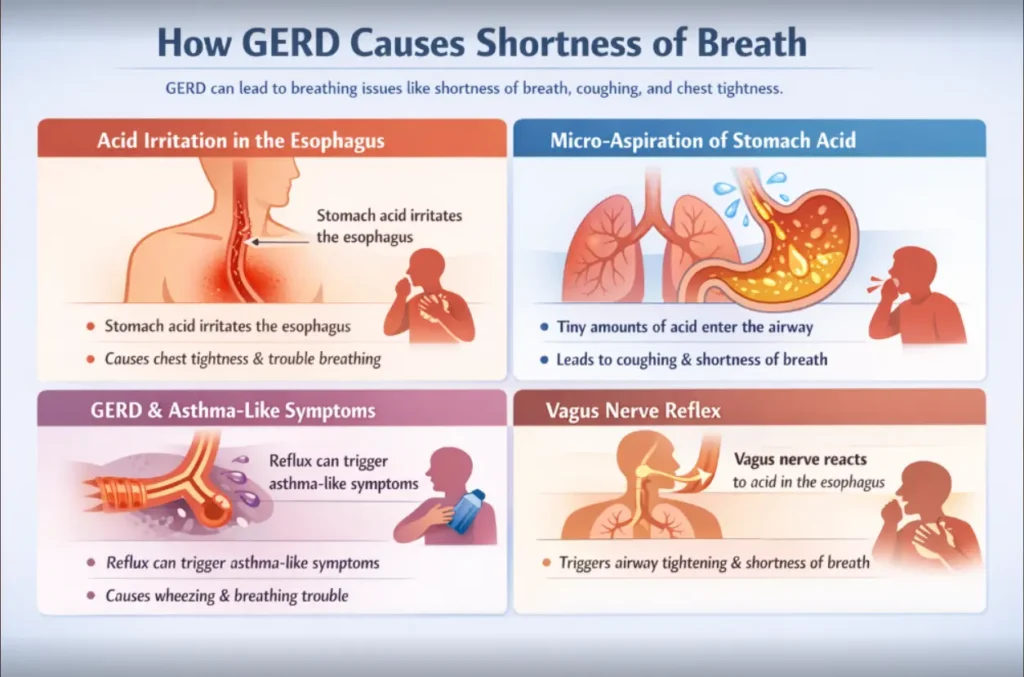
Shortness of breath from GERD occurs when acid reflux affects the esophagus and respiratory system. This is more than just a digestive problem; acid exposure can trigger nerve responses, airway irritation, and even asthma-like symptoms. Understanding the mechanisms can help readers recognize the connection and take action.
Esophageal Irritation and Nerve Stimulation
The esophagus and respiratory system share nerve pathways, particularly through the vagus nerve, which controls both swallowing and breathing reflexes. Repeated exposure to stomach acid irritates the esophageal lining and stimulates these nerves, which can send misleading signals to the lungs. This often results in chest tightness, a feeling of breathlessness, or shallow breathing, even when the lungs themselves are healthy.
Microaspiration of Stomach Contents
Sometimes, small amounts of stomach acid or partially digested food can enter the airways, especially during sleep. This microaspiration may be invisible but can inflame the bronchial tubes and lung tissue. The inflammation triggers persistent coughing, wheezing, and difficulty taking deep breaths, which may be mistaken for asthma or other pulmonary conditions.
GERD-Induced Asthma-Like Symptoms
Chronic acid reflux can directly exacerbate asthma or mimic asthma symptoms. Acid exposure may cause bronchospasms, in which the airways tighten and restrict airflow. Patients often report worsened breathing after meals, lying down, or at night, and these asthma-like episodes can interfere with daily activities if left untreated.
Sleep Disturbances
Nocturnal reflux, when acid flows back into the esophagus while lying down, can disrupt normal sleep and reduce oxygen intake. Nighttime shortness of breath is common in such cases, and repeated interruptions may decrease overall lung efficiency over time. Sleep deprivation caused by reflux can also worsen fatigue, further affecting respiratory function and overall health.
Symptoms of GERD-Related Shortness of Breath
Shortness of breath caused by GERD often occurs alongside other digestive and respiratory symptoms. Common signs include:
- Feeling of tightness or pressure in the chest
- Difficulty taking deep breaths or shallow breathing
- Persistent coughing, especially at night or after meals
- Wheezing or asthma-like symptoms
- Hoarseness, sore throat, or frequent throat clearing
- Regurgitation of acid or partially digested food
- Heartburn or a burning sensation in the chest
- Sensation of a lump in the throat (globus sensation)
These symptoms may worsen after large meals, lying down, or consuming trigger foods. For severe episodes, visit the closest emergency room near me for prompt care.
Triggers That Worsen GERD-Related Shortness of Breath
Managing GERD effectively means knowing what can trigger or worsen symptoms, including shortness of breath. Certain foods, habits, and lifestyle factors increase acid reflux and airway irritation.
- Dietary Choices: Spicy, fatty, or fried foods, chocolate, caffeine, and carbonated drinks can relax the LES or increase stomach acid, leading to reflux that may cause coughing, wheezing, or breathlessness.
- Eating Habits: Large meals or lying down right after eating increases stomach pressure, worsening reflux and shortness of breath, especially at night.
- Lifestyle Factors: Smoking, alcohol, and stress weaken the LES or increase acid production, sometimes causing chest tightness or breathing difficulty.
- Medical Conditions: Obesity and pregnancy raise abdominal pressure, pushing acid into the esophagus and potentially triggering asthma-like symptoms or nighttime breathing issues.
Avoiding these triggers through mindful eating, dietary adjustments, and lifestyle changes can reduce both digestive and respiratory problems.
Medications & Treatment Options
Managing GERD effectively to reduce shortness of breath usually involves a combination of lifestyle adjustments and medications.
Lifestyle and Dietary Adjustments
- Eat smaller, more frequent meals: Large meals increase stomach pressure, promoting acid reflux.
- Avoid trigger foods and beverages: Spicy, fatty, acidic, or carbonated foods can worsen reflux and respiratory symptoms.
- Stay upright after eating: Avoid lying down for at least 2–3 hours to prevent acid from flowing back into the esophagus.
- Elevate the head of the bed: Raising the head by 6–8 inches can reduce nighttime reflux and breathing difficulties.
- Maintain a healthy weight: Reducing abdominal pressure helps prevent acid backflow and decreases irritation of the airways.
Medications and Therapies
- Antacids: Provide quick relief by neutralizing stomach acid.
- H2 blockers: Reduce acid production over several hours, helping prevent irritation.
- Proton pump inhibitors (PPIs): Offer stronger, long-lasting acid suppression for chronic GERD.
- Breathing exercises: Can help manage mild shortness of breath caused by reflux-related airway irritation.
When GERD Becomes a Serious Problem
GERD can become serious when it leads to complications that affect both the digestive and respiratory systems. Persistent acid reflux may cause esophagitis, resulting in inflammation or ulcers in the esophagus, or Barrett’s esophagus, which involves pre-cancerous changes to the esophageal lining. Chronic reflux can also trigger respiratory issues, such as persistent cough, asthma flare-ups, or lung inflammation. In some cases, difficulty swallowing or ongoing vomiting may lead to nutritional deficiencies. Recognizing these warning signs early and managing GERD effectively is essential to preventing long-term damage and protecting overall health.
For children experiencing severe reflux symptoms, visiting an emergency room for pediatrics ensures specialized care and timely intervention.
When to Go to the ER?
Immediate medical attention is necessary if shortness of breath is accompanied by:
- Sudden or severe chest pain
- Fainting, dizziness, or confusion
- Rapid heart rate or difficulty speaking
- Persistent vomiting or signs of aspiration
- Severe coughing or wheezing that does not improve
In these cases, visiting Exceptional Emergency Centers ensures proper evaluation, ruling out heart or lung emergencies while addressing severe GERD complications.
Key Takeaways
- GERD can contribute to shortness of breath through nerve irritation, microaspiration, and asthma-like reactions.
- Symptoms often include heartburn, regurgitation, chronic cough, and chest tightness.
- Lifestyle changes, dietary adjustments, and medications can help manage both GERD and associated breathing issues.
- Recognizing serious complications early, such as esophagitis or nocturnal breathing problems, is crucial.
- Seek emergency care if shortness of breath is sudden, severe, or accompanied by chest pain or dizziness.
FAQs
Can GERD cause chest pain?
Yes, GERD can cause chest pain due to acid reflux irritating the esophagus. The pain is often mistaken for heart-related issues but usually occurs after meals or when lying down.
Does GERD cause backache?
Occasionally, GERD can cause discomfort that radiates to the back, especially between the shoulder blades, due to pressure or nerve irritation from acid reflux.
How is GERD diagnosed?
GERD is diagnosed through a combination of symptom evaluation, physical examination, and tests such as endoscopy, pH monitoring, or esophageal manometry to assess acid reflux severity.
Summary
GERD is more than occasional acid reflux or simple heartburn; it is a chronic condition that can affect both the digestive and respiratory systems, sometimes causing shortness of breath. Unlike occasional acid reflux, GERD occurs frequently and can lead to complications such as esophagitis, Barrett’s esophagus, and respiratory issues. Recognizing triggers, understanding how GERD impacts breathing, and knowing when to seek medical care are essential for effective management. With proper lifestyle changes, medications, and ongoing monitoring, most patients can reduce both digestive discomfort and respiratory symptoms, improving overall health and quality of life.