

That scratchy, painful feeling in your throat can make even simple actions like swallowing water or speaking feel exhausting. It often begins mildly but can quickly worsen over time, making eating, drinking, and resting uncomfortable. Most cases are temporary, but persistent throat pain should always be taken seriously.
If the pain becomes severe, lingers for days, or comes with fever, trouble breathing, or difficulty swallowing, it should not be ignored. These symptoms may need prompt medical attention to prevent complications. In such cases, visit our Fort Worth emergency room for fast evaluation and care when you need it most.
What Is a Sore Throat?
A sore throat, medically known as pharyngitis, is inflammation or irritation of the throat that leads to pain, scratchiness, or discomfort while swallowing or speaking. It is one of the most common reasons people seek medical care worldwide.
According to the NIH, most sore throats are caused by viral infections such as the common cold or influenza and typically resolve without complications. Research published in EClinicalMedicine shows that sore throat is highly common in children, with incidence reaching up to 82 episodes per 100 child-years.
Sore Throat Symptoms That You Shouldn’t Ignore
- Severe pain when swallowing or speaking
- High fever (especially above 101°F / 38.3°C)
- Difficulty breathing or feeling like the throat is closing
- Swollen glands in the neck or jaw area
- White patches or pus on the tonsils
- Persistent sore throat lasting more than a few days
- Hoarseness or voice changes that don’t improve
- Trouble opening the mouth or jaw pain
Causes of Sore Throat
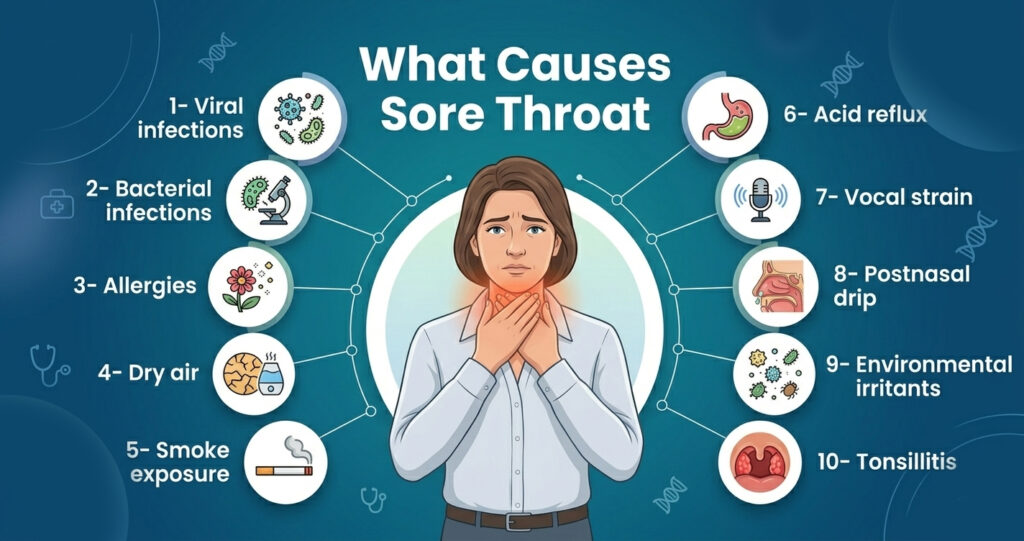
A sore throat develops when the throat becomes irritated, inflamed, or infected. It may range from mild discomfort to severe pain that interferes with daily life. While often temporary, identifying the cause is important when symptoms persist or worsen.
1. Viral Infections
Viral infections are one of the most common reasons for a sore throat and often occur alongside colds or flu. These infections inflame the throat lining, leading to pain and irritation. Symptoms may also include runny nose, cough, and fatigue. Most viral sore throats improve on their own within a few days with rest and hydration.
2. Bacterial Infections
Bacterial infections, such as strep throat, can cause more intense throat pain and often come on suddenly. They may be accompanied by fever, swollen tonsils, and difficulty swallowing. Unlike viral infections, bacterial causes may require antibiotic treatment. Early diagnosis helps prevent complications and speeds up recovery.
Also Read: How to Avoid Strep Throat During Peak Season
3. Allergies
Allergic reactions to dust, pollen, or pet dander can irritate the throat and cause ongoing discomfort. Postnasal drip from allergies can also worsen soreness by continuously irritating the throat lining. Symptoms often include sneezing, itchy eyes, and nasal congestion. Managing allergens can help reduce throat irritation over time.
4. Dry Air
Dry indoor air, especially from air conditioning or heaters, can dry out the throat lining. This dryness can lead to scratchiness, irritation, and mild pain. It is more common during seasonal changes or in low-humidity environments. Staying hydrated and using a humidifier can help relieve symptoms.
5. Smoke Exposure
Exposure to cigarette smoke or other pollutants can strongly irritate the throat. The harmful particles inflame delicate throat tissues, leading to persistent soreness. Even secondhand smoke can trigger symptoms in sensitive individuals. Avoiding smoke exposure is important for preventing ongoing irritation.
6. Acid Reflux
Acid reflux occurs when stomach acid flows back into the throat, causing burning and irritation. This can lead to chronic sore throat, especially in the morning. Other symptoms may include heartburn and a sour taste in the mouth. Managing diet and lifestyle can help reduce reflux-related throat pain.
7. Vocal Strain
Overusing the voice by shouting, singing, or speaking loudly can strain the throat muscles. This strain can cause hoarseness, soreness, and fatigue in the voice. It is common in teachers, singers, and public speakers. Resting the voice usually helps the throat recover.
8. Postnasal Drip
Postnasal drip happens when excess mucus from the nose drips down the throat. This constant drainage can irritate and inflame throat tissues. It often occurs with colds, allergies, or sinus infections. Drinking fluids and treating the underlying cause can help relieve discomfort.
9. Environmental Irritants
Chemicals, strong odors, and air pollution can irritate the throat lining. These irritants may cause burning sensations, dryness, or soreness. People living in polluted areas may experience more frequent symptoms. Reducing exposure helps prevent ongoing throat irritation.
10. Tonsillitis
Tonsillitis is the inflammation of the tonsils, often caused by viral or bacterial infections. It can lead to severe throat pain, difficulty swallowing, and visible swelling. Fever and bad breath may also occur in some cases. Treatment depends on whether the cause is viral or bacterial.
Sore Throat in Kids
Children with a sore throat may have difficulty eating, drinking, or sleeping comfortably. They may also experience fever, fatigue, or irritability. While most cases are mild, worsening or persistent symptoms should not be ignored, and may require Pediatric emergency care for proper evaluation and treatment.
Sore Throat Medicine For Kids
- Acetaminophen (Paracetamol) – Helps reduce pain and fever, prescribed by a doctor
- Ibuprofen – Reduces inflammation and throat discomfort, prescribed by a doctor
- Antibiotics (e.g., Amoxicillin) – Used only if a bacterial infection like strep throat is confirmed, prescribed by a doctor
- Throat lozenges (age-appropriate only) – Soothes irritation, prescribed or recommended by a doctor
- Antihistamines – Used if allergies are contributing to symptoms, prescribed by a doctor
When To Go To The ER For A Sore Throat
A sore throat is usually mild and improves on its own, but sometimes it can signal a more serious condition needing urgent care. Watch for worsening symptoms or difficulty swallowing or breathing. In such cases, visit the ER for sore throat immediately for prompt evaluation and treatment.
- Difficulty Breathing – Any feeling of tightness, choking, or trouble getting air requires emergency care
- Severe Trouble Swallowing – Inability to swallow liquids, saliva, or food safely
- High Fever – Persistent fever above 101°F (38.3°C) with worsening throat pain
- Drooling or Unable to Swallow Saliva – May indicate significant throat swelling
- Swelling in Throat or Neck – Visible or painful swelling that is rapidly worsening
- Severe or One-Sided Throat Pain – Could indicate abscess or serious infection
- Muffled “Hot Potato” Voice – A sign of deep throat infection
- Stiff Neck or Severe Headache – May suggest a more serious underlying condition
- Rash with Sore Throat – Can indicate certain bacterial infections needing urgent care
- Symptoms Lasting More Than a Few Days and Getting Worse – Especially if not responding to home care
How To Treat Sore Throat
A sore throat is often managed by reducing pain, soothing irritation, and treating the underlying cause if needed. Mild cases may improve with rest, fluids, and supportive care, while more severe cases may require medical treatment. It is important to avoid self-medicating without guidance, especially in children or when symptoms are intense.
- Acetaminophen (Paracetamol) – Helps relieve pain and reduce fever, prescribed by a doctor
- Ibuprofen – Reduces inflammation and throat discomfort, prescribed by a doctor
- Antibiotics (e.g., Amoxicillin, Penicillin) – Used only for bacterial infections like strep throat, prescribed by a doctor
- Throat Sprays (e.g., Phenol-based sprays) – Provide temporary pain relief, prescribed or recommended by a doctor
- Lozenges (age-appropriate) – Help soothe throat irritation, prescribed or recommended by a doctor
- Antihistamines (e.g., Cetirizine, Loratadine) – Used if allergies are contributing, prescribed by a doctor
- Corticosteroids (e.g., Dexamethasone) – Used in severe swelling or inflammation, prescribed by a doctor
- Oral Rehydration / Fluids Support – Helps prevent dehydration and supports recovery, as advised by a doctor
- Salt Water Gargles – Helps reduce irritation and swelling, recommended by a doctor
- Humidifiers / Steam Therapy – Keeps throat moist and eases dryness, recommended by a doctor
Sore Throat Care At Exceptional Emergency Centers
If you are wondering what causes a sore throat, it is important to understand that symptoms may range from mild irritation to serious infection. At Exceptional Emergency Centers, our medical team evaluates your condition to identify the exact cause and provide prompt treatment.
When symptoms persist or worsen, professional care becomes essential. Understanding throat pain helps ensure proper treatment decisions. Exceptional Emergency Centers provides fast, patient-focused emergency care so you can recover safely and return to daily life without delay.
Key Takeaway
- A sore throat can range from mild irritation to severe discomfort, affecting swallowing and speech
- It may become serious when symptoms persist or worsen over time
- Difficulty breathing, swallowing, or a high fever are warning signs that need urgent attention
- Causes can vary and require a proper medical evaluation for an accurate diagnosis
- Early treatment helps prevent complications and speeds up recovery
- Exceptional Emergency Centers provides timely and expert care for proper management
FAQs
How long does a sore throat last?
A sore throat usually lasts about 3–7 days when caused by a viral infection. If symptoms persist beyond this or worsen over time, medical evaluation may be needed to rule out other causes.
What helps a sore throat?
Warm liquids, saltwater gargles, throat lozenges, rest, and staying well-hydrated can help ease discomfort. These supportive measures can also help the throat heal more comfortably.
Can allergies cause a sore throat?
Yes, allergies can lead to a sore throat, often due to postnasal drip that continuously irritates the throat lining. This can cause ongoing scratchiness or discomfort.
Does Tylenol help with a sore throat?
Yes, Tylenol (acetaminophen) can help relieve pain and reduce fever linked to a sore throat. However, it does not treat the underlying cause of the condition.