

If you or your child is dealing with ear pain and fever, it can feel worrying and uncomfortable, especially when symptoms appear suddenly or start getting worse. Ear infections are common and occur when bacteria or viruses affect the middle ear, leading to inflammation, fluid buildup, and pain. In some cases, the body responds with fever as part of its natural immune response.
While many ear infections cause only mild fever, more severe infections, especially in children, can lead to higher temperatures and worsening symptoms. When fever rises or does not improve, it may indicate that the infection needs medical attention rather than home care alone. Our emergency room Beaumont TX is available to provide prompt evaluation and urgent care when symptoms become concerning.
What Causes an Ear Infection?
Ear infections develop when fluid becomes trapped in the middle ear and cannot drain properly. This creates a space where bacteria or viruses can grow, leading to infection and inflammation.
According to the National Institutes of Health (NIH), ear infections are among the most common childhood illnesses, especially in children under the age of three. They are often linked to immune response changes and upper respiratory conditions.
- Upper respiratory infections: Cold and flu can cause swelling and mucus buildup that block normal ear drainage.
- Eustachian tube dysfunction: When the tube that drains the middle ear becomes blocked, fluid gets trapped and increases infection risk.
- Bacterial or viral infection: Germs from the nose or throat can spread to the middle ear and trigger infection.
- Allergies: Allergic inflammation can cause nasal congestion and block proper ear drainage.
- Sinus infections: Pressure and inflammation from sinus issues can affect the ear and contribute to fluid buildup.
- Enlarged adenoids: In children, swollen adenoids can block ear drainage pathways and increase infection risk.
Will An Ear Infection Cause A Fever?
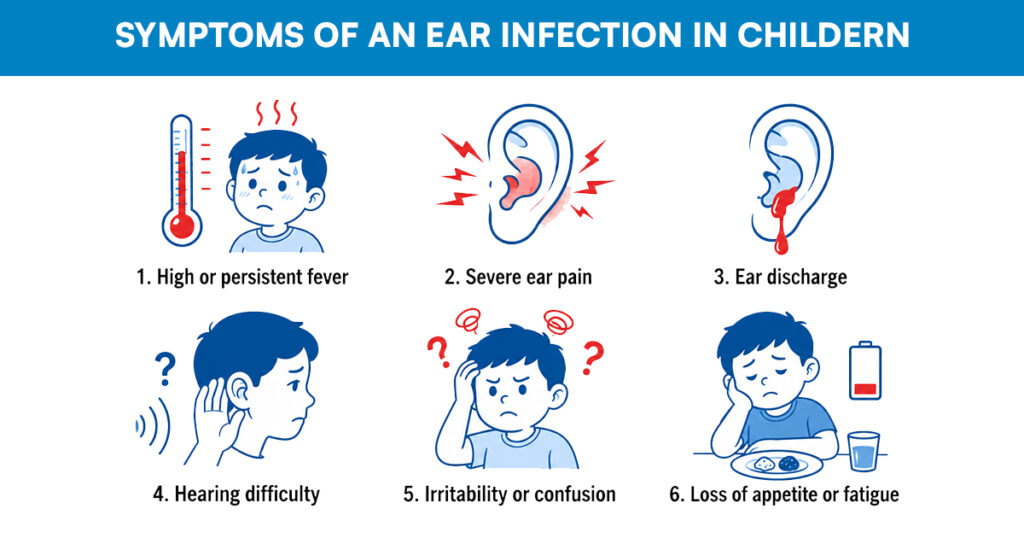
Yes, an ear infection can cause fever, especially in children. Mild infections usually lead to low-grade fever, while more severe infections can result in higher temperatures as the body actively fights the infection.
Dangerous Signs of Ear Infection With High Fever
- High or persistent fever: A fever that stays high or keeps returning may indicate a more serious ear infection that needs medical attention.
- Severe ear pain: Intense or worsening pain in the ear can signal increasing inflammation or pressure buildup in the middle ear.
- Ear discharge: Fluid, pus, or blood coming from the ear may suggest a ruptured eardrum or advanced infection.
- Hearing difficulty: Muffled hearing or sudden hearing loss can occur when fluid buildup affects normal sound transmission.
- Irritability or confusion: Especially in children, unusual fussiness, restlessness, or confusion can indicate the infection is affecting overall well-being.
- Loss of appetite or fatigue: Reduced eating, low energy, or extreme tiredness may be signs that the body is under significant stress from infection.
Is Fever Common with an Ear Infection?
Fever is common in ear infections, especially in young children. It is part of the body’s immune response to infection in the middle ear. In many cases, fever remains mild, but if it continues for several days or becomes higher, it may indicate a more advanced infection that needs medical attention.
How High Can Fever Go With an Ear Infection?
Fever levels in an ear infection can vary depending on the severity of the infection and how the body responds to it. In mild cases, the temperature may only rise slightly, while more severe infections, especially in children, can cause a significantly higher fever.
- Low-grade fever (99°F to 100.9°F / 37.2°C to 38.3°C): This is common in mild ear infections and often indicates the body is fighting the infection.
- Moderate fever (101°F to 102.9°F / 38.3°C to 39.4°C): This may suggest a more active infection and can be accompanied by increased ear pain or discomfort.
- High fever (103°F / 39.4°C or above): This can occur in more severe infections, particularly in children, and should be closely monitored as it may require urgent medical care.
Can You Have an Ear Infection Without a Fever?
Yes. Many mild ear infections, especially in adults, may occur without a fever. Symptoms may include ear pressure, pain, muffled hearing, or fullness in the ear. Even without fever, persistent symptoms should not be ignored, especially if they worsen over time.
Dangerous Fever and Ear Infection Symptoms in Kids
Ear infections in children can sometimes become more serious when paired with a high or persistent fever. While mild cases may resolve on their own, a stronger immune response can lead to more intense symptoms that affect a child’s comfort, behavior, and overall health.
- High or persistent fever: A fever that stays above normal or keeps returning may indicate a more serious infection that needs prompt evaluation.
- Severe ear pain or pulling at ears: Children may show discomfort by crying, irritability, or frequently tugging at the affected ear.
- Fluid or discharge from ear: Pus or fluid draining from the ear can be a sign of worsening infection or eardrum rupture.
- Hearing difficulty: A child may not respond normally to sounds due to fluid buildup affecting hearing.
- Excessive irritability or crying: Unusual fussiness or difficulty calming down can signal significant discomfort or pain.
- Loss of appetite or low energy: Reduced eating, fatigue, or unusual sleepiness may indicate the infection is affecting overall health.
If these symptoms appear or worsen, it is important to seek treatment at our Beaumont pediatric emergency room immediately for proper evaluation and urgent care.
When to Go to the ER
An ear infection can often be managed at home, but there are situations where symptoms become serious and require immediate medical attention. High fever, worsening pain, or signs of complications may indicate that the infection is progressing and needs urgent evaluation. In such cases, urgent care for earaches may be needed.
- Fever above 103°F or not improving with medication.
- Severe or worsening ear pain.
- Fluid, pus, or blood from the ear.
- Sudden hearing loss or major hearing changes.
- Stiff neck, severe headache, or confusion.
- Signs of dehydration or extreme weakness in children.
Treatment for Ear Infection With Fever
Treatment for an ear infection with fever depends on the severity of the infection and whether it is caused by bacteria or a virus. In many mild cases, symptoms improve on their own with rest and supportive care, but more serious infections may require medical treatment.
- Fever and pain management: Medications such as acetaminophen or ibuprofen may be used to reduce fever and relieve pain, but these should be taken only as directed or prescribed by the doctor.
- Antibiotics (if bacterial infection): Antibiotics may be prescribed by the doctor if the infection is confirmed or strongly suspected to be bacterial. These help eliminate the infection and prevent complications.
- Warm compress: Applying a warm cloth to the affected ear can help reduce pain and improve comfort.
- Rest and hydration: Getting enough rest and drinking fluids supports the immune system in fighting the infection.
- Ear drops (if prescribed): Certain ear drops may be prescribed by the doctor to reduce pain or treat infection when appropriate.
- Monitoring symptoms: Keeping track of fever, pain, and overall condition is important, and worsening symptoms should be reported to a healthcare provider promptly.
ER Care for Ear Infection With High Fever at Exceptional Emergency Centers
When symptoms become severe, emergency care may be required. At Exceptional Emergency Centers, patients receive rapid evaluation to determine the severity of infection and immediate treatment needs.
Care may include fever control, antibiotics prescribed by the doctor if needed, IV fluids for dehydration, and diagnostic testing to identify the cause of infection when addressing Can an Ear Infection Cause High Fever. Patients are closely monitored to ensure stability and safe recovery before discharge or further referral if required.
Key Takeaway
- Ear infections are common and often linked to fluid buildup and infection.
- Fever is a frequent symptom, especially in children.
- High fever may indicate a more serious infection.
- Symptoms like ear pain, discharge, and hearing changes require attention.
- Children may show behavioral signs like irritability or fatigue.
- Severe cases require urgent medical evaluation.
- Emergency care ensures fast diagnosis and treatment when needed.
FAQs
Can An Ear Infection Cause A Sore Throat?
Yes, an ear infection can sometimes cause a sore throat because the ear, nose, and throat are connected through the Eustachian tube.
Do Ear Infections Go Away On Their Own?
Mild ear infections often clear on their own within a few days, but some cases may require medical treatment if symptoms persist or worsen.
How Long Does A Fever Last?
A fever from an infection usually lasts 2–3 days, but it can last longer if the underlying infection is more severe.