

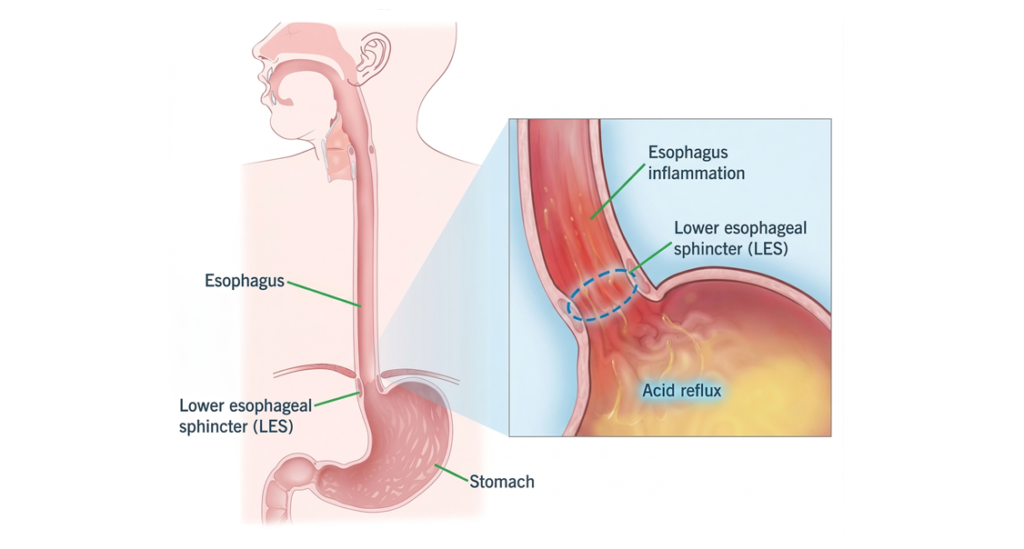
Acid reflux is a digestive issue that occurs when stomach acid flows backward into the esophagus, the tube responsible for carrying food from the mouth to the stomach. This usually happens when the lower esophageal sphincter (LES), a circular muscle at the bottom of the esophagus, fails to close tightly or relaxes at inappropriate times. Acting as a valve, the LES is designed to keep stomach contents contained, but when it malfunctions, acid can rise and irritate the lining of the esophagus, leading to discomfort and burning sensations.
Many people experience occasional acid reflux, often after eating large meals, indulging in spicy or fatty foods, or lying down too soon after dinner. For instance, a patient might notice heartburn and a sour taste in the mouth after a late-night pizza and soda. While these sporadic episodes are common and usually harmless, frequent reflux may indicate gastroesophageal reflux disease (GERD), a long-term condition that can harm the esophagus and affect daily life. In severe cases, prompt evaluation at an emergency room may be necessary to address complications and ensure proper care. Recognizing the symptoms, understanding triggers, and exploring effective treatment options are key to managing acid reflux and preventing complications.
Common Symptoms of Acid Reflux
Acid reflux can present in various ways, from mild discomfort to more severe digestive issues. Recognizing these symptoms early allows for timely intervention.
Burning Sensation (Heartburn): A common symptom of acid reflux is a burning feeling behind the breastbone, often occurring after meals or when lying down. This burning is caused by stomach acid irritating the esophageal lining.
Sour or Bitter Taste in the Mouth: Acid that moves upward can leave a sour or bitter taste, especially in the back of the throat.
Regurgitation: The sensation of acid or food coming back into the throat or mouth is typical in reflux.
- Nausea: Acid irritation can slow stomach emptying, leading to nausea or a feeling of fullness.
- Difficulty Swallowing (Dysphagia): Chronic reflux can cause inflammation, making it difficult or painful to swallow.
- Chronic Cough or Hoarseness: Persistent coughing or a raspy voice can result from acid reaching the throat or vocal cords.
- Feeling of Food Stuck in the Throat: Frequent irritation may cause the sensation of a lump in the throat.
These symptoms often worsen when bending over, lying down, or during nighttime, making it essential to monitor your lifestyle and eating habits and if discomfort escalates, visit the closest emergency room near me for fast, expert care you can trust.
How Long Does Acid Reflux Last?
The duration of acid reflux varies depending on the underlying cause, meal composition, and individual health. Some episodes may last just a few minutes, while others can persist for several hours.
- Mild Acid Reflux: Typically lasts a few minutes to an hour and may resolve on its own as the digestive system processes food.
- Reflux After Large Meals: Heavy meals can prolong symptoms for hours because the stomach requires more time to empty.
- Food-Triggered Reflux: Spicy, fatty, or acidic foods may extend discomfort, especially for individuals sensitive to these triggers.
- Nighttime Acid Reflux: Lying down allows gravity to no longer assist in keeping stomach contents in the stomach, prolonging symptoms and sometimes causing disrupted sleep.
- Chronic or Frequent Reflux (GERD): Multiple weekly episodes or persistent reflux can lead to esophageal inflammation, ulcers, or strictures, requiring medical attention to prevent complications.
What Causes Acid Reflux?
Acid reflux occurs due to a combination of mechanical, dietary, and lifestyle factors. Understanding these causes can help in prevention and management.
Weak Lower Esophageal Sphincter: A malfunctioning LES is the primary cause of acid reflux. When the valve does not close properly, stomach acid can flow upward into the esophagus.
Certain Foods and Beverages: Common triggers include spicy foods, fried foods, chocolate, caffeine, citrus fruits, carbonated beverages, and alcohol. These can relax the LES or increase acid production.
- Overeating: Large portions elevate stomach pressure, increasing the likelihood of acid backflow.
- Obesity and Increased Abdominal Pressure: Extra weight in the abdomen can push stomach contents upward, exacerbating reflux.
- Pregnancy: Hormonal changes and increased pressure in the abdominal area can increase reflux risk.
- Hiatal Hernia: A condition in which part of the stomach pushes through the diaphragm into the chest cavity, interfering with normal LES function and promoting reflux.
- Smoking and Alcohol: Both relax the LES and impair the esophagus’s natural defense mechanisms.
Delayed Gastric Emptying: When the stomach empties slowly, acid can accumulate and more easily flow back into the esophagus.
How can I Relieve Acid Reflux
Treatment for acid reflux varies based on the severity and frequency of symptoms, ranging from lifestyle modifications to medications. For persistent or severe symptoms, seeking care at Exceptional Emergency Centers ensures fast, expert evaluation and treatment.
Lifestyle Changes to Control Acid Reflux
Simple daily adjustments can significantly reduce reflux episodes and prevent esophageal damage.
- Eat Smaller, Frequent Meals: Smaller meals reduce pressure on the stomach and LES.
- Avoid Trigger Foods: Spicy, fatty, acidic, caffeinated, and carbonated foods can worsen symptoms.
- Stay Upright After Eating: Waiting at least two to three hours before lying down can prevent acid from flowing backward.
- Maintain Healthy Weight: Excess abdominal fat increases pressure on the stomach.
- Elevate Head While Sleeping: Raising the head of the bed by 6–8 inches helps reduce nighttime reflux.
- Limit Alcohol and Quit Smoking: Both relax the LES and aggravate symptoms.
Over-the-Counter Medications for Acid Reflux
OTC medications are widely used to relieve acid reflux symptoms temporarily.
- Antacids: Neutralize stomach acid quickly, providing fast relief for mild heartburn.
- H2 Blockers: Reduce acid production for longer-lasting relief compared to antacids.
- Proton Pump Inhibitors (PPIs): Significantly decrease acid production and are often used for more frequent or chronic reflux.
- Proper Usage: Even OTC medications should be used as directed to ensure safety and effectiveness.
Prescription Treatments
For severe or persistent reflux, doctors may recommend:
- Prescription-Strength Medications: Stronger H2 blockers or PPIs may be necessary for frequent reflux.
- Medical Evaluation: Endoscopy or pH monitoring may be performed to assess esophageal damage and confirm GERD diagnosis.
- Long-Term Care: Prevents complications such as esophagitis, Barrett’s esophagus, or strictures.
Acid Reflux vs Heartburn vs GERD
Understanding the difference between these terms helps in correctly identifying the condition:
- Acid Reflux: The physiological process where stomach acid flows backward into the esophagus.
- Heartburn: The symptom of burning in the chest or throat caused by acid reflux.
- GERD (Gastroesophageal Reflux Disease): Chronic, persistent reflux occurring multiple times per week, potentially causing complications if untreated.
What Happens During Acid Reflux?
When the LES malfunctions, stomach acid moves upward into the esophagus. Unlike the stomach lining, the esophagus lacks protective mucosa, so acid exposure leads to:
- Irritation and Inflammation: Causing pain, burning, and discomfort.
- Esophageal Damage: Long-term exposure can result in ulcers, strictures, or Barrett’s esophagus.
- Symptoms Amplification: Repeated episodes increase the severity of discomfort and complications.
When to Seek Emergency Care for Acid Reflux
Although most acid reflux cases are manageable, certain signs indicate the need for urgent medical attention:
- Severe Chest Pain: Could indicate a heart attack; immediate evaluation is essential.
- Difficulty Breathing: May signal a serious underlying condition.
- Persistent Vomiting or Nausea: Risk of dehydration and esophageal damage.
- Difficulty Swallowing: Could suggest narrowing or inflammation of the esophagus.
- Symptoms Not Responding to Medication: May require professional assessment.
Care for Acid Reflux Concerns at Exceptional Emergency Centers
Exceptional Emergency Centers provides expert care for patients experiencing acid reflux and related digestive issues. Their team evaluates symptoms such as heartburn, regurgitation, nausea, and difficulty swallowing to determine the severity of the condition. Advanced diagnostic tools like endoscopy and pH monitoring allow accurate identification of esophageal irritation and potential damage. Personalized treatment plans combine medications, dietary guidance, and lifestyle modifications to manage symptoms effectively. Patients receive continuous monitoring to prevent complications such as GERD or Barrett’s esophagus. The hospital ensures timely attention to urgent cases with severe chest pain or persistent vomiting, including access to an emergency room for pediatrics for young patients. Early intervention and professional care help patients regain comfort and maintain digestive health.
Key Takeaways
- Acid reflux occurs when stomach acid flows backward into the esophagus.
- Occasional reflux is common and often resolves naturally.
- Chronic reflux may indicate GERD and requires medical evaluation.
- Lifestyle modifications such as smaller meals, avoiding triggers, and maintaining a healthy weight are effective preventive measures.
- OTC and prescription medications can reduce acid levels and relieve symptoms.
- Severe symptoms like chest pain, persistent vomiting, or difficulty swallowing warrant immediate medical attention.
FAQs
Can acid reflux cause coughing?
Yes, refluxed stomach acid can reach the throat and airways, triggering a chronic cough. This is more common at night or when lying down. Managing reflux with lifestyle changes or medications can reduce cough symptoms.
Which side to sleep on for acid reflux?
Sleeping on the left side is recommended, as it helps keep the stomach below the esophagus. This position reduces acid backflow and nighttime symptoms. Elevating the head of the bed also provides additional relief.
Can acid reflux cause diarrhea?
Acid reflux itself rarely causes diarrhea, but GERD medications or related digestive disorders can lead to loose stools. Food triggers that worsen reflux may also irritate the gut. Monitoring diet and symptoms can help identify the cause.