

Mucus is a thick, gel-like fluid produced by mucous membranes throughout the body. Its primary role is protective, trapping dust, bacteria, viruses, and other harmful particles before they can penetrate deeper tissues. Mucus also keeps tissues moist, facilitates smooth movement within organs, and supports overall health. While normal mucus is essential for body functions, unusual changes in color, thickness, or amount may signal underlying infections, allergies, or chronic conditions. Occasional excess mucus is common during colds, allergies, or irritants, but persistent or abnormal changes should prompt medical evaluation. Understanding mucus is vital for recognizing symptoms that require attention or a visit to an Amarillo emergency room.
How Is Mucus Produced in the Human Body?
Mucus is secreted by specialized cells known as goblet cells and by mucous glands lining various tissues. It is primarily made of water, glycoproteins, salts, and antibodies that help neutralize pathogens.
- Respiratory Tract: Mucus traps inhaled dust, bacteria, and viruses, preventing them from reaching the lungs. It also contains enzymes that help break down pathogens.
- Digestive Tract: The mucus lining in the stomach and intestines protects against digestive acids and enzymes, preventing tissue damage and ulcers.
- Reproductive System: Mucus in the reproductive tract keeps tissues moist and aids in sperm transport, supporting fertility and tissue health.
Normal mucus production can increase temporarily in response to irritants, infections, or allergens. However, excessive or discolored mucus may indicate infection or chronic conditions requiring professional evaluation at an emergency room near me.
What Are the Functions of Mucus
Mucus plays a critical role in protecting and maintaining various body systems. It acts as a natural barrier and supports essential bodily functions that keep tissues healthy and functioning properly.
- Protection: Mucus forms a protective layer over tissues, shielding them from harmful pathogens, dust, and environmental irritants. It also helps protect sensitive linings, such as the stomach, from strong acids and digestive enzymes.
- Immune Defense: Mucus contains antibodies and enzymes that help trap and neutralize bacteria, viruses, and other harmful microorganisms. This defense mechanism prevents infections from spreading deeper into the body.
- Moisture Regulation: It keeps vital areas like the eyes, nose, mouth, respiratory tract, and digestive system properly hydrated. This moisture is essential to prevent dryness, irritation, and tissue damage.
- Facilitation: Mucus plays a role in important bodily processes such as digestion, where it helps food pass smoothly through the digestive tract. It also supports sperm movement in reproduction and helps clear dust and debris from the airways.
- Health Importance: Without mucus, the body would be more exposed to infections, dehydration, and internal damage. It acts as a first line of defense and is essential for maintaining overall health and proper bodily function.
What Does a Mucus Plug Look Like?
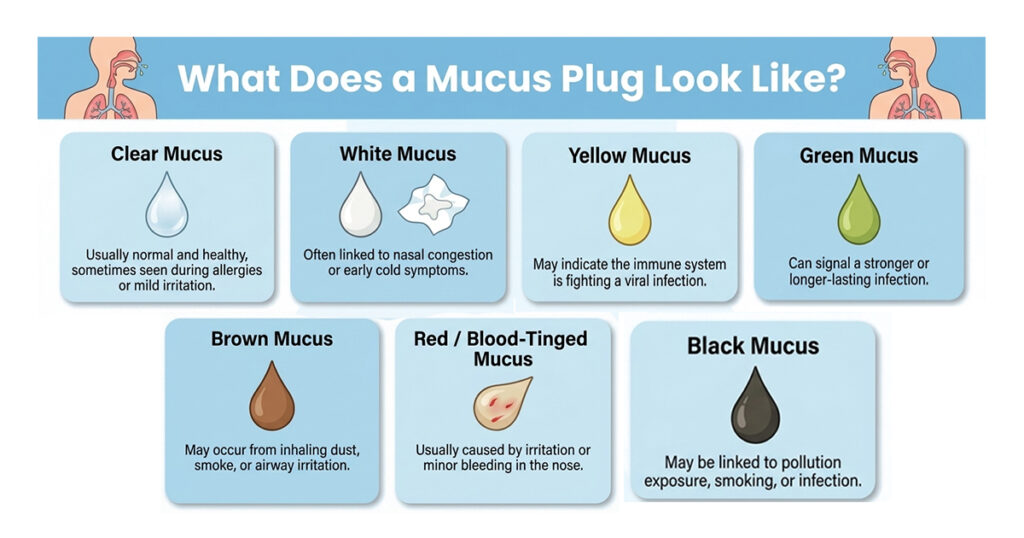
Mucus can reveal important information about your health, and its color is one of the clearest indicators of what’s happening in your body. Changes in mucus color may point to infections, irritation, or other underlying conditions that require attention.
- Clear Mucus: Usually normal and healthy, indicating proper hydration and functioning airways. It can also appear during allergies or mild irritation.
- White Mucus: Often linked to congestion or inflammation in the nasal passages. It may be an early sign of a cold or sinus blockage.
- Yellow Mucus: Yellow mucus indicates the immune system is actively fighting an infection. It is commonly seen during viral illnesses like colds or flu.
- Green Mucus: Green mucus suggests a stronger or prolonged infection, where white blood cells are actively combating bacteria. It may require medical evaluation if persistent.
- Brown Mucus: Brown mucus can result from inhaling dust, smoke, or dried blood. It may also be seen in people exposed to pollutants or after irritation in the airways.
- Red or Blood-Tinged Mucus: Indicates the presence of blood, often due to irritation, dryness, or minor injury. However, frequent or heavy bleeding may signal a serious condition and needs immediate medical attention.
- Black Mucus: Black mucus is rare but can be associated with heavy pollution exposure, smoking, or fungal infections. It should always be evaluated by a healthcare professional.
If you notice unusual mucus colors along with symptoms like fever, chest pain, difficulty breathing, or persistent coughing, seek medical attention immediately.
What is the Cause of Mucus
Mucus production can increase due to various causes ranging from infections to chronic illnesses.
- Respiratory Infections: Viral infections like colds, influenza, or COVID-19 often trigger thickened, yellow, or green mucus. It is a natural immune response but may need evaluation if severe.
- Allergies: Exposure to dust, pollen, or pet dander can lead to clear, watery mucus as the body reacts to allergens.
- Sinusitis: Inflamed sinuses produce thicker mucus accompanied by congestion and facial pressure, sometimes requiring medical intervention.
- Gastrointestinal Issues: Conditions like acid reflux, gastritis, or irritable bowel syndrome can lead to excess mucus in the throat or stool.
- Smoking and Pollution: Tobacco smoke and pollutants irritate mucous membranes, causing overproduction of mucus.
- Chronic Conditions: Asthma, chronic bronchitis, and cystic fibrosis often lead to persistent abnormal mucus that requires medical management.
Recognizing the root cause is crucial, and when professional care is needed, trust Exceptional Emergency Centers for fast, expert treatment you can rely on.
How to Get Rid of Mucus
Excess mucus can cause discomfort, congestion, and difficulty breathing or swallowing. Reducing it early helps improve overall comfort and supports normal body function.
Home Remedies
These natural methods can help reduce mucus buildup and improve ease of breathing or passage without medication:
- Stay Hydrated: Drinking plenty of water thins mucus, making it easier for the body to expel. Proper hydration also supports healthy mucous membranes.
- Use Humidifiers: Moist air prevents mucus from thickening and reduces irritation, especially in dry environments.
- Saline Sprays or Rinses: Saline solutions help flush out nasal passages and other areas, clearing mucus naturally and safely.
- Avoid Irritants: Smoke, dust, and chemical fumes can worsen mucus production. Limiting exposure speeds recovery.
- Healthy Diet: Eating fruits, vegetables, and drinking warm liquids like teas or broths soothes membranes and strengthens immunity.
If mucus persists or worsens, professional evaluation or an ER visit may be necessary to prevent complications.
Medications for Excess Mucus
When natural remedies aren’t enough, medications can help control mucus and relieve symptoms:
- Decongestants: Reduce nasal or sinus mucus and pressure for easier breathing; usually for short-term relief.
- Expectorants: Thin mucus in the chest or respiratory tract, making it easier to expel.
- Antihistamines: Help reduce mucus caused by allergies, easing congestion and irritation.
- Antibiotics or Antivirals: Used for bacterial or viral infections to treat the underlying cause. Always follow medical instructions carefully.
If symptoms continue despite treatment, contact your healthcare provider or visit an emergency room for pediatrics for proper assessment.
Chronic Conditions Affecting Mucus
Long-term illnesses can lead to persistent mucus production requiring ongoing care.
- Asthma: Causes thick mucus in the airways, resulting in wheezing and coughing. Effective treatment reduces inflammation.
- Chronic Bronchitis: Persistent bronchial inflammation leads to excessive sputum production and daily discomfort.
- Cystic Fibrosis: A genetic disorder causing thick, sticky mucus in lungs and digestive tract, requiring constant management.
- GERD (Acid Reflux): Irritates the throat and increases mucus production. Lifestyle changes and medications can help.
Managing these conditions involves lifestyle adjustments, medications, and regular medical monitoring.
Mucus vs Phlegm vs Saliva
Understanding these fluids helps identify the source of symptoms and direct appropriate treatment.
- Mucus: Produced by mucous membranes throughout the body. Traps dust, bacteria, and other particles while keeping tissues moist.
- Phlegm: A type of mucus originating from the lungs or lower respiratory tract. It is thicker and usually expelled via coughing, especially during infection or inflammation.
- Saliva: Secreted by salivary glands in the mouth. Helps digest food, prevents tooth decay, and keeps oral tissues moist.
Differentiating these fluids can guide medical care and indicate whether ER evaluation is necessary.
When to Seek ER for Mucus
While minor mucus changes are common, certain signs require urgent care.
- Emergency Signs: Chest pain or difficulty breathing with thick or bloody mucus.
- Infections: High fever or persistent green/yellow mucus signaling bacterial or viral infection.
- Gastrointestinal Red Flags: Vomiting blood or passing black/bloody stool.
- Chronic Condition Flare-ups: Sudden worsening of asthma or bronchitis.
Facilities like Exceptional Emergency Centers provide 24/7 evaluation for severe respiratory or digestive issues. Early ER consultation ensures timely treatment and prevents complications.
Care For Mucus Concerns At Exceptional Emergency Centers
Exceptional Emergency Care Center provides fast and reliable evaluation for patients experiencing abnormal or persistent mucus symptoms. Medical professionals carefully assess whether the cause is due to infections, allergies, or chronic conditions like asthma or bronchitis. Advanced diagnostic tools allow for accurate identification of the underlying issue, ensuring timely treatment. Personalized care plans may include medications, respiratory support, and therapies to relieve discomfort. Patients benefit from minimal wait times and a comfortable environment designed for urgent care. The center prioritizes severe symptoms, such as difficulty breathing or blood in mucus, for immediate intervention. Prompt attention at an ER for flu helps prevent complications and supports faster recovery.
Key Takeaways
- Mucus protects tissues, traps pathogens, and maintains hydration.
- Normal mucus is healthy; changes in color, thickness, or amount may indicate health issues.
- Persistent or severe symptoms should prompt immediate contact with a healthcare provider or ER.
- Mild cases can be managed through hydration, lifestyle adjustments, and medications.
- Professional evaluation is crucial to prevent complications and maintain long-term health.
FAQs
What does mucus in stool mean?
Mucus in stool can indicate irritation or inflammation in the intestines. It may be caused by conditions like infections, irritable bowel syndrome (IBS), or inflammatory bowel disease (IBD). If the mucus is persistent, blood-streaked, or accompanied by abdominal pain, you should consult a healthcare provider.
Does green snot mean infection?
Green snot usually reflects that your body is fighting an infection, often bacterial or viral. The color comes from immune cells and their enzymatic activity against germs. If green mucus persists with fever, facial pain, or other severe symptoms, it’s important to contact a healthcare provider for proper evaluation.
What is flem?
“Flem” is a common misspelling of phlegm, which is mucus produced in the lower respiratory system. It helps trap and remove dust, allergens, and pathogens from the lungs. Phlegm can become thick and colored during infections or respiratory illnesses, signaling that the body is responding to irritation or disease.