
Dealing with persistent ear pain or discomfort can make even simple daily activities frustrating. If you’re experiencing Swimmer’s Ear (Outer Ear Infections), you may be worried about how quickly it will improve and whether it’s something serious. Knowing when to seek care can help you avoid unnecessary pain and complications.
Although mild ear discomfort may seem harmless at first, symptoms can worsen quickly if an infection is left untreated. Increasing pain, swelling, drainage, or hearing changes may signal a more serious problem that requires prompt medical attention. Visit Tyler ER for timely evaluation and treatment to prevent complications and protect your ear health.
What Is Swimmer’s Ear?
Swimmer’s Ear (Outer Ear Infections), also called acute otitis externa, is an infection or inflammation of the outer ear canal. It develops when the skin lining the ear canal becomes damaged, allowing bacteria or fungi to grow. Early diagnosis and treatment can relieve symptoms quickly and help prevent complications.
Study: A review published by the NIH (NCBI Bookshelf) reports that approximately 10% of people will develop otitis externa (swimmer’s ear) during their lifetime, with about 95% of cases being acute.
What Causes Swimmer’s Ear?
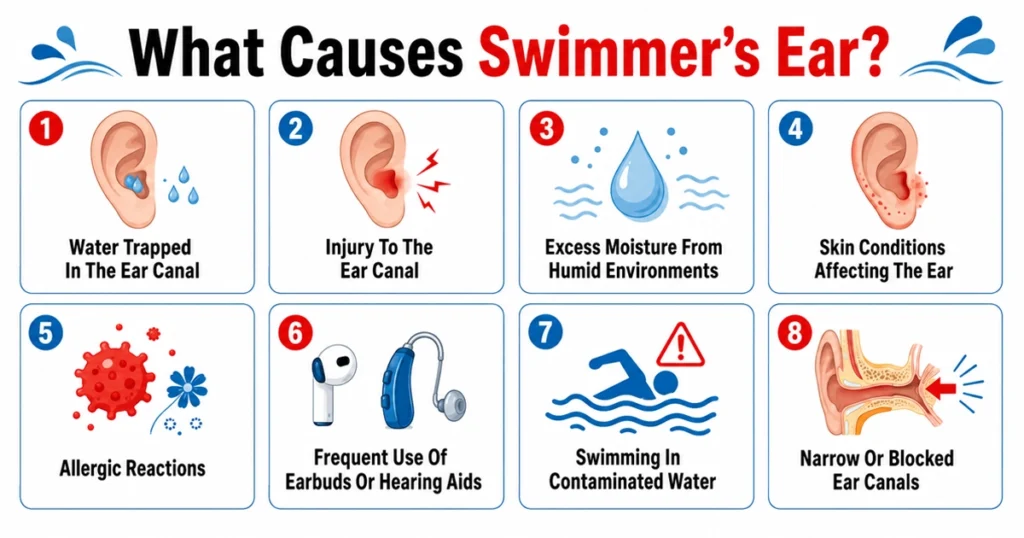
If you’re dealing with ear pain or irritation, it’s natural to wonder what caused it. Swimmer’s Ear (Outer Ear Infections) can develop for several reasons, and identifying the underlying cause is important for effective treatment and preventing future infections. Understanding the common risk factors can also help you protect your ears and know when to seek medical care.
1. Water Trapped In The Ear Canal
Water that remains in the ear after swimming, bathing, or showering creates a warm, moist environment where bacteria can multiply. This is the most common cause of swimmer’s ear, especially in people who spend a lot of time in the water. Moisture also softens the skin inside the ear canal, making it easier for germs to enter.
Treatment
- Gently dry the outer ear after water exposure.
- Use doctor-recommended drying ear drops if appropriate.
- Prescription antibiotic ear drops (prescribed by a doctor) if an infection develops.
- Keep the ear dry until it has healed.
2. Injury To The Ear Canal
Cleaning the ears with cotton swabs, fingernails, or other objects can scratch the delicate skin lining the ear canal. Even small injuries allow bacteria to enter and cause an infection. Avoid inserting anything into the ear unless advised by a healthcare provider.
Treatment
- Stop using cotton swabs or sharp objects in the ear.
- Keep the ear clean and dry.
- Prescription antibiotic or antibiotic-steroid ear drops (prescribed by a doctor) if infection is present.
- Seek medical evaluation for persistent pain or bleeding.
3. Excess Moisture From Humid Environments
Living in hot, humid climates or sweating heavily can keep the ear canal damp for long periods. Constant moisture weakens the ear’s natural protective barrier and increases the likelihood of bacterial growth. This risk is higher during summer months.
Treatment
- Dry the ears thoroughly after sweating.
- Wear moisture-wicking headwear if needed.
- Doctor-recommended preventive drying drops for frequent moisture exposure.
- Avoid prolonged moisture in the ear canal.
4. Skin Conditions Affecting The Ear
Skin disorders such as eczema, psoriasis, or seborrheic dermatitis can cause dryness, cracking, and inflammation inside the ear canal. Damaged skin makes it easier for bacteria or fungi to invade and trigger an infection. Proper management of these conditions lowers the risk.
Treatment
- Keep the skin condition under control.
- Avoid scratching the affected area.
- Prescription medicated creams or ear drops (prescribed by a doctor) when appropriate.
- Treat any secondary infection promptly.
5. Allergic Reactions
Hair products, hearing aids, earbuds, or certain earrings may trigger allergic reactions that irritate the ear canal. Ongoing inflammation weakens the skin’s protective barrier, making infection more likely. Identifying and avoiding the allergen is essential.
Treatment
- Stop using the product causing irritation.
- Keep the ear clean and dry.
- Prescription anti-inflammatory or medicated ear drops (prescribed by a doctor) if needed.
- Use hypoallergenic alternatives.
6. Frequent Use Of Earbuds Or Hearing Aids
Wearing earbuds or hearing aids for long periods can trap heat and moisture inside the ear canal. These devices may also cause friction, leading to irritation and tiny skin breaks where bacteria can enter. Proper cleaning and regular breaks help reduce the risk.
Treatment
- Clean hearing devices regularly.
- Remove devices periodically to let the ear dry.
- Prescription antibiotic ear drops (prescribed by a doctor) if infection develops.
- Replace damaged or poorly fitting devices.
7. Swimming In Contaminated Water
Swimming in lakes, rivers, hot tubs, or poorly maintained pools exposes the ear to higher levels of bacteria. If contaminated water remains trapped in the ear, it significantly increases the chance of infection. Using clean swimming facilities can help lower the risk.
Treatment
- Avoid swimming until the infection has healed.
- Dry the ears immediately after swimming.
- Prescription antibiotic ear drops (prescribed by a doctor) for bacterial infections.
- Seek medical care if symptoms worsen.
8. Narrow Or Blocked Ear Canals
Some people naturally have narrow ear canals or excess earwax that traps water inside the ear. This retained moisture creates favorable conditions for bacterial growth and recurrent swimmer’s ear. Structural differences may also make proper drainage more difficult.
Treatment
- Professional earwax removal (performed by a doctor) if blockage is present.
- Keep the ears dry after water exposure.
- Prescription medicated ear drops (prescribed by a doctor) when needed.
- Follow preventive ear care advice from your healthcare provider.
When To Go To The ER
While mild cases of Swimmer’s Ear (Outer Ear Infections) can often be treated with prescription ear drops, severe symptoms or rapidly worsening pain should never be ignored. Prompt emergency care can help prevent the infection from spreading and reduce the risk of serious complications.
- Severe ear pain that becomes worse despite treatment.
- High fever (above 101°F or 38.3°C).
- Swelling that spreads to the outer ear, face, or neck.
- Pus, bloody, or foul-smelling ear drainage.
- Sudden hearing loss or significant hearing changes.
- Severe redness or warmth around the ear.
- Difficulty opening the jaw because of pain or swelling.
- Dizziness, loss of balance, or persistent vomiting.
- Symptoms that do not improve within 48–72 hours of treatment.
- Swimmer’s ear symptoms in people with diabetes, weakened immune systems, or those receiving chemotherapy.
If ear pain becomes severe or symptoms continue to worsen, seek prompt medical care. Urgent care for earaches can provide evaluation and treatment to help relieve discomfort and address potential infections.
Home Remedies For Swimmer’s Ear
If symptoms are mild, some simple home care steps may help reduce discomfort and keep the ear dry while the body heals. However, these remedies should not replace medical treatment, especially if pain, discharge, or hearing changes are present. If symptoms worsen, professional evaluation is necessary.
- Warm Compress: Applying a warm, dry compress to the affected ear for 10–15 minutes can help reduce pain and improve comfort. It may also ease mild swelling and soothe irritation. Avoid applying excessive heat directly to the skin.
- Drying The Ear Gently: Keeping the ear dry is important for recovery. Tilt the head to help trapped water drain naturally and gently dry the outer ear with a clean towel. Do not insert cotton swabs or objects inside the ear canal.
- Over-The-Counter Pain Relief: Pain relievers such as acetaminophen or ibuprofen can help reduce ear pain and inflammation. These should be used as directed on the label or as recommended by a healthcare provider.
- Diluted Vinegar Solution (If Advised): A mixture of equal parts white vinegar and rubbing alcohol may help keep the ear dry and create an environment less favorable for bacteria. This should only be used if the eardrum is not damaged and preferably after medical advice.
- Avoid Water Exposure: Protect the ear from further moisture by avoiding swimming and keeping water out during bathing. Using earplugs or a shower cap can help prevent worsening of symptoms while healing.
If home care does not improve your symptoms or pain becomes more severe, do not delay seeking medical attention. Visit the nearest emergency room for proper evaluation and treatment to prevent the condition from worsening.
Swimmer’s Ear Care At Exceptional Emergency Centers
If you are dealing with Swimmer’s Ear (Outer Ear Infections), timely medical attention can help prevent the infection from worsening and spreading deeper into the ear. Our 24/7 emergency room provides prompt evaluation and treatment to address symptoms, reduce complications, and support faster recovery.
At Exceptional Emergency Centers, we focus on identifying the cause of your ear infection and delivering prompt, evidence-based treatment to support faster recovery. Our specialists guide patients through safe management options and help prevent complications or recurrence. Seeking care early ensures better outcomes and protects your long-term ear health.
Key Takeaways
- Early treatment of swimmer’s ear helps prevent complications and faster symptom relief.
- Trapped water in the ear canal is one of the most common risk factors.
- Increasing pain, discharge, or hearing changes should never be ignored.
- Home remedies may ease discomfort but do not replace medical care.
- Swimmers, hearing aid users, and people with skin conditions are at higher risk.
- Severe symptoms require urgent medical attention without delay.
Frequently Answered Questions
How Long Does Swimmer’s Ear Last?
With early and appropriate treatment, symptoms usually start improving within 48 to 72 hours, and most infections resolve within 7 to 10 days. Severe or untreated cases may take longer to fully heal and can cause ongoing discomfort.
What Is The Best Antibiotic For Swimmer’s Ear?
The most effective treatment is usually prescription antibiotic ear drops, which are chosen based on the severity and suspected bacteria causing the infection. Your healthcare provider will decide the most suitable option after examination.
How Long Does Swimmer’s Ear Last Without Treatment?
Without treatment, the infection can persist for several weeks and often becomes progressively worse. It may lead to increased pain, swelling, reduced hearing, and possible spread of infection to surrounding tissues.
How To Prevent Swimmer’s Ear?
Prevention includes thoroughly drying the ears after swimming or bathing, avoiding insertion of cotton swabs or objects into the ear canal, and keeping earbuds or hearing aids clean. These habits help maintain the ear’s natural protective barrier and reduce infection risk.
Do Ear Infections Go Away On Their Own?
Some mild ear infections may improve on their own, but many require medical treatment. If symptoms worsen, persist for more than a few days, or include severe pain, fever, or hearing changes, seek medical care promptly.