

When dealing with a severe, scratchy, and inflamed throat, you might wonder about the risk of spreading it to your family, friends, or coworkers. Because tonsillitis is most commonly caused by underlying viral or bacterial infections, the underlying illnesses themselves are highly contagious. They easily spread from person to person through respiratory droplets released during coughing or sneezing, or through direct contact like sharing utensils.
Understanding how it spreads, how long you remain infectious, and the primary causes of tonsillitis can help you take the right precautions. Seeking urgent care for sore throat ensures you not only treat the discomfort quickly but also prevent serious complications and widespread transmission.
What Is Tonsillitis?
Tonsillitis is the inflammation of the tonsils, which are the two oval-shaped pads of tissue situated at the back of the throat. Your tonsils act as the immune system’s first line of defense against illness-causing germs that enter through your mouth and nose. However, this function makes them particularly vulnerable to infection themselves, sometimes requiring a visit to a 24/7 emergency room to manage severe swelling and pain.
Also Read: How Contagious Is Strep Throat?
Dangerous Signs Of Tonsillitis You Shouldn’t Ignore
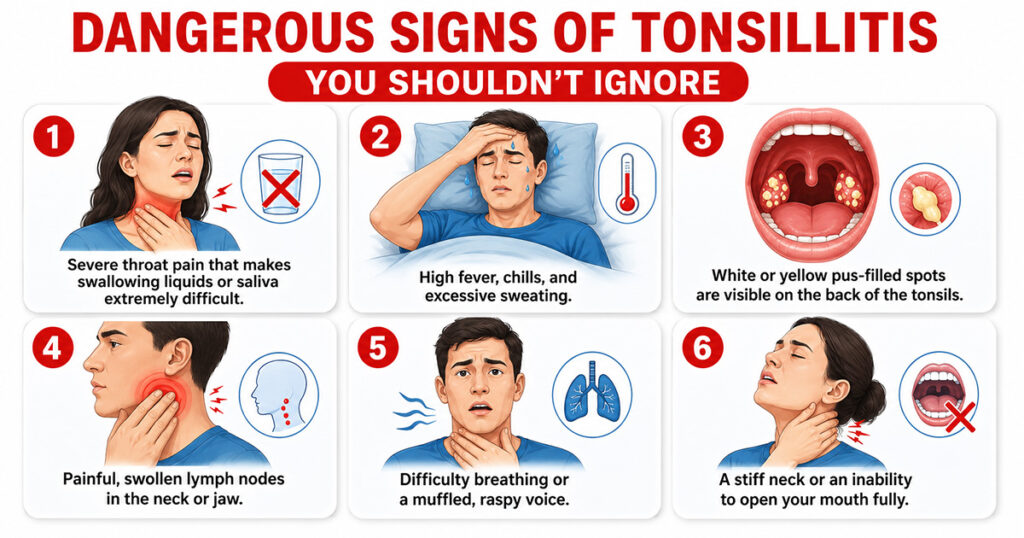
- Severe throat pain that makes swallowing liquids or saliva extremely difficult.
- High fever, chills, and excessive sweating.
- White or yellow pus-filled spots are visible on the back of the tonsils.
- Painful, swollen lymph nodes in the neck or jaw.
- Difficulty breathing or a muffled, raspy voice.
- A stiff neck or an inability to open your mouth fully.
Causes of Tonsillitis
To effectively treat the condition, medical professionals must first determine the specific pathogen causing the inflammation. The causes of tonsillitis generally fall into two categories, both of which require different medical approaches.
Viral Infections
The vast majority of tonsillitis cases are viral. Common viruses, such as those that cause the common cold, influenza (the flu), or the Epstein-Barr virus (which causes mononucleosis), frequently infect the tonsils. Viral tonsillitis typically involves a gradual onset of a sore throat, accompanied by a runny nose, mild fever, and coughing.
Bacterial Infections
Bacterial tonsillitis is less common but generally more severe. The most frequent culprit is Streptococcus pyogenes (group A streptococcus), the same bacteria that cause strep throat. Because bacterial infections can lead to severe secondary complications like rheumatic fever, state infectious diseases guidelines strongly advise seeking prompt medical testing if strep is suspected.
How Long Is Tonsillitis Contagious?
People frequently ask, “How long is tonsillitis contagious?” The answer depends entirely on whether a virus or bacteria caused the infection.
For viral cases, you are typically contagious for a few days before tonsillitis symptoms start until the fever subsides and you begin feeling better (usually 7 to 10 days). If your illness is bacterial, you can remain highly contagious for up to two weeks if left untreated. However, once a doctor prescribes a course of antibiotics, you are generally no longer contagious 24 to 48 hours after starting the medication. Since it spreads through saliva and respiratory droplets, is tonsillitis contagious through kissing? Yes, sharing drinks, utensils, or kissing an infected person significantly increases the likelihood of transmission.
Diagnosis of Tonsillitis
Because bacterial vs viral tonsillitis can look nearly identical to the naked eye, a formal diagnosis relies heavily on clinical evaluation and testing. A prompt and accurate diagnosis ensures you do not take unnecessary antibiotics for a virus or miss crucial medication for a bacterial infection.
- Physical Examination: A doctor will examine the throat for redness, swelling, and white spots, as well as feel the neck for enlarged lymph nodes.
- Rapid Strep Test: A quick swab of the back of the throat can detect group A streptococcus bacteria within minutes. Learning how long a strep throat test takes can ease anxiety during an ER visit.
- Throat Culture: If a rapid test is negative but a bacterial infection is still strongly suspected, a secondary culture is sent to the lab for definitive confirmation.
- Complete Blood Count (CBC): In severe cases, a Port Arthur emergency room doctor may draw blood to check immune cells, determining if the body is fighting a virus or bacteria.
When to Go to The ER?
Many people assume a sore throat is not a serious medical issue, but tonsillitis can rapidly escalate into a severe emergency. Waiting too long to get evaluated can result in blocked airways or abscesses forming behind the tonsils. Knowing when to go to the ER for tonsillitis can prevent life-threatening complications. Seek immediate emergency care if you experience:
- Significant difficulty breathing or a sudden feeling that the airway is swelling shut.
- An inability to swallow liquids, leading to severe dehydration.
- Extreme pain concentrated heavily on one side of the throat, which may indicate a peritonsillar abscess.
- Persistent, extremely high fevers that do not respond to over-the-counter fever reducers.
- Extreme fatigue, confusion, or a stiff neck.
Tonsillitis Treatment
Once a diagnosis is confirmed, a medical professional will recommend a targeted treatment plan. Treatment aims to reduce inflammation, manage the pain, and permanently eliminate the underlying infection. Proper management is also heavily emphasized by public health services to prevent the spread of illness in communities.
- Antibiotic Therapy: If group A strep or another bacterium is confirmed, a full course of antibiotics (like penicillin or amoxicillin) is prescribed. It is vital to finish all medication even if symptoms stop.
- Corticosteroids: For severe swelling that threatens to close the airway, a doctor may administer a steroid injection to rapidly decrease inflammation.
- Surgical Removal (Tonsillectomy): In cases of chronic, recurring infections that do not respond to medication, a doctor may recommend surgically removing the tonsils.
- IV Fluids: Administered at an ER near me for patients who have become severely dehydrated due to an inability to swallow water.
Home Remedies and Medical Relief
For viral cases, medical intervention focuses heavily on symptom relief. Rest, aggressive hydration, using a cool-mist humidifier, and taking over-the-counter pain medications like ibuprofen can drastically improve comfort while your immune system fights off the virus. Staying home until you are fever-free helps comply with local school health standards and prevents community outbreaks.
Tonsillitis Care At Exceptional Emergency Centers
Severe throat swelling and the inability to swallow are critical medical symptoms that cannot wait for a scheduled doctor’s appointment. When tonsillitis symptoms peak and you require urgent relief, a fast and accurate diagnosis is your best defense.
At Exceptional Emergency Centers, our board-certified physicians are available 24/7 to provide immediate evaluations for severe sore throats and airway concerns. With our fully equipped on-site laboratories, we can perform rapid testing to identify the exact cause of your pain. Whether you need immediate antibiotics, steroid treatments to reduce swelling, or IV fluids to combat dehydration, our team is ready to deliver fast, compassionate care.
Key Takeaways
- Tonsillitis is highly contagious when caused by viral or bacterial infections, spreading easily through close contact.
- Tonsillitis symptoms often include a severely sore throat, fever, white spots on the tonsils, and swollen lymph nodes.
- Bacterial infections (strep) require prescription antibiotics, while viral infections rely on symptom management.
- You remain contagious until the fever breaks in viral cases, or until you have been on antibiotics for at least 24 hours in bacterial cases.
- Seek immediate ER care if you experience difficulty breathing, extreme one-sided throat pain, or an inability to swallow fluids.
- Exceptional Emergency Centers offer 24/7 rapid testing and emergency treatments for severe tonsillitis complications.