
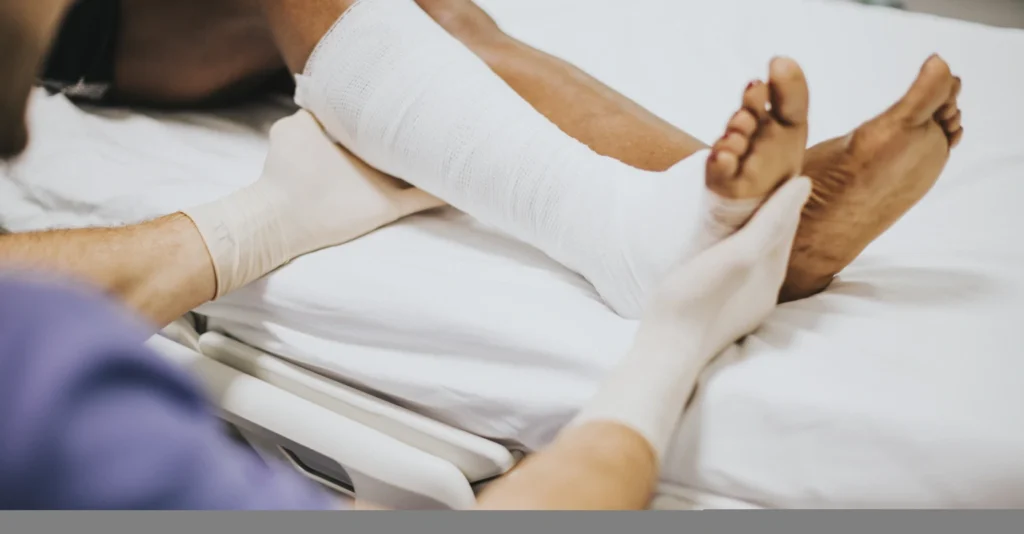
It can be overwhelming and painful when you or someone close suddenly suffers an injury that limits movement or causes intense discomfort. Even simple tasks like standing, walking, or lifting may become difficult and frightening. In such moments, getting clarity about the injury becomes important for peace of mind and proper care.
In some cases, what seems like a minor accident can actually indicate a more serious bone injury that needs urgent medical attention. Delaying evaluation may increase pain, swelling, and the risk of improper healing or long-term complications. Visit Amarillo emergency room for timely assessment and care to support proper recovery.
What Is A Fracture?
A fracture is a break or crack in a bone that occurs due to trauma, stress, or weakened bone structure. It can range from a small hairline crack to a complete break, often causing pain, swelling, bruising, and limited movement. Prompt medical evaluation is important to ensure proper alignment and prevent complications like improper healing or long-term disability.
A population-based study published in JAMA Internal Medicine (indexed on NIH/NCBI) found that the age-adjusted hip fracture incidence decreased by 4.4% per year in women and 1.9% per year in men over a 40-year follow-up period.
Bone Fracture Symptoms To Watch For
- Sudden, sharp pain at the injury site that worsens with movement.
- Swelling and bruising around the affected area.
- Visible deformity or abnormal alignment of the limb.
- Difficulty or inability to move or put weight on the injured part.
- Tenderness when touching the area even lightly.
- A cracking or snapping sound at the time of injury in some cases.
- Numbness or tingling if nearby nerves are affected.
If you notice these warning signs after an injury, prompt evaluation is important to confirm the severity of the damage. Urgent care for fracture can provide timely assessment and treatment to help manage pain and support healing.
Types Of Bone Fractures
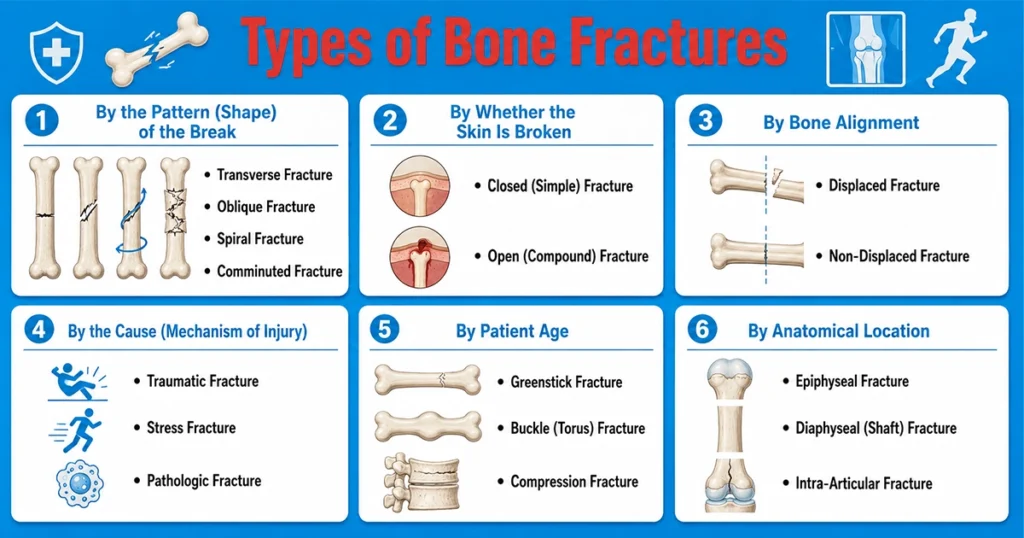
Understanding the different types of bone fractures can help you recognize why some injuries heal quickly while others require urgent treatment and careful monitoring. Doctors classify fractures based on the pattern of the break, skin involvement, bone alignment, cause, and location to understand the severity of the injury. This classification helps create the right treatment approach and supports proper recovery while reducing the risk of complications.
By The Pattern (Shape) Of The Break
This classification describes the shape and direction of the fracture line in the bone. The pattern helps doctors understand the force behind the injury and determine how stable or complex the fracture may be.
Transverse Fracture
A transverse fracture is a straight break that runs across the bone at a right angle. It is usually caused by a strong direct force and may involve complete separation of the bone. Treatment depends on the location and stability of the fracture.
Oblique Fracture
An oblique fracture occurs when the bone breaks at a diagonal angle rather than straight across. These fractures are often caused by bending or combined forces and may have a higher chance of shifting during healing.
Spiral Fracture
A spiral fracture happens when a twisting force causes the bone to break in a spiral pattern. It is commonly associated with sports injuries, falls, or sudden rotational movements and may require careful alignment during treatment.
Comminuted Fracture
A comminuted fracture occurs when the bone breaks into multiple pieces. It is usually caused by high-impact injuries and can be more difficult to treat because the bone fragments may require surgical repair.
By Whether The Skin Is Broken
This classification focuses on whether the fracture remains inside the body or creates an opening through the skin. It is especially important because open fractures have a higher risk of infection and complications.
Closed (Simple) Fracture
A closed fracture occurs when the bone breaks but does not break through the skin. Although there is no open wound, it can still cause severe pain, swelling, bruising, and difficulty moving the affected area.
Open (Compound) Fracture
An open fracture occurs when the broken bone pierces the skin or creates an open wound near the fracture. This type of injury requires urgent medical attention because of the increased risk of infection and tissue damage.
By Bone Alignment
This classification explains whether the broken pieces of bone stay in their original position or move out of place. Alignment affects healing and determines whether additional procedures are needed.
Displaced Fracture
A displaced fracture occurs when the broken bone pieces move away from their normal alignment. These fractures may require manipulation, casting, or surgery to restore proper positioning and function.
Non-Displaced Fracture
A non-displaced fracture occurs when the bone cracks or breaks but remains properly aligned. These fractures often heal with support such as a cast or splint, depending on the injury.
By The Cause (Mechanism Of Injury)
This classification explains what caused the fracture, helping doctors understand the injury pattern and identify factors that may affect healing.
Traumatic Fracture
A traumatic fracture occurs due to sudden force, such as falls, accidents, sports injuries, or direct impact. These fractures can range from mild cracks to severe breaks depending on the force involved.
Stress Fracture
A stress fracture is a small crack in the bone caused by repeated stress or overuse. It commonly affects athletes and people who increase physical activity too quickly without allowing enough recovery time.
Pathologic Fracture
A pathologic fracture occurs when a weakened bone breaks due to an underlying condition such as osteoporosis or certain bone diseases. These fractures may happen with little or no major injury.
By Patient Age
Some fractures are more common in certain age groups because bone strength, flexibility, and structure change throughout life. Understanding these differences helps doctors provide age-appropriate treatment and prevent complications during healing.
Greenstick Fracture
A greenstick fracture is an incomplete break where the bone bends and cracks rather than fully separating. It is commonly seen in children because their bones are more flexible than adult bones.
Buckle (Torus) Fracture
A buckle fracture occurs when one side of the bone compresses and becomes raised or bent. It is common in children and usually results from falls or mild trauma. These fractures are generally stable but still require medical evaluation to ensure proper recovery.
Compression Fracture
A compression fracture occurs when a bone collapses under pressure, often affecting the spine. It is commonly associated with weakened bones from conditions such as osteoporosis. Treatment focuses on pain control, bone health management, and preventing further fractures.
By Anatomical Location
Fractures can also be classified by the specific area of the bone where the break occurs. The location of the fracture can influence symptoms, treatment options, healing time, and the risk of affecting nearby joints or growth areas.
Epiphyseal Fracture
An epiphyseal fracture affects the growth plate of a bone, which is especially important in children and teenagers. Proper treatment is needed to prevent possible growth problems. Regular monitoring may be required to ensure the bone develops normally.
Diaphyseal (Shaft) Fracture
A diaphyseal fracture occurs in the long middle section of a bone. These fractures may require longer healing periods depending on the severity and the bone involved. Treatment often focuses on restoring alignment and maintaining stability during recovery.
Intra-Articular Fracture
An intra-articular fracture extends into a joint surface. Because it can affect joint movement and function, accurate treatment is important to reduce the risk of long-term stiffness or arthritis. Proper alignment of the joint surface is essential for better recovery.
When to Go to the ER
A bone fracture can sometimes be more serious than it first appears, especially if there is severe pain, visible deformity, or signs of complications. In such cases, delaying treatment can lead to long-term damage, infection, or improper healing. It is important to seek emergency care immediately if symptoms suggest a severe or unstable fracture.
- Severe pain that does not improve with rest or immobilization.
- Visible bone sticking out through the skin.
- Obvious deformity or misalignment of the injured area.
- Inability to move or bear weight on the affected limb.
- Heavy bleeding or an open wound at the injury site.
- Numbness, tingling, or loss of sensation in the limb.
- Swelling that increases rapidly or becomes extreme.
- Signs of poor circulation such as pale or cold skin.
If you experience any of these serious fracture symptoms, do not delay medical attention. Visit the closest emergency room near me for prompt evaluation and treatment to prevent further complications.
Fracture Care At Exceptional Emergency Centers
A suspected fracture should be evaluated quickly to reduce pain, prevent complications, and support proper healing. Even injuries that seem minor may require medical assessment to ensure the bone heals correctly. Our 24/7 emergency room provides prompt evaluation and care for suspected fractures and other urgent injuries.
At Exceptional Emergency Centers, our team provides prompt care for different types of fractures, including evaluation, pain management, and treatment guidance. Early medical attention helps protect mobility and supports a safer recovery.
Key Takeaways
- Fractures are partial or complete breaks in a bone that can vary in severity and require proper evaluation for safe healing.
- Bone fractures are classified by their pattern, skin involvement, alignment, cause, patient age, and anatomical location.
- Common fracture types include closed, open, displaced, non-displaced, stress, traumatic, greenstick, and compression fractures.
- Symptoms of a fracture may include pain, swelling, bruising, deformity, limited movement, and difficulty bearing weight.
- Some fractures require emergency care, especially when there is severe pain, open wounds, numbness, deformity, or circulation problems.
- Early medical evaluation helps prevent complications and supports proper bone healing and recovery.
Frequently Asked Questions
How Long Can A Stress Fracture Take To Heal?
Most stress fractures heal within 6 to 8 weeks with proper rest and reduced activity. Recovery time can vary depending on the fracture location, severity, and overall health. Some cases may take several months to fully heal.
Is A Fracture The Same As A Break?
Yes. A fracture and a break mean the same thing, a bone has cracked or broken. “Fracture” is the medical term commonly used by healthcare professionals.
How Long Does A Fractured Bone Take To Heal?
Most fractured bones heal within 6 to 12 weeks, but healing time depends on the type and location of the fracture, age, health condition, and treatment approach. More severe fractures may require additional time to recover.
How Serious Is A Compression Fracture Of The Spine?
A spinal compression fracture can range from mild to serious depending on the damage. Some cases may cause pain and limited movement, while others can lead to long-term discomfort, posture changes, or nerve-related issues. Medical evaluation is important for proper treatment.