

Staphylococcal infections are bacterial infections caused by Staphylococcus bacteria, commonly known as staph. These bacteria often live harmlessly on the skin or inside the nose, but they can cause infection when they enter the body through cuts, wounds, burns, or other breaks in the skin. While some staph infections remain limited to the skin, others can become serious and spread to deeper tissues, bones, joints, lungs, or the bloodstream.
Ignoring signs of a worsening staph infection can allow bacteria to spread and increase the risk of severe complications, including sepsis, a life-threatening response to infection. If you experience increasing redness, swelling, severe pain, pus drainage, fever, chills, or signs that the infection is spreading, seek immediate medical care at our Port Arthur emergency room for prompt evaluation and treatment.
Dangerous Staphylococcal Infection Symptoms To Watch For
Staphylococcal infections can cause different symptoms depending on where the bacteria enter the body and how severe the infection becomes. Early signs may appear similar to a minor skin problem, but some infections can rapidly worsen and require emergency care. Recognizing warning signs early can help you receive treatment before the infection spreads. Common symptoms of staphylococcal infections include:
- Red, swollen, or painful areas of skin that continue to grow.
- Warmth and tenderness around an infected area.
- Pus-filled bumps, boils, or abscesses.
- Open sores that drain fluid or fail to heal.
- Fever and chills.
- Increasing pain around a wound.
- Swelling that spreads beyond the original infection site.
- Red streaks extending from the infected area.
- Fatigue, weakness, or feeling generally unwell.
- Fast heartbeat, confusion, dizziness, or trouble breathing, which may indicate a serious infection.
If a staph infection is accompanied by a high fever or worsening symptoms, seek fever urgent care to prevent complications.
What Causes Staphylococcal Infections?
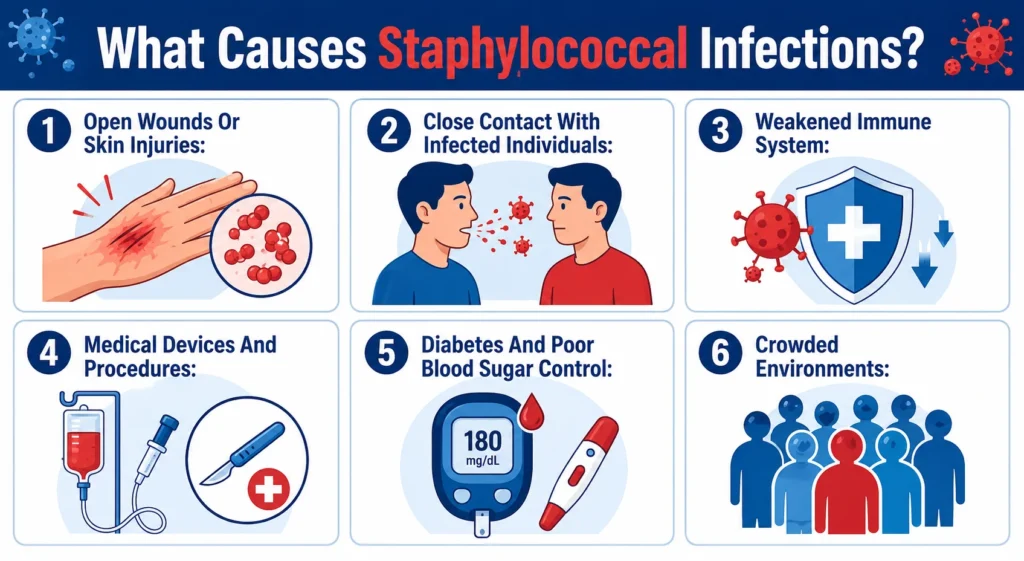
Staphylococcal infections occur when Staphylococcus bacteria enter the body and begin multiplying. These bacteria commonly live on the skin and usually do not cause problems unless they enter through an injury or weakened area of the body. Several factors can increase your risk of developing a staph infection.
- Open Wounds Or Skin Injuries: Cuts, scrapes, burns, surgical wounds, and insect bites can create openings where staph bacteria enter the body. Once inside, bacteria can multiply and cause redness, swelling, pain, and drainage. Proper wound cleaning and covering can help reduce the risk of infection.
- Close Contact With Infected Individuals: Staphylococcus bacteria can spread through direct skin-to-skin contact or by touching contaminated surfaces. Sharing personal items such as towels, razors, clothing, or sports equipment can increase the chance of transmission.
- Weakened Immune System: People with weakened immune systems may have more difficulty fighting bacterial infections. Certain medical conditions or treatments that affect immune function can increase the risk of developing severe staph infections.
- Medical Devices And Procedures: Staph bacteria can enter the body through medical devices such as IV lines, catheters, or surgical sites. These infections can become serious because bacteria may spread beyond the original area and affect deeper tissues.
- Diabetes And Poor Blood Sugar Control: High blood sugar levels can weaken the immune response and slow wound healing. People with poorly controlled diabetes may have a higher risk of developing serious staphylococcal infections.
- Crowded Environments: Staph bacteria can spread more easily in places where people have close physical contact, share equipment, or have limited access to proper hygiene practices.
Types Of Staphylococcal Infections
Staphylococcal infections can affect different parts of the body. Some remain limited to the skin, while others can spread and cause serious health problems. Understanding the different types can help you recognize when symptoms require urgent medical attention.
Staph Skin Infections
Skin infections are the most common type of staphylococcal infection. They may cause boils, abscesses, cellulitis, or infected wounds. Symptoms often include:
- Redness.
- Swelling.
- Pain or tenderness.
- Warm skin around the affected area.
- Pus or fluid drainage.
Methicillin-Resistant Staphylococcus Aureus (MRSA)
MRSA is a type of staph infection that is resistant to certain commonly used antibiotics. Because of this resistance, MRSA infections can be more difficult to treat. MRSA often affects the skin but can become dangerous if it spreads into deeper tissues or the bloodstream. Warning signs may include:
- Painful red bumps.
- Swelling.
- Warmth around the infected area.
- Drainage or pus.
- Fever.
Bloodstream Infection (Bacteremia)
When staph bacteria enter the bloodstream, the infection can spread throughout the body. This condition can become life-threatening without immediate treatment. Symptoms may include:
- High fever.
- Chills.
- Fast heart rate.
- Low blood pressure.
- Confusion.
- Severe weakness.
Staphylococcal Pneumonia
Staph bacteria can infect the lungs and cause pneumonia, especially in people who have weakened immune systems or recent hospital stays. Symptoms may include:
- Persistent cough.
- Chest pain.
- Shortness of breath.
- Fever.
- Fatigue.
- Difficulty breathing.
Bone And Joint Infections
Staphylococcus bacteria can spread to bones and joints, causing serious infections such as osteomyelitis or septic arthritis. Symptoms may include:
- Severe pain.
- Swelling.
- Warmth around the joint.
- Difficulty moving.
- Fever.
Staphylococcal Food Poisoning
Some staph bacteria produce toxins that contaminate food and cause sudden illness. Symptoms usually appear quickly and may include:
- Nausea.
- Vomiting.
- Stomach cramps.
- Diarrhea.
Also Read: What Is a Lesion
How Are Staphylococcal Infections Diagnosed?
Doctors diagnose staphylococcal infections by evaluating symptoms, examining the affected area, and performing tests when necessary.
- Physical Examination: A healthcare provider examines the infected area for signs such as redness, swelling, warmth, drainage, and tenderness. This helps determine the severity of the infection and whether it may be spreading.
- Wound Culture: A sample from the infected area may be collected and tested to identify the specific bacteria causing the infection. This helps doctors choose the most effective antibiotic treatment.
- Blood Tests: Blood tests can help determine whether the infection has entered the bloodstream and how the body is responding to the infection.
- Imaging Tests: If doctors suspect the infection has spread to deeper tissues, bones, or joints, imaging tests may be used to evaluate the extent of the infection and identify complications.
If you are experiencing worsening symptoms and searching for an emergency room near me, prompt evaluation can help prevent serious complications.
Staphylococcal Infection Treatment Options
Treatment depends on the location, severity, and type of staphylococcal infection. Some infections require simple care, while others need emergency treatment.
- Antibiotics: Antibiotics are commonly used to treat staphylococcal infections. The specific medication depends on the type of bacteria causing the infection and whether it is resistant to certain antibiotics, such as MRSA.
- Abscess Drainage: Many staph abscesses contain trapped pus that needs to be drained by a healthcare professional. Attempting to drain an abscess at home can spread bacteria, worsen symptoms, and delay proper treatment.
- Intravenous Antibiotics: Severe staph infections may require IV antibiotics, especially when bacteria have spread to the bloodstream, deeper tissues, bones, or joints. This allows medication to work more quickly throughout the body.
- Wound Care: Proper wound cleaning, dressing changes, and follow-up care help support healing, reduce the risk of complications, and prevent the infection from returning.
When To Go To The ER For A Staphylococcal Infection
While some staph infections can be treated with routine medical care, certain symptoms indicate a serious infection that requires immediate emergency evaluation. Seek emergency care if you experience:
- Rapidly Spreading Redness Or Swelling: Skin redness or swelling that expands quickly may indicate that the infection is spreading beyond the original area and requires immediate medical evaluation.
- Severe Pain: Increasing or intense pain around an infected area may signal a deeper infection that needs urgent treatment.
- High Fever Or Chills: A fever accompanied by worsening infection symptoms may indicate that bacteria are affecting the entire body and require prompt medical attention.
- Red Streaks On The Skin: Red lines extending away from a wound may be a warning sign that the infection is spreading through the lymphatic system.
- Large Or Painful Abscess: Deep, swollen, or painful abscesses may require professional drainage and medical treatment to prevent the infection from worsening.
- Signs Of Sepsis: Seek emergency care if you experience warning signs such as: Confusion, Rapid breathing, Fast heartbeat, Extreme weakness, Dizziness, Low blood pressure.
- Difficulty Breathing: Breathing problems may indicate that the infection has spread to the lungs or bloodstream and requires immediate emergency treatment.
- Infection After Surgery: Increasing pain, swelling, redness, warmth, or drainage from a surgical site should be evaluated promptly to prevent serious complications.
Staphylococcal Infection Care At Exceptional Emergency Centers
A staphylococcal infection can become serious when bacteria spread beyond the skin and reach deeper tissues or the bloodstream. Early emergency evaluation is important when symptoms worsen, fever develops, pain increases, or signs of spreading infection appear. Prompt treatment can help prevent complications and reduce the risk of severe conditions such as sepsis.
With an average ER wait time of just 9 minutes, Exceptional Emergency Centers provides fast evaluation and treatment for infections requiring immediate attention. Our emergency team offers advanced diagnostic services, assesses infection severity, performs necessary testing, provides appropriate treatment, and guides you through the next steps toward recovery. Whether you have a painful abscess, worsening skin infection, fever, or concerns about a spreading infection, our emergency rooms are available 24/7.
Key Takeaways
- Staphylococcal infections are caused by Staphylococcus bacteria that enter the body through wounds or damaged skin.
- Some staph infections are minor, while others can spread quickly and become life-threatening.
- Common symptoms include redness, swelling, pain, pus drainage, and fever.
- MRSA is a resistant type of staph infection that may require specialized treatment.
- Severe infections can spread to the bloodstream, lungs, bones, and joints.
- Treatment may include antibiotics, drainage, wound care, or IV medications.
- Seek emergency care for spreading redness, severe pain, high fever, breathing problems, confusion, or signs of sepsis.
- Early treatment can help prevent serious complications.
Frequently Asked Questions
What Does A Staphylococcal Infection Look Like?
A staphylococcal infection may appear as a red, swollen, painful area of skin with warmth, tenderness, or pus drainage. Some infections develop into boils or abscesses, while severe infections may cause fever and other body-wide symptoms.
Are Staphylococcal Infections Serious?
Some staph infections are mild, but others can become serious if bacteria spread to the bloodstream, lungs, bones, or joints. Severe symptoms require immediate medical evaluation.
Can A Staph Infection Go Away Without Treatment?
Some minor infections may improve with proper wound care, but many require medical treatment. Delaying care can allow the infection to worsen or spread.
How Long Does A Staph Infection Take To Heal?
Recovery time depends on the severity and location of the infection. Minor skin infections may improve quickly, while deeper infections may require longer treatment.
When Should I Go To The ER For A Staph Infection?
Go to the ER if you have rapidly spreading redness, severe pain, high fever, confusion, difficulty breathing, a large abscess, or signs that the infection is spreading throughout your body. Prompt treatment can help prevent serious complications.