

Hair loss can feel deeply personal, especially when you suddenly notice a smooth bald patch while brushing your hair or looking in the mirror. What is alopecia areata? It is an autoimmune condition that causes the immune system to mistakenly attack healthy hair follicles, leading to sudden and often patchy hair loss.
Although alopecia areata is not usually life-threatening, sudden or unexplained hair loss should not be ignored. Getting medical attention can help identify the cause and rule out other conditions, and if your symptoms are sudden or accompanied by other concerning signs, prompt evaluation at our Amarillo emergency room may be appropriate.
What Causes Alopecia Areata?
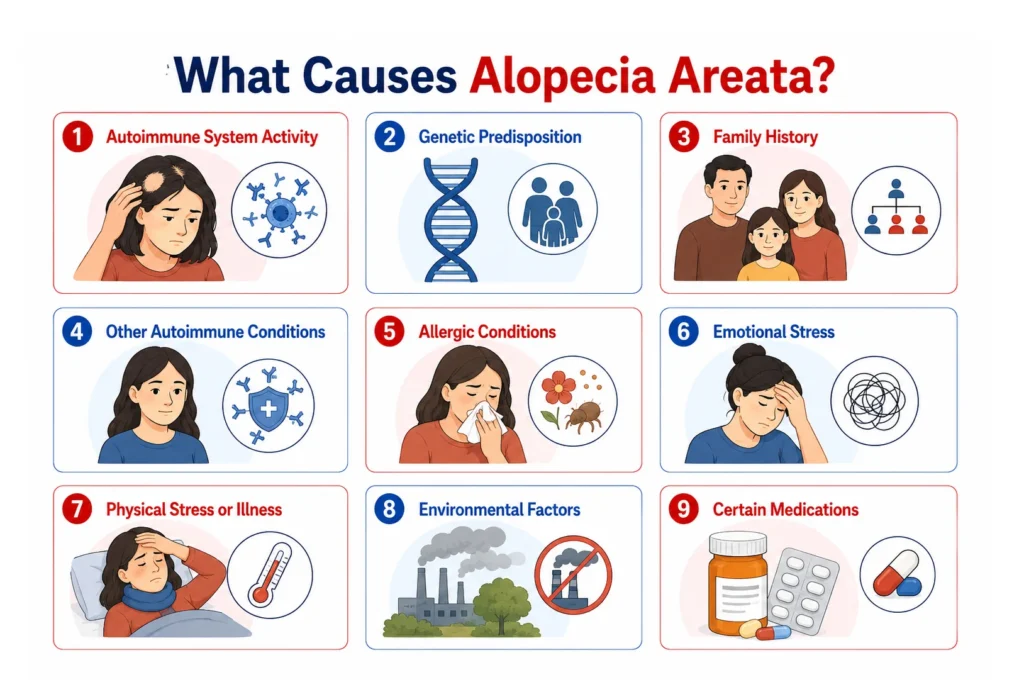
Seeing sudden patches of hair loss can leave you searching for answers and wondering why it happened. The exact cause of alopecia areata is not completely known, and there is rarely one single reason behind the condition. Instead, research suggests that several factors can work together to make some people more susceptible to this autoimmune form of hair loss.
Autoimmune System Activity
Alopecia areata is primarily an autoimmune condition. The immune system mistakenly attacks healthy hair follicles, causing inflammation that disrupts normal hair growth. This can lead to sudden, smooth, round patches of hair loss on the scalp or other parts of the body. Fortunately, the hair follicles are usually not permanently destroyed, so regrowth may be possible.
Genetic Predisposition
Genetics can play an important role in a person’s susceptibility to alopecia areata. Having a close family member with the condition may increase the risk, although many people develop it without any known family history. Researchers have identified genes involved in immune system function that may contribute to the condition.
Family History
A family history of alopecia areata can increase the likelihood of developing the condition. However, inheriting genetic susceptibility does not mean that a person will definitely experience patchy hair loss. The condition appears to develop through a complex interaction between inherited factors and other influences that researchers are still investigating.
Other Autoimmune Conditions
People with certain autoimmune conditions may have a higher risk of developing alopecia areata. Conditions linked with an increased risk include autoimmune thyroid disease, vitiligo, and psoriasis. These associations suggest that abnormalities in immune system regulation may contribute to why some people are more susceptible to autoimmune hair loss.
Allergic Conditions
Certain allergic or atopic conditions are also associated with a higher risk of alopecia areata. These include atopic dermatitis, hay fever, and asthma. Having one of these conditions does not mean alopecia areata will develop, but the association may reflect underlying differences in how the immune system responds and functions.
Emotional Stress
Some people notice patchy hair loss after a period of intense emotional stress or a major personal crisis. Stress is not considered a proven direct cause of alopecia areata, but it may act as a trigger in someone who already has a genetic or immune susceptibility. Importantly, people should not blame themselves for developing the condition.
Physical Stress or Illness
A significant illness or physical stress on the body may sometimes precede the onset of alopecia areata in susceptible individuals. Researchers believe these events could potentially influence immune system activity, although the exact relationship is not fully understood. In many cases, however, there is no obvious illness or event that explains when the hair loss began.
Environmental Factors
Environmental influences may also contribute to the development of alopecia areata in genetically susceptible people. Researchers continue to investigate which external factors may affect immune activity and trigger an abnormal response against hair follicles. Because these factors can vary between individuals, it is often impossible to identify one specific trigger for every case.
Certain Medications
In rare situations, certain medications may be associated with alopecia areata. For example, the American Academy of Dermatology notes that the cancer immunotherapy drug nivolumab can trigger alopecia areata in some patients. If you develop sudden hair loss after starting a new medication, speak with your healthcare provider rather than stopping a prescribed treatment on your own.
Dangerous Alopecia Areata Symptoms
Alopecia areata itself is usually not life-threatening, but sudden or rapidly worsening hair loss can be distressing and may require prompt medical evaluation. Severe or widespread symptoms can indicate extensive alopecia areata, while redness, swelling, severe pain, or signs of infection may suggest a different condition that needs urgent care.
- Sudden round or oval bald patches on the scalp.
- Rapidly spreading or worsening hair loss.
- Multiple bald patches that join together into larger areas.
- Significant or complete loss of scalp hair.
- Loss of eyebrows or eyelashes.
- Widespread hair loss affecting other areas of the body.
- Tingling, burning, or itching before or during hair loss.
- Noticeable nail changes, including pitting, splitting, or brittle nails.
- Severe eye irritation after losing eyelashes or eyebrows.
- Redness, swelling, intense pain, sores, or pus on the scalp, which may indicate another condition or infection rather than typical alopecia areata.
If you are experiencing sudden or severe symptoms and searching for an ER near me, seek prompt medical attention, especially when hair loss is accompanied by severe scalp pain, swelling, signs of infection, or other concerning symptoms.
How Common Is Alopecia Areata?
Alopecia areata is a relatively common autoimmune condition that can affect people of all ages, although the severity and pattern of hair loss can vary widely. Research suggests that approximately 2% of people may develop alopecia areata during their lifetime. A large U.S. cross-sectional study found a self-reported lifetime prevalence of 2.51%, showing that millions of people may experience this form of sudden hair loss.
When to Go to the ER for Alopecia Areata
Alopecia areata is usually not an emergency, but certain symptoms occurring with hair loss may signal another serious condition. Seek emergency care if you develop severe or rapidly worsening symptoms that require immediate medical attention.
- Severe swelling of the face, lips, tongue, or throat.
- Difficulty breathing or swallowing.
- A rapidly spreading rash or widespread skin blistering.
- High fever with severe scalp swelling or tenderness.
- Pus, open sores, or rapidly worsening scalp changes.
- Severe eye pain or sudden vision changes.
- Fainting, confusion, or severe unexplained weakness.
- Hair loss or scalp damage after a serious injury or chemical exposure.
How Is Alopecia Areata Treated?
Hair loss from alopecia areata can be difficult to cope with, but treatment may help encourage regrowth. The best option depends on the amount of hair loss, its location, and your overall health. Some people experience regrowth without treatment, while others may need medical care.
- Watchful Waiting: Some patches may regrow naturally without treatment, especially in mild cases.
- Over-The-Counter Minoxidil: This may support hair regrowth. Most doctors recommend using it under medical guidance because it does not treat the underlying autoimmune condition.
- Topical Corticosteroids: Prescription creams or lotions may help reduce inflammation. Most doctors recommend them based on the severity and location of hair loss.
- Corticosteroid Injections: Injections into bald patches may encourage regrowth. Most doctors recommend them for certain cases of patchy hair loss.
- JAK Inhibitors: These prescription medicines target immune pathways involved in alopecia areata. Most doctors recommend them only after evaluating potential risks and benefits.
- Topical Immunotherapy: This specialized treatment may be considered for extensive or persistent hair loss.
- Anthralin: This prescription topical treatment may help stimulate hair regrowth in some people. Most doctors recommend using it exactly as prescribed.
- Gentle Hair Care and Cosmetic Options: Wigs, scarves, and gentle hair care can help protect the scalp and manage the emotional effects of hair loss.
- Emerging Procedures: Treatments such as platelet-rich plasma may be considered, but more research is needed to confirm their effectiveness.
Here is a version tailored to alopecia areata with the same style and urgency:
Exceptional Emergency Care for Sudden Hair Loss
Sudden or severe hair loss can be concerning, especially when it occurs with scalp pain, swelling, signs of infection, or other unusual symptoms. At Exceptional Emergency Centers, our experienced emergency physicians are available in our 24/7 emergency room to evaluate urgent symptoms and provide prompt medical care.
Our centers provide emergency evaluations, on-site laboratory testing, imaging when medically necessary, and treatment for urgent conditions that may cause sudden hair loss or scalp symptoms. With an ER wait time of just 11 minutes, you can receive timely medical attention when concerning symptoms that require emergency evaluation.
Key Takeaways
- Alopecia areata is an autoimmune condition that causes sudden, often patchy hair loss.
- The immune system mistakenly attacks healthy hair follicles.
- Genetics, immune system activity, and other factors may contribute to its development.
- Alopecia areata can affect the scalp, eyebrows, eyelashes, and other parts of the body.
- Treatment may help encourage hair regrowth, depending on the severity of hair loss.
- Alopecia areata is usually not an emergency, but severe scalp symptoms or sudden concerning symptoms should be evaluated promptly.
- Seek emergency care for symptoms such as severe swelling, difficulty breathing, high fever, or signs of a serious infection.
Frequently Asked Questions
Will Alopecia Areata Go Away?
Alopecia areata is unpredictable, and hair may regrow on its own in some people. However, hair loss can return, and there is currently no permanent cure. Treatment may help encourage regrowth, especially when hair loss is extensive or persistent.
Is Alopecia Areata Contagious?
No, alopecia areata is not contagious. You cannot catch it through physical contact, sharing personal items, or being near someone with the condition. It occurs when the immune system mistakenly attacks hair follicles.
Can Alopecia Areata Cause Permanent Hair Loss?
Alopecia areata does not usually destroy the hair follicles, so regrowth is possible. However, the amount and timing of regrowth can vary, and some people may experience repeated episodes or long-lasting hair loss.