

Many people wonder whether asthma runs in families, especially after seeing a parent, sibling, or child struggle with breathing problems. Yes, asthma can be genetic, but having a family history does not guarantee that you will develop it. Inherited genes can increase your risk, yet other factors also play a role in whether the condition develops.
Breathing problems should never be ignored, particularly if they become sudden, severe, or are accompanied by wheezing, chest tightness, or difficulty speaking. While a genetic risk does not always lead to asthma, any signs of serious breathing trouble require immediate medical evaluation. Early recognition and prompt emergency care can be lifesaving when symptoms rapidly worsen. Our emergency rooms in Orange County provide timely evaluation and treatment for asthma-related breathing concerns.
What Is Asthma?
Asthma is a chronic disease that affects the airways in the lungs, causing them to become inflamed and overly sensitive. During an asthma flare-up, the airways can narrow, swell, and produce extra mucus, making it difficult to breathe. Symptoms may come and go or worsen after exposure to triggers such as allergens, exercise, or respiratory infections. Although asthma cannot always be cured, it can often be managed effectively with proper medical care and regular monitoring.
NIH Study: According to the National Heart, Lung, and Blood Institute (NHLBI), approximately 1 in 13 people in the United States (about 7.7% of the population) have asthma, making it one of the most common chronic respiratory diseases.
What Does It Mean If Asthma Is Genetic?
Finding out that asthma can run in families can be concerning, but a genetic link does not mean you will definitely develop the condition. It simply means you may have a higher inherited risk than someone without a family history. Your environment, lifestyle, and exposure to triggers also influence whether asthma develops. Knowing your family history can help you recognize symptoms early and seek timely medical care.
- Inherited Risk, Not a Guarantee: Having a parent or sibling with asthma increases your risk, but many people with a family history never develop the condition.
- Multiple Genes Are Involved: Asthma is linked to several genes that affect the immune system and airway function rather than a single asthma gene.
- Environmental Triggers Still Matter: Allergens, smoke, pollution, and respiratory infections often work alongside genetic factors to trigger asthma.
- Symptoms And Severity Can Differ: Even within the same family, asthma symptoms and severity can vary from person to person.
- Early Monitoring Is Important: Knowing your family history can help you recognize symptoms early and receive prompt diagnosis and treatment.
If asthma symptoms occur with fever or infection signs, seek prompt care, as respiratory infections can trigger severe asthma flare-ups. A fever emergency room can provide evaluation and treatment when symptoms worsen.
How Is Asthma Inherited?
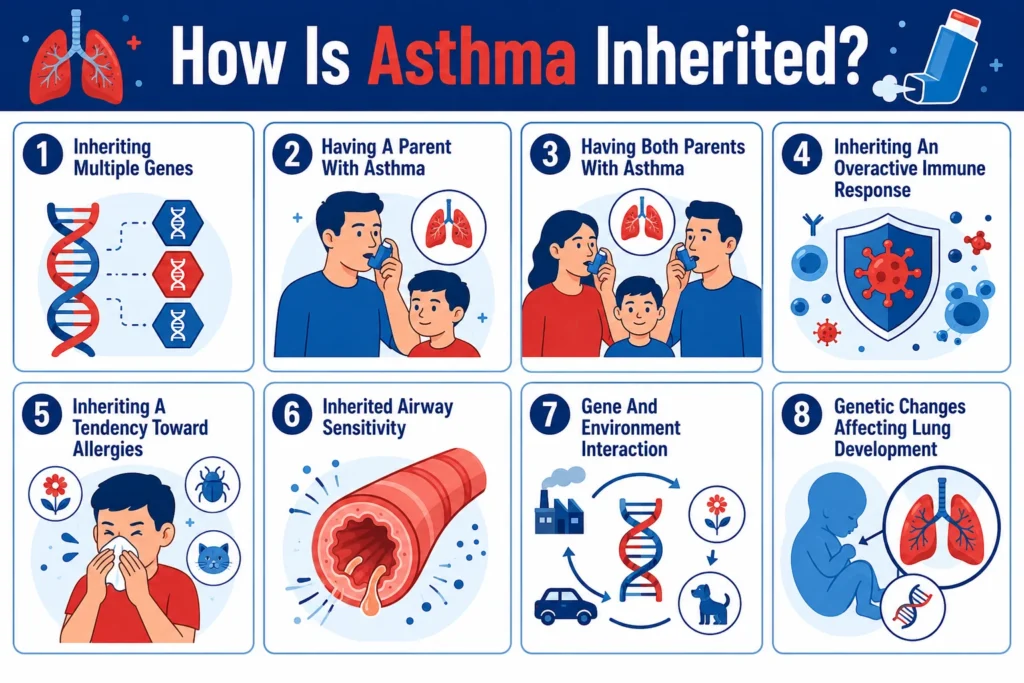
If asthma runs in your family, it’s natural to wonder how that risk is passed from one generation to the next. Asthma inheritance is complex and involves a combination of genetic and environmental factors rather than a single inherited trait. While family history increases your likelihood of developing asthma, it does not determine your future. Understanding how asthma is inherited can help you recognize your risk and seek medical evaluation if symptoms develop.
Inheriting Multiple Genes
Asthma is a polygenic condition, meaning it is influenced by many different genes rather than one specific asthma gene. These genes affect how the immune system functions and how the airways respond to irritation. Inheriting several of these genes may increase your susceptibility to asthma. However, additional environmental factors are usually needed for the condition to develop.
Having A Parent With Asthma
Children with one parent who has asthma have a greater chance of developing the condition than those without a family history. The inherited genes may make their airways more sensitive to allergens and irritants. The level of risk varies from person to person. Early monitoring can help identify symptoms sooner.
Having Both Parents With Asthma
When both parents have asthma, the inherited risk is generally higher. A child may inherit multiple genetic variations that increase airway inflammation and immune responses. Even so, not every child will develop asthma. Lifestyle and environmental exposures remain important influences.
Inheriting An Overactive Immune Response
Some people inherit genes that make their immune system react more strongly to allergens such as pollen, dust mites, or pet dander. This heightened immune response can contribute to airway inflammation. Over time, repeated inflammation may increase the likelihood of asthma symptoms. Allergy management may help reduce flare-ups.
Inheriting A Tendency Toward Allergies
Asthma often occurs alongside allergic conditions like eczema and hay fever. Families with these conditions may pass on genes that increase allergic sensitivity. This inherited tendency can make allergic asthma more likely. Not everyone with allergies will develop asthma, but the risk is higher.
Inherited Airway Sensitivity
Some individuals inherit airways that are naturally more reactive to irritants such as smoke, pollution, cold air, or strong odors. These sensitive airways can narrow more easily when exposed to triggers. This increases the chance of asthma symptoms developing. Avoiding known triggers can help reduce attacks.
Gene And Environment Interaction
Inherited genes alone rarely cause asthma. The condition often develops when genetic susceptibility combines with environmental exposures such as respiratory infections, tobacco smoke, or air pollution. This interaction explains why some family members develop asthma while others do not. Both inherited and environmental factors are important.
Genetic Changes Affecting Lung Development
Certain inherited genetic variations may influence how the lungs and airways develop before and after birth. These differences can make the airways more prone to inflammation and narrowing later in life. Although these genetic factors cannot be changed, early diagnosis and proper treatment can help manage symptoms effectively.
When To Go To The ER
Asthma symptoms can become life-threatening if the airways narrow rapidly and breathing becomes severely restricted. Seek emergency medical care immediately if symptoms do not improve with a rescue inhaler or if breathing continues to worsen.
- Severe shortness of breath that makes walking or talking difficult.
- Blue lips, face, or fingernails.
- Rapid breathing or gasping for air.
- Chest tightness that becomes severe.
- No improvement after using a rescue inhaler.
- Wheezing that suddenly becomes much worse.
- Confusion, drowsiness, or loss of consciousness.
- Rib muscles pulling inward while breathing.
- Peak flow reading below 50% of your personal best.
- Symptoms that return quickly after initial improvement.
If you are experiencing these symptoms and searching for the closest emergency room near me, seek immediate medical attention for asthma-related breathing problems.
Asthma Care At Exceptional Emergency Centers
If you’re wondering if asthma is genetic, remember that while genetics can increase your risk, breathing problems should never be ignored. Sudden wheezing, severe shortness of breath, or an asthma attack can become life-threatening without prompt treatment. With an average ER wait time of just 12 minutes, Exceptional Emergency Centers provide rapid evaluation of respiratory symptoms and 24/7 emergency care from experienced physicians to help stabilize asthma attacks and provide the treatment you need.
Whether your asthma symptoms are triggered by inherited factors, allergies, or environmental exposures, our team is equipped to deliver rapid diagnosis and treatment. We offer breathing treatments, oxygen therapy, advanced diagnostic testing, and personalized emergency care to help stabilize your condition and support a safe recovery when every minute matters.
Key Takeaways
- Genetics can increase your risk of asthma, but having a family history does not mean you will definitely develop the condition.
- Environmental triggers such as allergens, air pollution, tobacco smoke, and respiratory infections also play a major role in asthma development.
- Asthma can develop during childhood or adulthood, even if no one else in your family has the condition.
- Common symptoms include wheezing, coughing, chest tightness, and shortness of breath, especially during exercise, illness, or allergy season.
- Severe breathing difficulty, persistent wheezing, or an asthma attack that does not improve with a rescue inhaler requires immediate emergency medical care.
Frequently Asked Questions
Can Asthma Go Away?
Some people, especially children, may experience long periods without asthma symptoms. However, the condition can return at any time, so it is important to continue following your healthcare provider’s recommendations even if you feel well.
Can You Develop Asthma As An Adult?
Yes. Many people are diagnosed with asthma for the first time as adults. Adult-onset asthma may occur after exposure to allergens, workplace irritants, viral infections, or other environmental triggers, and it often requires ongoing treatment.
How To Test For Asthma?
Healthcare providers diagnose asthma by evaluating your symptoms and measuring how well your lungs work. Tests such as spirometry, peak flow testing, bronchodilator response testing, and allergy testing help confirm the diagnosis and determine the best treatment plan.