

If your eyes feel dry, gritty, burning, or tired, you may be frustrated by discomfort that keeps coming back. Even simple activities like reading, using a screen, or driving can become difficult when your eyes do not feel properly lubricated.
So, what causes dry eyes? The answer can vary from person to person, and identifying the underlying reason is important for choosing the right treatment. If your eye discomfort becomes severe, painful, or starts affecting your vision, seek prompt medical attention at our Tyler ER.
What Is Dry Eye?
Dry eye is a common eye condition that occurs when the eyes do not produce enough tears or when tears do not work properly to keep the eye surface lubricated. It can cause burning, stinging, scratchiness, redness, excessive watering, light sensitivity, or blurred vision.
A 2022 systematic review and meta-analysis published in JAMA Ophthalmology estimated that dry eye affected 8.1% of the U.S. population in its primary analysis. This highlights how common the condition is and why persistent symptoms should not be ignored.
Dangerous Dry Eye Symptoms
Most dry eye symptoms are uncomfortable rather than dangerous, but severe or worsening symptoms can signal significant irritation or damage to the eye surface.
- Persistent burning, stinging, or intense eye irritation.
- Severe eye pain that does not improve.
- Significant redness or very watery eyes.
- Blurred or changing vision.
- Increased sensitivity to light.
- A gritty or foreign-body sensation that persists.
- Eye symptoms accompanied by an eye injury or trauma.
- Sudden vision changes or vision loss, which require urgent medical evaluation.
Causes of Dry Eyes
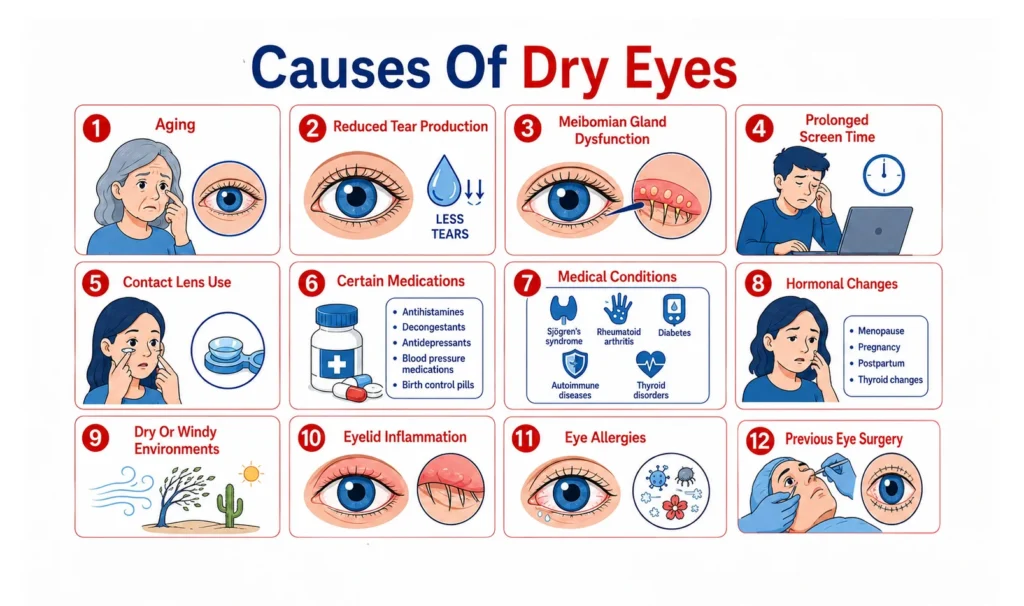
Dry eyes can be frustrating, especially when irritation, burning, or blurred vision keeps returning despite trying to rest your eyes. The condition can develop when the tear film does not provide enough moisture or protection for the eye surface.
Because dry eye can have more than one contributing factor, identifying what is behind your symptoms can help guide appropriate treatment. Some causes are temporary, while others may require ongoing management or evaluation by an eye care professional.
Aging
Dry eyes become more common with age because tear production can gradually decrease over time. The tear film may also become less stable, allowing moisture to evaporate more quickly. People over 50 are particularly likely to experience dry eye symptoms.
Reduced Tear Production
Some people develop dry eyes because their lacrimal glands do not produce enough watery tears. Without adequate tears, the eye surface can become irritated and uncomfortable. Reduced tear production may occur with aging, certain illnesses, or changes affecting the tear glands.
Meibomian Gland Dysfunction
Meibomian glands along the eyelid edges produce oils that help prevent tears from evaporating too quickly. When these glands become blocked or dysfunctional, the oily layer of the tear film may be inadequate. This can contribute to evaporative dry eye and persistent eye irritation.
Prolonged Screen Time
Spending long periods looking at computers, phones, or tablets can reduce how frequently you blink. Less frequent or incomplete blinking allows tears to evaporate from the eye surface more quickly. This is why dryness and eye fatigue can become noticeable during extended screen use.
Contact Lens Use
Contact lenses can interfere with the normal tear film and may increase evaporation or reduce comfort. Wearing lenses for extended periods can make dryness, burning, irritation, and blurred vision more noticeable. People with persistent symptoms may need an eye care professional to assess their lens use and eye surface.
Certain Medications
Several medications can reduce tear production or contribute to dry eye symptoms as a side effect. Examples include some antihistamines, decongestants, antidepressants, blood pressure medicines, and hormonal medications. If symptoms began after starting a medicine, discuss the possibility with your healthcare professional rather than stopping it yourself.
Medical Conditions
Certain health conditions can affect tear production or the stability of the tear film. Diabetes, thyroid disorders, and autoimmune diseases such as Sjögren syndrome, lupus, and rheumatoid arthritis are associated with dry eye. Managing an underlying condition may be an important part of controlling symptoms.
Hormonal Changes
Changes in hormone levels can affect tear production and make dry eye more likely. Symptoms may become more noticeable during menopause, pregnancy, or other periods of hormonal change. Hormonal medications, including some forms of birth control, may also be associated with dry eye symptoms.
Dry or Windy Environments
Wind, low humidity, air conditioning, heating, and smoke can increase tear evaporation and irritate the eye surface. Symptoms may become worse when you spend significant time outdoors in windy conditions or indoors with dry circulating air. Reducing direct airflow toward your eyes can help limit irritation.
Eyelid Inflammation
Inflammation of the eyelids, including blepharitis, can interfere with the glands responsible for maintaining the oily layer of tears. This may cause tears to evaporate too quickly and leave the eye surface inadequately protected. Eyelid inflammation can also cause redness, crusting, irritation, and discomfort around the eyes.
Eye Allergies
Eye allergies can irritate the surface of the eyes and contribute to tear film instability. Allergic inflammation may cause redness, itching, watering, and discomfort that can overlap with dry eye symptoms. Treating the underlying allergy may help reduce eye irritation in affected individuals.
Previous Eye Surgery
Some people experience dry eyes after procedures such as LASIK or other refractive eye surgery. Changes in corneal nerve sensitivity can temporarily affect tear production and the normal sensation of the eye surface. Symptoms often improve over time, but persistent or severe dryness should be evaluated by an eye care professional.
When to Go to the ER for Dry Eyes
Most cases of dry eyes are not emergencies, but severe or sudden eye symptoms can indicate a more serious problem. Do not assume significant pain or vision changes are simply from dryness. Seek emergency medical care if you experience:
- Sudden loss of vision or a major change in vision.
- Severe or rapidly worsening eye pain.
- Significant redness with severe pain or vision changes.
- Severe sensitivity to light.
- A serious eye injury, chemical exposure, or foreign object in the eye.
- Sudden swelling around the eye accompanied by pain or vision changes.
- Severe headache, nausea, or vomiting occurring with intense eye pain.
- Symptoms that rapidly worsen or do not improve with usual dry-eye measures.
If you have severe eye symptoms or sudden vision changes, search for an ER near me for prompt medical evaluation.
How to Treat Dry Eyes
Persistent dry, burning, or irritated eyes can be frustrating, especially when symptoms interfere with reading, screen use, or daily activities. Treatment depends on the cause and severity of dry eye. Mild cases may improve with simple self-care, while persistent symptoms may need medical treatment.
- Artificial Tears: Over-the-counter lubricating drops can relieve dryness and irritation. Most doctors recommend preservative-free drops for frequent use.
- Prescription Eye Drops: These can reduce inflammation or improve tear production. Most doctors recommend them when artificial tears are not enough.
- Warm Compresses: A warm compress can help improve oil flow from the eyelid glands and reduce tear evaporation.
- Eyelid Hygiene: Gently cleaning the eyelids can reduce debris and inflammation that may contribute to dry eyes.
- Screen Breaks: Take regular breaks and blink frequently during screen use to reduce tear evaporation.
- Humidifier: Adding moisture to dry indoor air can help prevent tears from evaporating too quickly.
- Protective Eyewear: Sunglasses can protect your eyes from wind, dust, and other environmental irritants.
- Punctal Plugs: An eye specialist can place tiny plugs in tear ducts to keep tears on the eye surface longer.
- Contact Lens Changes: Reducing contact lens use or changing lens type may improve dryness and discomfort.
- Advanced Procedures: Treatments targeting blocked eyelid glands may be considered for moderate or severe dry eye that does not improve with other measures.
Exceptional Emergency Care for Dry Eyes
If you or a loved one experiences severe eye pain, sudden vision changes, significant redness, or symptoms following an eye injury, do not delay seeking medical care. At Exceptional Emergency Centers, our experienced emergency physicians are available in our 24/7 emergency room to evaluate concerning eye symptoms and provide prompt treatment.
Our centers provide emergency evaluation, on-site laboratory testing, imaging when medically necessary, and treatment for urgent eye-related conditions. With an ER wait time of just 8 minutes, you can receive timely medical attention when severe or sudden symptoms require emergency evaluation.
Key Takeaways
- Dry eyes can cause burning, irritation, grittiness, redness, and blurred vision.
- Reduced tear production and excessive tear evaporation are common contributors.
- Screen use, contact lenses, medications, aging, and certain health conditions can increase the risk.
- Artificial tears, warm compresses, eyelid care, and lifestyle changes may relieve mild symptoms.
- Severe eye pain, sudden vision changes, or an eye injury require prompt medical evaluation.
- Persistent or worsening symptoms should be assessed by an eye care professional.
Frequently Asked Questions About Dry Eyes
What Does Dry Eye Feel Like?
Dry eyes may feel gritty, scratchy, burning, stinging, or as though something is stuck in the eye. You may also experience redness, watering, light sensitivity, eye fatigue, or fluctuating vision.
Can Dry Eyes Cause Headaches?
Dry eyes can contribute to eye strain and discomfort that may be associated with headaches, particularly during prolonged screen use. However, frequent or severe headaches may have other causes and should be evaluated if they persist.
What Are The Best Eye Drops For Dry Eyes?
Artificial tears are commonly used to relieve mild dry eye symptoms. Most doctors recommend preservative-free artificial tears for people who need drops frequently, while persistent symptoms may require evaluation and prescription treatment.