

Yes, allergies can absolutely cause a cough, and it is one of the more frustrating symptoms that allergy sufferers deal with because it tends to linger long after other symptoms start to ease. When the immune system reacts to allergens like pollen, dust mites, pet dander, or mold, it triggers inflammation throughout the respiratory tract that can irritate the throat, airways, and sinuses in ways that produce a persistent and sometimes exhausting cough. Understanding what causes allergies in the first place is the first step toward understanding why coughing is such a common part of the allergic response.
Unlike a cough from a cold or infection, an allergy-related cough does not carry a virus, does not cause a fever, and can persist for weeks or even months, depending on allergen exposure. Knowing how to identify an allergy cough, distinguish it from other causes, and recognize when it requires emergency care can help you avoid unnecessary discomfort and get the right treatment. Our Tyler ER provides prompt evaluation for severe allergy-related symptoms and breathing concerns.
What Is an Allergy Cough?
An allergy cough is a persistent cough triggered by the immune system’s reaction to airborne allergens rather than by a bacterial or viral infection. According to MedlinePlus, allergic rhinitis affects millions of Americans and causes a range of respiratory symptoms, including nasal congestion, sneezing, itchy eyes, and coughing that can vary in intensity depending on allergen levels and individual sensitivity. The cough associated with allergies is typically dry, tickly, or throat-based rather than deep and chesty, and it tends to improve when the person is away from the allergen source or after taking antihistamines.
How Do Allergies Cause a Cough?
The mechanism behind an allergy cough involves several overlapping processes that all stem from the immune system’s exaggerated response to harmless environmental particles.
- When allergens enter the body, the immune system releases histamine and other inflammatory chemicals that irritate the lining of the nose, throat, and airways
- This irritation causes the mucous membranes to produce excess mucus as a protective response to the perceived threat
- Postnasal drip occurs when this excess mucus drips down the back of the throat, triggering the cough reflex repeatedly throughout the day and especially at night
- Inflammation in the airways makes them more sensitive and reactive, causing coughing even without significant mucus buildup
- In people with allergic asthma, the airways can narrow and constrict in response to allergens, producing a wheezing cough that requires more urgent attention
If allergy symptoms become severe or affect your breathing, seek urgent care for allergies to receive proper evaluation and treatment.
What Does an Allergy Cough Feel Like?
An allergy cough has a fairly distinctive character that differs meaningfully from the cough that accompanies a cold, flu, or respiratory infection. Recognizing these characteristics can help you determine whether your cough is allergy-related or something else requiring a different kind of treatment.
- Dry and tickly sensation in the throat rather than a deep, wet, or productive cough
- Frequent throat clearing that provides temporary relief but does not resolve the underlying irritation
- Worse at night or in the morning when postnasal drip pools in the throat during sleep
- Improves significantly indoors with air filtration or after taking antihistamines
- Accompanied by typical allergy symptoms like sneezing, itchy eyes, a runny nose, and nasal congestion
- No fever, body aches, or chills that would suggest a viral or bacterial infection is present
An allergy cough can also contribute to sore throat symptoms, as repeated coughing irritates the throat lining over time, especially during prolonged allergy seasons.
Allergy Cough vs. Cold Cough: What Is the Difference?
Telling apart an allergy cough from a cold cough is important because the treatments are completely different. Using the wrong approach wastes time and delays relief.
Duration and Pattern
A cold cough typically lasts 7 to 10 days before improving naturally as the immune system clears the virus. An allergy cough can persist for weeks or months continuously as long as the person remains exposed to the triggering allergen without proper treatment or avoidance strategies in place.
Associated Symptoms
Cold symptoms often include a sore throat that appears first, followed by thick, colored nasal discharge, fatigue, body aches, and sometimes a mild fever that develops over the course of a few days. Allergy symptoms appear simultaneously and without fever, typically including sneezing, itchy eyes, a clear, runny nose, and a dry, tickly cough that is consistent and does not worsen progressively over time, the way a cold does.
Response to Treatment
An allergy cough responds well to antihistamines, nasal corticosteroid sprays, and allergen avoidance because it is driven by histamine and inflammation rather than by an active infection. A cold cough does not improve with antihistamines and requires rest, hydration, and time for the immune system to clear the infection entirely on its own.
How Long Does an Allergy Cough Last?
An allergy cough lasts as long as the person remains exposed to the triggering allergen, which means it can continue for weeks or months during high pollen seasons without proper management. Here is what to generally expect based on your situation:
- With antihistamines, nasal sprays, and allergen avoidance, most people see significant improvement within a few days of starting treatment
- Without treatment or continued allergen exposure, the cough can persist throughout the entire allergy season
- A cough lasting beyond two to three weeks without improvement despite treatment needs medical evaluation
- Other conditions, like a sinus infection, asthma, or acid reflux, can mimic or worsen an allergy cough and may require a different treatment approach entirely
- If symptoms are worsening rather than stabilizing, do not wait to get evaluated by a medical professional
If your allergy cough becomes severe or causes breathing difficulties, visit the nearest emergency room for immediate evaluation.
How to Stop an Allergy Cough?
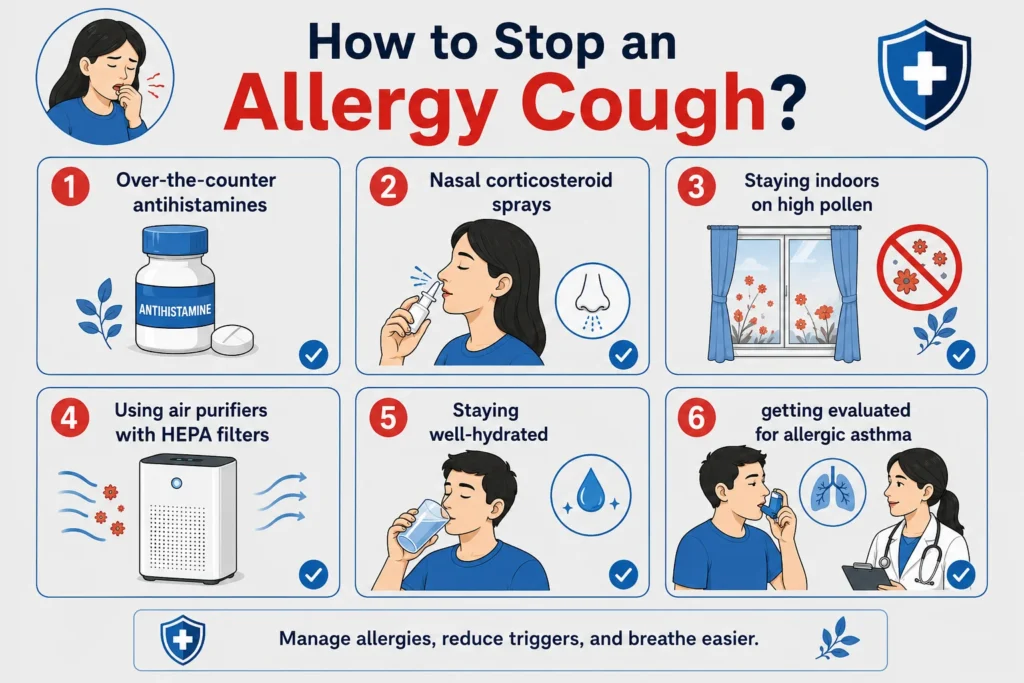
Managing an allergy cough effectively requires addressing both the allergy itself and the airway irritation it causes. The most effective approaches combine allergen avoidance with targeted medication.
- Over-the-counter antihistamines reduce histamine release and help control postnasal drip that triggers the cough reflex
- Nasal corticosteroid sprays reduce inflammation in the nasal passages and decrease mucus production over time
- Staying indoors on high pollen count days and keeping windows closed reduces allergen exposure significantly
- Using air purifiers with HEPA filters in the bedroom removes airborne allergens that contribute to nighttime coughing
- Staying well-hydrated thins mucus and reduces the irritating effect of postnasal drip on the throat
- If wheezing accompanies the cough, getting evaluated for allergic asthma is essential since it requires a different treatment approach, including inhaler therapy
If wheezing is a significant part of your symptoms, learning how to stop wheezing immediately can help you manage acute episodes while you work on longer-term allergy control.
When to Go to the ER for an Allergy Cough?
Most allergy coughs can be managed with over-the-counter medications and lifestyle adjustments, but certain symptoms indicate a medical emergency that should not be ignored. Visit Exceptional Emergency Centers immediately if your allergy cough is accompanied by any of the following.
- Severe difficulty breathing, wheezing, or a feeling that your airway is tightening or constricting
- Throat swelling, hoarseness, or difficulty swallowing that develops suddenly after allergen exposure
- Hives spreading rapidly across the body, alongside breathing difficulty or throat tightness
- Dizziness, lightheadedness, or fainting following exposure to a known allergen
- Chest tightness or chest pain that does not improve with rest or inhaler use
- A cough in someone with known severe allergies or asthma that is not responding to their usual medications
- Any signs of anaphylaxis, which is a severe and potentially life-threatening whole-body allergic reaction
According to the CDC, indoor allergens like dust mites, pet dander, and mold can trigger reactions year-round, making allergy-related respiratory emergencies possible in any season. If you are unsure whether your cough and symptoms are allergy-related or something more serious, a condition like hay fever can present similarly to a more serious respiratory illness, so getting evaluated is always the right call when you are uncertain.
Allergy Cough Care at Exceptional Emergency Centers
A persistent allergy cough that does not improve with treatment or worsens into breathing difficulty requires prompt medical evaluation. With a 24/7 emergency room available, Exceptional Emergency Centers provides expert assessment of respiratory symptoms, helps distinguish between an allergy cough and more serious conditions, and offers fast treatment for severe allergic reactions and asthma flares. Do not wait for symptoms to worsen; seek expert care to protect your breathing and overall health.