

Key Takeaways
- Clear mucus: Normal and healthy; common with allergies, cold air, or early viral infections.
- White mucus: Thickened mucus from congestion or inflammation, often seen with colds.
- Yellow mucus: Indicates an active immune response as white blood cells fight infection.
- Green mucus: Often appears later in an infection due to enzyme activity from immune cells — not automatically bacterial.
- Red, brown, or black mucus: May suggest blood, smoke exposure, pollution, or rarely fungal infection — seek care if severe or persistent, including at our Beaumont emergency room.
What Is Mucus?
Mucus is a gel-like fluid produced by mucous membranes in the nose, throat, and lungs that traps dust, bacteria, and allergens to protect the body. It keeps airways moist and helps remove debris via cilia. Changes in its color or consistency can signal infection, irritation, or inflammation. A study of 241 patients with acute cough found 12% of those with yellow or green mucus had bacterial infections, showing mucus color can reflect immune activity.
What Causes Mucus
- Viral Infections: The common cold, influenza, and other respiratory viruses stimulate mucus glands to increase production as the body traps and clears pathogens.
- Allergies: Exposure to pollen, pet dander, mold, or dust mites triggers histamine release, leading to inflammation and increased mucus secretion.
- Environmental Irritants: Smoke, air pollution, chemicals, and strong odors irritate airway linings and stimulate excess mucus production.
- Chronic Respiratory Conditions: Asthma, chronic sinusitis, and chronic bronchitis cause persistent airway inflammation and ongoing mucus buildup.
Different Mucus Colors And Their Meanings
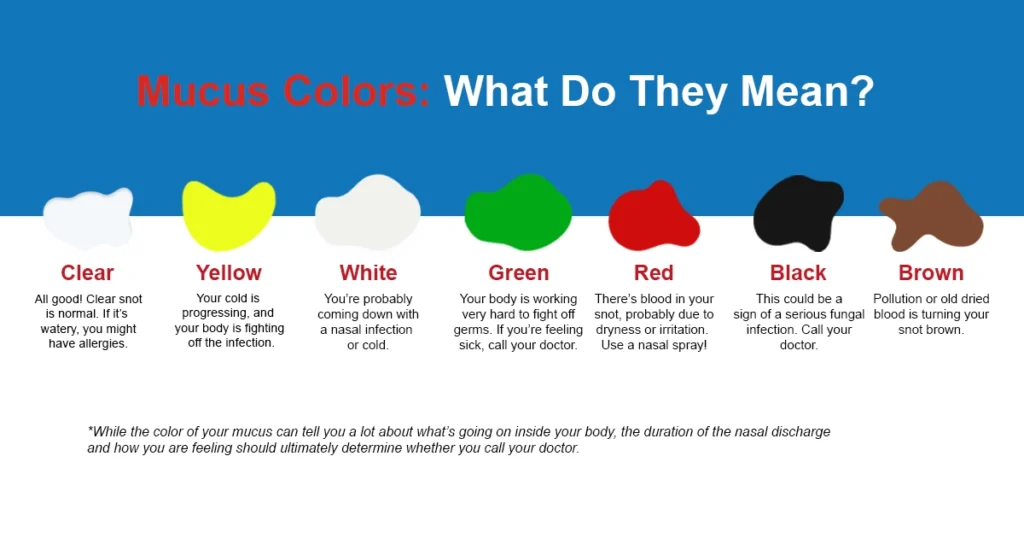
Mucus color changes are often part of the body’s natural immune response. Inflammation alters the thickness and cellular content of mucus, which affects its appearance. While color alone does not determine whether an infection is viral or bacterial, the duration of symptoms, severity, and associated signs such as fever or facial pain are clinically more important indicators.
What Does Clear Mucus Mean
Clear mucus typically reflects normal respiratory function. It keeps tissues moist and efficiently traps airborne particles. Increased clear discharge is common during allergy flare-ups, exposure to cold air, or the early stage of a viral infection. Although it may cause a runny nose, it rarely signals a serious condition.
What Causes Clear Mucus
- Allergic Rhinitis: Histamine release during allergies leads to thin, watery nasal discharge.
- Early Cold Symptoms: Viral infections often begin with clear mucus before thickening.
- Cold Or Dry Air Exposure: Environmental changes can temporarily increase mucus production.
What Does White Mucus Mean
White mucus usually develops when nasal tissues become swollen and inflamed. Reduced airflow slows mucus drainage, allowing it to thicken and appear cloudy or white. This commonly occurs in the early phase of a cold or sinus congestion. White mucus alone does not indicate bacterial infection.
What Causes White Mucus
- Common Cold: Viral infections slow mucus movement, making it appear thicker and white.
- Sinus Blockage: Swelling in the sinus passages traps mucus and changes its consistency.
- Dehydration: Reduced fluid intake can thicken mucus secretions.
What Does Yellow Mucus Mean
Yellow mucus typically signals that the immune system is actively fighting an infection. White blood cells release enzymes while attacking viruses or bacteria, and this process changes the mucus color. Yellow discharge often appears during the middle phase of a viral respiratory infection.
What Does Yellow Mucus Indicate
- Active Immune Response: The body is fighting off a viral or mild bacterial infection.
- Cold Or Flu: Many upper respiratory viral illnesses produce yellow mucus temporarily.
- Sinus Inflammation: Persistent yellow discharge with pressure may suggest sinus involvement.
Also Read: Why Is My Mucus Yellow
What Does Green Mucus Mean
Green mucus generally appears later in the immune response. The green tint results from higher concentrations of myeloperoxidase, an enzyme found in white blood cells. This often occurs as immune cells break down pathogens during ongoing inflammation.
Does Green Mucus Mean Infection?
Green mucus does not automatically mean a bacterial infection. Both viral and bacterial illnesses can produce green discharge due to immune enzyme activity. Medical evaluation is recommended if green mucus lasts longer than 10 days, worsens after initial improvement, or is accompanied by high fever, severe facial pain, or significant fatigue.
What Does Red Mucus Mean
Red mucus indicates the presence of fresh blood. Minor streaks often result from dryness, irritation, or frequent nose blowing. While small amounts are usually harmless, persistent or heavy bleeding should be evaluated promptly to rule out infection, trauma, or vascular issues.
Causes Of Red Mucus
- Dry Air Or Irritation: Cracked nasal passages may bleed slightly.
- Sinus Infection: Severe inflammation can irritate blood vessels.
- Nasal Trauma: Injury or forceful nose blowing may cause bleeding.
What Does Brown Mucus Mean
Brown mucus often results from old, dried blood mixing with nasal secretions. It may also occur after inhaling dirt, dust, or smoke particles. While occasional discoloration is not uncommon, repeated episodes warrant medical evaluation, particularly in smokers or those exposed to pollutants.
What Does Brown Mucus Indicate
- Old Dried Blood: Previously clotted blood can darken the mucus color.
- Environmental Pollutants: Dust and smoke particles may discolor secretions.
- Chronic Airway Irritation: Ongoing inflammation can alter mucus appearance.
What Does Black Mucus Mean
Black mucus is uncommon and may indicate significant exposure to smoke, heavy pollution, or industrial dust. In rare cases, it can be associated with fungal infections, particularly in individuals with weakened immune systems. Persistent black discharge should always be medically evaluated.
What Causes Black Mucus
- Smoke Exposure: Cigarette or wildfire smoke can darken mucus.
- Occupational Dust: Coal or construction dust may stain respiratory secretions.
- Fungal Infection: Rare but possible in individuals with weakened immune systems.
When To Seek Emergency Care?
Most mucus color changes improve with hydration, rest, and supportive care. However, certain symptoms require urgent medical evaluation to prevent complications. Monitoring both the color and accompanying symptoms is essential.
- High fever lasting more than three days.
- Severe facial pain or swelling.
- Shortness of breath or chest pain.
- Coughing up significant amounts of blood.
- Symptoms worsening after initial improvement.
If you experience any of these warning signs, contact the Exceptional Emergency Centers for immediate medical evaluation.
Exceptional Emergency Centers For Respiratory Symptoms
Changes in mucus color can sometimes signal more than a minor illness. If you experience persistent fever, severe facial pressure, chest pain, shortness of breath, or cough up blood, seeking immediate emergency care is essential. At Exceptional Emergency Centers, our experienced medical team provides rapid evaluations, on-site diagnostics, and prompt treatment to address potentially serious respiratory concerns.
Are you asking yourself, “What Does The Color Of Your Mucus Mean?” When symptoms worsen, last longer than expected, or are accompanied by alarming signs, a professional evaluation can provide clarity and peace of mind. Exceptional Emergency Centers offers 24/7 emergency care, personalized treatment, and continuous monitoring to help protect your respiratory health when urgent medical attention matters most.