

Waking up with discomfort in your back can feel unsettling, especially when it affects simple daily movements. Many people quietly struggle through it, hoping it will ease on its own. But persistent discomfort should never be ignored when it starts disrupting routine life.
Middle back pain can make even basic activities like sitting, standing, or bending feel uncomfortable. It often creates worry, especially when the pain appears suddenly or keeps returning. Paying attention to these early warning signs is important for your overall health and timely care at our emergency room Beaumont, TX.
Understanding Middle Back Pain
Middle back pain, also known as thoracic back pain, is discomfort felt in the area between the neck and the lower back where the thoracic spine is located. It can range from mild stiffness to sharp or burning pain that may worsen with movement, posture changes, or long periods of sitting.
According to the National Institute of Neurological Disorders and Stroke (NINDS), pain is a complex sensory and emotional experience that can become chronic and significantly affect quality of life if not properly managed. Persistent pain can interfere with daily activities, emotional well-being, and overall functioning.
Signs Of Middle Back Pain That Should Never Be Ignored
- Sudden or severe middle back pain that appears without injury.
- Pain that worsens over time or does not improve with rest.
- Middle back pain accompanied by chest pain, shortness of breath, or dizziness.
- Numbness, tingling, or weakness in the arms, legs, or torso.
- Pain with fever, unexplained weight loss, or night sweats.
If you or your loved one is experiencing these symptoms, consider visiting an emergency room for back pain.
Middle Back Pain Causes
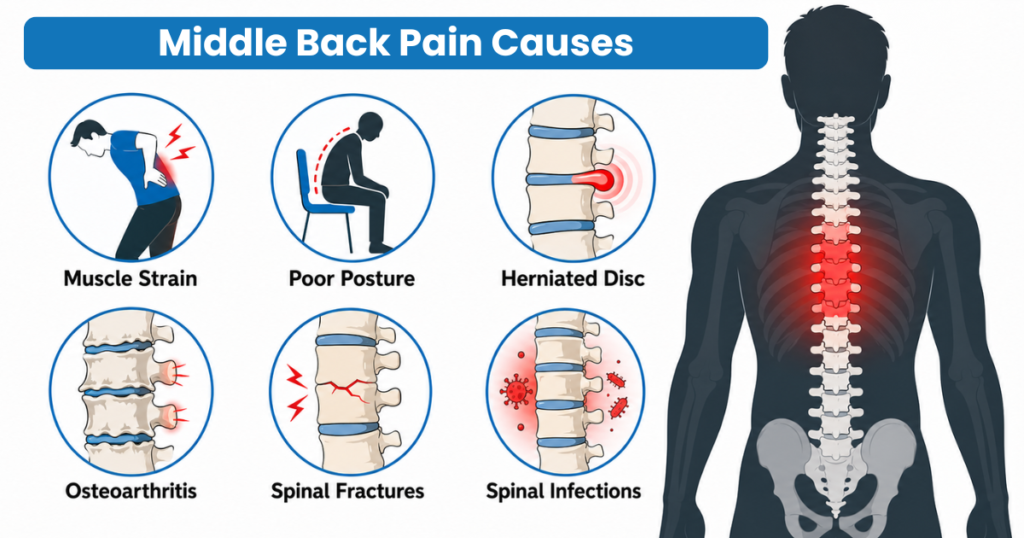
Middle back pain can result from issues affecting the muscles, bones, joints, or nerves in the thoracic spine. It often develops gradually due to daily activities, back injuries, or underlying conditions. Identifying the cause is essential for proper treatment and long-term relief. Below are the most common causes of middle back pain.
Muscle Strain
Muscle strain is a leading cause of middle back pain and often results from overuse, heavy lifting, or sudden twisting movements. It can also occur due to poor posture or repetitive strain during daily activities. The pain is usually localized, sore, and may worsen with movement or pressure. Most cases improve with rest and proper muscle care.
Poor Posture
Poor posture places continuous stress on the thoracic spine, especially during long hours of sitting or screen use. This can gradually lead to muscle fatigue, stiffness, and persistent middle back pain. People who do not maintain ergonomic sitting positions are more prone to this issue. Over time, it may contribute to chronic discomfort if not corrected.
Herniated Disc
A herniated disc occurs when the inner gel-like material of a spinal disc pushes through its outer layer and irritates nearby nerves. In the thoracic spine, this can lead to localized middle back pain or radiating discomfort around the chest area. The pain may worsen with movement, coughing, or bending. In some cases, it may also cause numbness or weakness.
Osteoarthritis
Osteoarthritis in the spine results from wear and tear of the joints over time. This degeneration can lead to inflammation, stiffness, and chronic middle back pain. It is more common with aging and may become worse after periods of inactivity. Reduced flexibility and joint discomfort are also common symptoms.
Spinal Fractures
Spinal fractures, often caused by osteoporosis or trauma, can lead to sudden and severe middle back pain. These fractures weaken the vertebrae, making even minor movements painful. The condition is more common in older adults with low bone density. Pain may be sharp and worsen with standing or walking.
Spinal Infections
Spinal infections occur when bacteria or other pathogens spread to the spine, leading to inflammation and pain. Although rare, they can cause persistent middle back pain along with fever, fatigue, and weakness. The pain is often constant and does not improve with rest.
Who Is At Risk Of Middle Back Pain?
Middle back pain can affect people of all ages, but certain individuals are more likely to develop it due to lifestyle habits, health conditions, or occupational strain. In many cases, repeated stress on the spine or weak musculoskeletal support increases the risk over time.
- People who sit for long hours with poor posture or desk jobs.
- Older adults due to natural wear and tear of the spine and joints.
- Individuals with osteoporosis or low bone density.
- People who frequently lift heavy objects or perform physical labor.
- Individuals with a sedentary lifestyle and a lack of regular exercise.
- Those with a history of spinal injuries or chronic back problems.
When symptoms become severe or concerning, it is important to act quickly and look for the closest emergency room near me.
When To Go To The ER
Middle back pain is often not serious, but in some cases, it can be a sign of a medical emergency that needs immediate attention. If the pain appears suddenly, becomes severe, or is associated with other concerning symptoms, it should not be ignored. Seeking timely care in the emergency room can help prevent serious complications and ensure proper diagnosis and treatment.
- Sudden, severe middle back pain that does not improve or worsens quickly.
- Middle back pain with chest pain, shortness of breath, or pressure.
- Numbness, weakness, or loss of control in the arms or legs.
- Pain following a fall, accident, or direct injury to the spine.
- Middle back pain with fever, chills, or unexplained weight loss.
- Loss of bladder or bowel control along with back pain.
Also read: When to Go to the Emergency Room for Back Pain
Treatment For Middle Back Pain
Middle back pain treatment depends on the cause and severity of symptoms, and in many cases, early care can help reduce discomfort and improve movement. A combination of self-care, medical treatment, and lifestyle changes is often recommended for better recovery.
- Over-the-Counter Pain Relief: Medicines like ibuprofen or paracetamol help reduce pain and inflammation. Most doctors recommend them for short-term relief in mild to moderate cases. They should be used only as directed.
- Physical Therapy: Exercise-based therapy helps strengthen back muscles and improve posture. A physiotherapist guides safe movements based on the patient’s condition. It is effective for long-term recovery.
- Heat and Cold Therapy: Heat relaxes tight muscles, while cold packs reduce swelling and inflammation. Using both can help ease early pain symptoms. It is a simple home treatment option.
- Posture Correction: Proper sitting and standing posture reduces strain on the spine. Ergonomic adjustments at work or home can prevent worsening pain. It is important for daily prevention.
- Prescription Medicines: Doctors may prescribe muscle relaxants or stronger pain relief if needed. Most doctors recommend these only when OTC medicines are not enough. They should be taken under supervision.
- Medical Procedures: In severe cases, injections or surgery may be required. These are used only when other treatments fail. Specialist evaluation is necessary before proceeding.
Tips To Relieve Middle Back Pain
- Stay Active With Light Movement: Gentle walking or stretching reduces stiffness and improves blood flow. Avoid long bed rest unless advised. It supports faster recovery.
- Maintain Proper Sleeping Position: Sleep on your back or side with good spine support. Avoid stomach sleeping as it strains the back. A firm mattress may help.
- Avoid Heavy Lifting: Improper lifting can worsen pain. Bend your knees and keep weight close to your body. This reduces spinal strain.
- Practice Deep Breathing: Slow breathing relaxes tight muscles and reduces stress. It is helpful during pain flare-ups. It also promotes relaxation.
- Eat Healthy and Stay Hydrated: Good nutrition supports bone and muscle health. Calcium and vitamin D are important. Hydration helps muscle function.
Emergency Care At Exceptional Emergency Centers
Understanding middle back pain is important because some cases can become serious if warning signs are ignored. While many cases are mild, sudden or severe symptoms may need urgent medical attention. Early diagnosis helps prevent complications and supports faster recovery.
When middle back pain comes with symptoms like chest pain, breathing issues, weakness, or bladder changes, immediate care is required. At Exceptional Emergency Centers, patients receive fast evaluation and treatment to manage the condition quickly at a 24/7 emergency room. Timely care can help reduce risks and improve outcomes.
Key Takeaways
- Middle back pain can range from mild discomfort to a sign of a serious condition.
- Poor posture, muscle strain, injuries, and spinal issues are common causes.
- Risk is higher in older adults, sedentary individuals, and people with physically demanding jobs.
- Severe symptoms like chest pain, weakness, or breathing issues need emergency care.
- Treatment includes pain relief, physical therapy, posture correction, and medical procedures when needed.
- Early diagnosis and proper care can help prevent long-term complications and recurrence.