

If you have ever struggled to catch your breath, heard a whistling sound while breathing, or felt tightness in your chest, you may be concerned about what these symptoms mean. Asthma is a long-term condition that affects the airways in the lungs, causing them to become inflamed and narrowed, making breathing more difficult.
Asthma symptoms can range from mild and occasional to severe and sudden. While many people manage their symptoms with proper treatment, a severe asthma attack can become a medical emergency and may require immediate care at an emergency room in Beaumont, TX.
What Causes Asthma?
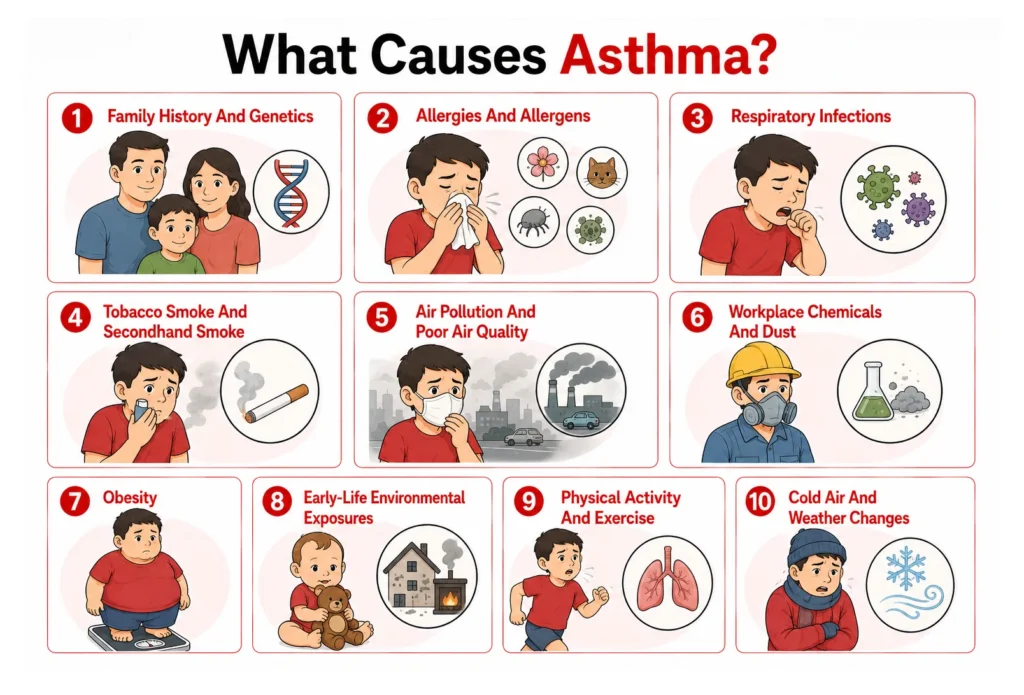
The exact reason why some people develop asthma is not fully known, and it can differ from person to person. Asthma is believed to result from a combination of genetic and environmental factors that affect how the airways and immune system respond to certain exposures. It is also important to distinguish between factors that may increase the risk of developing asthma and triggers that cause symptoms or asthma attacks. Identifying personal triggers can help you better manage symptoms and reduce the risk of flare-ups.
Family History and Genetics
Asthma can run in families, and having a parent or sibling with asthma may increase your risk of developing the condition. Genetic factors can influence how the immune system and airways respond to allergens and other environmental exposures. However, having a family history does not mean you will definitely develop asthma. Other environmental and lifestyle factors may also play a role.
Allergies and Allergens
People with allergies may have a greater risk of developing asthma or experiencing asthma symptoms. Common allergens include pollen, dust mites, mold, pet dander, and cockroach particles. When a sensitive person’s immune system reacts strongly to these substances, the airways can become inflamed and narrowed. This may lead to coughing, wheezing, chest tightness, or shortness of breath.
Respiratory Infections
Respiratory infections can irritate the airways and trigger or worsen asthma symptoms. Viral illnesses such as the common cold and flu are common triggers, particularly in people who already have asthma. Symptoms may become more noticeable during or shortly after an infection because the airways become more sensitive. If breathing problems worsen significantly during an illness, prompt medical evaluation may be needed.
Tobacco Smoke and Secondhand Smoke
Smoking and exposure to secondhand smoke can irritate and inflame the airways. These exposures may increase the risk of asthma and make existing symptoms more difficult to control. Tobacco smoke can also trigger coughing, wheezing, and asthma attacks in both children and adults. Avoiding smoking and secondhand smoke is an important part of reducing airway irritation.
Air Pollution and Poor Air Quality
Outdoor and indoor air pollution can irritate sensitive airways and contribute to asthma symptoms. Common sources include vehicle exhaust, industrial pollution, wildfire smoke, and poorly ventilated indoor environments. Some people may notice worsening coughs, wheezing, or shortness of breath when air quality is poor.
Workplace Chemicals and Dust
Certain workplace exposures can cause or worsen asthma, sometimes leading to work-related asthma. Chemicals, fumes, industrial dust, flour, wood dust, and other airborne substances may irritate or sensitize the airways. Symptoms may improve away from work and return after repeated exposure, although this pattern can vary. Anyone who notices breathing problems related to their workplace should discuss them with a healthcare professional.
Obesity
Being overweight or having obesity may increase the risk of developing asthma and can make existing asthma more difficult to manage. Excess weight can affect breathing and may contribute to inflammation within the body. People with both asthma and obesity may experience more frequent or severe symptoms. Maintaining a healthy weight may support better asthma control as part of an individualized care plan.
Early-Life Environmental Exposures
Exposure to certain environmental factors early in life may affect lung development and the risk of asthma later on. According to the NHLBI, cigarette smoke and certain respiratory infections during infancy or childhood may contribute to this risk. A child’s developing immune system and lungs can be particularly sensitive to environmental exposures.
Physical Activity and Exercise
Exercise does not usually cause asthma itself, but physical activity can trigger asthma symptoms in some people. Rapid breathing during exercise may irritate sensitive airways and lead to coughing, wheezing, chest tightness, or shortness of breath. This is sometimes called exercise-induced bronchoconstriction.
Cold Air and Weather Changes
Cold, dry air and sudden weather changes can trigger asthma symptoms in some people. Breathing cold air may cause sensitive airways to narrow, resulting in coughing, wheezing, or difficulty breathing. High humidity, thunderstorms, and other weather conditions may also worsen symptoms for certain individuals. Knowing how weather affects your asthma can help you take appropriate steps to manage your symptoms.
Asthma Symptoms You Should Never Ignore
Asthma symptoms can range from mild breathing changes to signs of a serious flare that needs urgent care. A systematic review of 67 studies found that wheezing occurred in 46.97%, breathlessness in 50.31%, and chest tightness in 50.41% of people with asthma.
- Wheezing or a whistling sound when breathing.
- Shortness of breath or difficulty breathing.
- Chest tightness or pressure.
- Persistent or worsening cough, especially at night or early morning.
- Rapid breathing.
- Difficulty speaking because of breathlessness.
- Trouble sleeping due to coughing or breathing problems.
- Reduced ability to exercise or perform normal activities.
- Severe breathing difficulty that does not improve with prescribed rescue medication.
- Bluish or gray lips, face, or fingernails.
How Is Asthma Diagnosed?
Asthma is diagnosed using your symptoms, medical history, and lung function tests. Your provider may use several tests to confirm asthma and rule out other conditions.
- Medical History: Your provider reviews wheezing, coughing, shortness of breath, chest tightness, triggers, allergies, and family history.
- Spirometry: Measures how much and how quickly you can exhale to detect airflow problems.
- Peak Flow Testing: Tracks how quickly you can force air out of your lungs over time.
- FeNO Testing: Measures nitric oxide in your breath to identify airway inflammation.
- Bronchial Challenge: Checks whether your airways narrow after exposure to a specific trigger.
- Allergy Testing: Identifies allergies that may trigger or worsen asthma symptoms.
When to Go to the ER
An asthma attack can become life-threatening when breathing becomes severely restricted or prescribed rescue medicine does not provide relief. Go to the ER immediately if your asthma is rapidly worsening or you are struggling to breathe despite following your asthma action plan.
- Your rescue inhaler is not providing relief as expected.
- Your peak flow is below 50% of your personal best.
- You cannot complete normal activities because of breathing difficulty.
- You are unable to speak in full sentences.
- Your chest or neck muscles pull inward with each breath.
- Your breathing becomes unusually fast or labored.
- Your lips or fingernails turn blue or gray.
- You become confused, extremely drowsy, or less responsive.
- Your condition continues to worsen despite following your asthma action plan.
If you are searching for an ER near me because your asthma is worsening, seek emergency medical care without delay.
Asthma Treatment
Asthma treatment can help control symptoms, prevent flare-ups, and reduce the risk of severe asthma attacks. The right treatment depends on your symptoms and how severe your asthma is. Your doctor may recommend a combination of medications, trigger avoidance, and other treatments based on your individual needs.
- Quick-Relief Inhalers: Medicines such as albuterol can quickly open the airways during sudden symptoms. Most doctors recommend using them as prescribed.
- Inhaled Corticosteroids: These medicines reduce airway inflammation and help prevent asthma symptoms. Most doctors recommend regular use for long-term asthma control.
- Combination Inhalers: These combine different medicines to help control persistent asthma. Most doctors recommend them when one medicine alone is not enough.
- Nebulizer Treatments: A nebulizer delivers liquid medicine as a mist that is easier to inhale. Most doctors recommend it when appropriate for the person’s symptoms.
- Oral Corticosteroids: Medicines such as prednisone may help during severe asthma flare-ups. Most doctors recommend short-term use when medically necessary.
- Allergy Treatment: Allergy medicines or immunotherapy may help people whose asthma is linked to allergies. Most doctors recommend identifying specific allergens first.
- Biologic Medications: These specialized medicines may help certain people with severe asthma. Most doctors recommend them when standard treatments do not provide enough control.
- Avoiding Triggers: Limiting exposure to smoke, allergens, and other triggers can help prevent flare-ups. Most doctors recommend identifying and avoiding personal triggers.
- Asthma Action Plan: A personalized plan can help you manage daily symptoms and recognize when asthma is worsening. Most doctors recommend having a written plan.
- Bronchial Thermoplasty: This procedure may help selected adults with severe asthma that does not respond well to other treatments. Most doctors recommend specialist evaluation before considering it.
Exceptional Emergency Centers For Asthma Care
If you or your loved one is experiencing a severe asthma attack, worsening breathing difficulty, or symptoms that are not improving with prescribed rescue medication, do not wait to seek emergency care. At Exceptional Emergency Centers, our experienced emergency physicians are available 24/7 to evaluate asthma symptoms, perform diagnostic testing when needed, and provide prompt treatment. Our ER wait time is just 11 minutes, although actual wait times can vary based on medical urgency and patient volume.
At Exceptional Emergency Centers, patients can receive emergency evaluation, on-site laboratory testing, imaging, and treatment for respiratory conditions. The centers are equipped to provide timely emergency care when asthma symptoms become severe or potentially life-threatening.
Key Takeaways
- Asthma is a chronic condition that causes inflammation and narrowing of the airways.
- Common asthma symptoms include wheezing, coughing, chest tightness, and shortness of breath.
- Spirometry is one of the main tests used to help diagnose asthma.
- Asthma attacks can become life-threatening when breathing problems rapidly worsen.
- Seek emergency care if your rescue inhaler is not providing relief or you cannot breathe or speak normally.
- Avoiding known triggers and following your asthma action plan can help reduce the risk of severe attacks.
Frequently Asked Questions
What Does Asthma Feel Like?
Asthma can feel like chest tightness, difficulty getting enough air, or pressure in the chest. You may also experience wheezing, coughing, or shortness of breath, especially during an asthma flare.
Can Asthma Go Away?
Asthma does not currently have a cure, but symptoms can become less frequent or even disappear for periods of time. Even when symptoms improve, asthma can return, so ongoing monitoring and treatment may still be needed.
Is Asthma Genetic?
Yes, genetics can influence your risk of developing asthma, especially if a close family member has it. However, asthma is not caused by a single gene; genetic factors interact with environmental exposures and other risk factors.
Can You Develop Asthma As An Adult?
Yes, asthma can develop at any age, including adulthood. Adult-onset asthma may be associated with allergies, respiratory infections, workplace exposures, obesity, or other environmental and health factors.