
Introduction
When vomiting, diarrhea, nausea, and painful stomach cramps suddenly take over your day, even a common stomach bug can leave you feeling miserable and drained. You may also worry about how long it will take before your appetite, energy, and digestion return to normal.
Most stomach bugs improve within 1 to 3 days, although some infections can last longer. If vomiting or diarrhea becomes severe, you cannot keep fluids down, or you develop signs of dehydration, do not wait for symptoms to worsen. In these situations, visit our emergency room Fort Worth for prompt medical evaluation.
What Is A Stomach Bug?
A stomach bug is a common term for gastroenteritis, an inflammation of the stomach and intestines that can cause vomiting, diarrhea, nausea, abdominal cramps, and sometimes fever. Viral infections are a frequent cause, particularly norovirus, but bacteria, parasites, contaminated food or water, and other infections can also trigger gastroenteritis.
A systematic review of 175 studies involving more than 187,000 patients found that norovirus was detected in 18% of acute gastroenteritis cases, showing how commonly this virus contributes to stomach bug symptoms.
Stomach Bug Symptoms You Should Never Ignore
Most stomach bug symptoms are uncomfortable but temporary. However, certain symptoms can signal severe dehydration, a serious infection, or another condition requiring urgent evaluation. Do not ignore the following warning signs, and seek prompt care at your nearest emergency room if they occur:
- Persistent Vomiting: You cannot keep fluids down or continue vomiting repeatedly.
- Severe Diarrhea: Frequent diarrhea causes significant fluid or electrolyte loss.
- Bloody Stool: Blood appears in your stool or diarrhea.
- Severe Abdominal Pain: Intense, persistent, or worsening stomach pain.
- High Fever: A high fever occurs with severe or worsening symptoms.
- Dehydration: Very little urination, dark urine, dizziness, dry mouth, or extreme weakness.
- Confusion or Fainting: Confusion, fainting, or difficulty staying awake.
What Causes Stomach Bugs?
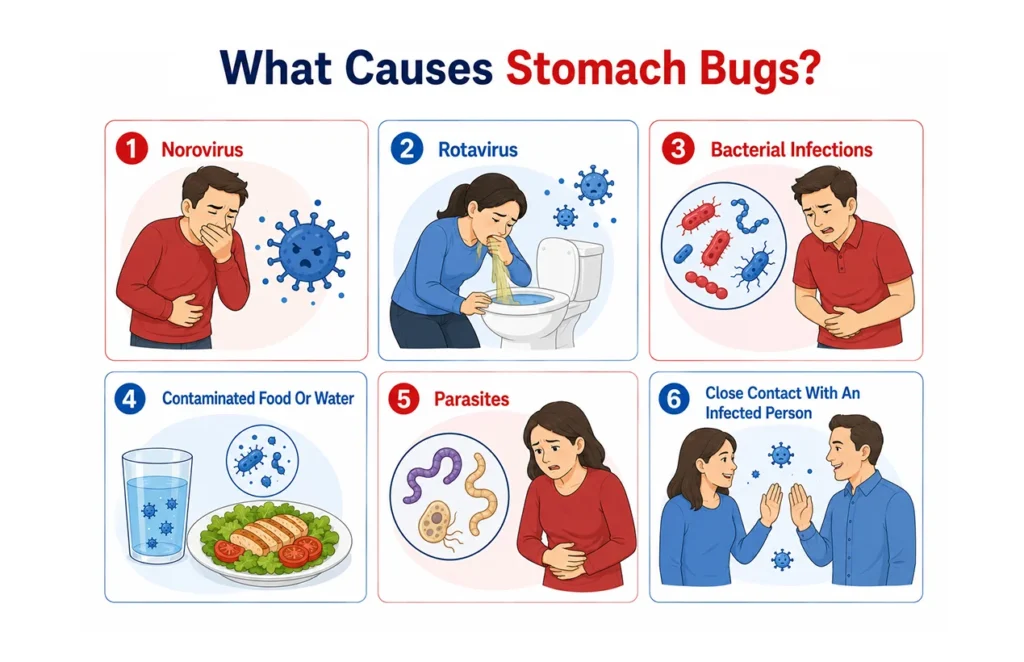
Stomach bugs can develop when harmful viruses, bacteria, parasites, or other infectious agents enter the digestive system. These infections can spread through contaminated food or water, contaminated surfaces, or close contact with an infected person. The specific cause can affect how quickly symptoms begin, how severe they become, and how long they last.
Norovirus
Norovirus is one of the most common causes of acute gastroenteritis and spreads extremely easily. It can pass from person to person and can also contaminate food, water, and surfaces. Symptoms often appear suddenly and include vomiting, watery diarrhea, nausea, and stomach cramps.
Rotavirus
Rotavirus is another viral cause of gastroenteritis and primarily affects infants and young children. It can cause severe watery diarrhea, vomiting, fever, and abdominal discomfort. Vaccination has significantly reduced severe rotavirus illness in children.
Bacterial Infections
Bacteria such as Salmonella, Campylobacter, E. coli, and Clostridium perfringens can cause gastroenteritis after contaminated food or water is consumed. Symptoms may include diarrhea, abdominal cramps, vomiting, and fever. Some bacterial infections can become serious and may require medical evaluation or targeted treatment.
Contaminated Food or Water
Eating or drinking something contaminated with harmful microorganisms can trigger gastroenteritis and foodborne illness. Contamination can occur during food production, preparation, storage, or handling. Undercooked foods, unpasteurized products, contaminated water, and improperly stored foods can increase the risk.
Parasites
Parasites such as Giardia and Cryptosporidium can infect the digestive tract through contaminated food or water. These infections may cause diarrhea, stomach cramps, nausea, bloating, and fatigue. Unlike some short-lived viral infections, certain parasitic infections can cause digestive symptoms that persist for weeks.
Close Contact With An Infected Person
Stomach viruses can spread rapidly in households, schools, workplaces, healthcare facilities, and other crowded environments. Touching contaminated surfaces and then touching your mouth can transfer infectious particles into your digestive system. Careful handwashing and avoiding food preparation while sick can help reduce transmission.
How Long Does A Stomach Bug Last?
The duration of a stomach bug depends on the infectious agent involved, the severity of the illness, and your overall health. Some people begin feeling better within a day or two, while others may experience diarrhea, weakness, or digestive changes for longer. If symptoms are not improving or are getting worse, medical evaluation may be necessary.
- Less Than 24 Hours: Some mild cases can cause short-lived nausea, vomiting, diarrhea, and stomach cramps that improve within a day.
- 1 To 3 Days: Many viral stomach bugs improve within this period as the immune system clears the infection. Vomiting often settles before diarrhea completely resolves.
- 4 To 7 Days: Some infections can cause diarrhea, abdominal cramps, fever, and weakness for several days before gradually improving.
- More Than 1 Week: Persistent diarrhea or other digestive symptoms may occur with certain bacterial or parasitic infections. Symptoms lasting this long should be discussed with a healthcare professional.
- Several Weeks: Some gastrointestinal infections can cause prolonged diarrhea or digestive problems for weeks. Ongoing symptoms, weight loss, blood in the stool, or worsening weakness require medical evaluation.
When to Go to the ER For A Stomach Bug
Most stomach bugs can be managed at home with fluids, rest, and careful monitoring. However, severe vomiting and diarrhea can cause dangerous dehydration, while certain symptoms may indicate a more serious infection or another medical condition.
- Severe Dehydration: Very little urination, severe dizziness, fainting, or extreme weakness.
- Uncontrollable Vomiting: You cannot keep fluids down.
- Bloody Diarrhea: Blood appears in your stool.
- Severe Abdominal Pain: Intense or worsening stomach pain.
- High Fever: A high fever occurs with severe symptoms.
- Confusion Or Fainting: You become confused, unusually drowsy, or faint.
- Worsening Symptoms: Your symptoms suddenly become severe or continue getting worse.
Stomach Bug Treatment
There is usually no specific medicine that cures a viral stomach bug. Treatment focuses on preventing dehydration, replacing lost electrolytes, controlling uncomfortable symptoms when appropriate, and allowing the body time to recover. Most doctors recommend avoiding unnecessary antibiotics because they do not treat viral infections.
- Oral Rehydration Solution: Most doctors recommend oral rehydration solutions to replace water and electrolytes lost through vomiting and diarrhea. Take small, frequent sips if nausea makes drinking difficult.
- Fluids: Water, broth, and other suitable fluids can help maintain hydration. Frequent small amounts may be easier to tolerate than drinking a large quantity at once.
- Eat As Tolerated: Most doctors recommend eating when you feel able rather than fasting for prolonged periods. Start with foods you can tolerate and gradually return to your normal diet.
- Loperamide: Most doctors recommend loperamide only for certain adults with uncomplicated diarrhea. It should not be used when there is bloody diarrhea or a significant fever unless a healthcare professional advises you to do so.
- Bismuth Subsalicylate: Most doctors recommend bismuth subsalicylate for some adults with uncomplicated diarrhea and stomach discomfort. It may not be appropriate for everyone, so follow the product directions and medical advice.
- Anti-Nausea Medicine: A healthcare professional may recommend medication to control severe nausea or vomiting when symptoms prevent you from drinking enough fluids.
- IV Fluids: Severe dehydration may require intravenous fluids in an emergency department. IV fluids can replace water and electrolytes when drinking is not enough or cannot be tolerated.
- Rest: Adequate rest supports recovery while your body fights the infection. Avoid alcohol and foods or drinks that make your symptoms worse until your digestion improves.
Stomach Bug Care at Exceptional Emergency Centers
Most stomach bugs improve within a few days, but persistent vomiting, severe diarrhea, dehydration, or worsening symptoms can become serious. If you cannot keep fluids down, have bloody diarrhea, severe abdominal pain, or signs of dehydration, do not wait for symptoms to worsen. Visit our 24/7 emergency room, where experienced emergency physicians are ready to provide prompt evaluation and treatment.
At Exceptional Emergency Centers, our board-certified emergency physicians are available 24/7 to evaluate prolonged or severe stomach bug symptoms and related complications. We provide diagnostic testing, IV fluids for dehydration, medications to control severe symptoms, and personalized emergency care to support a safe recovery.
Key Takeaways
- Most stomach bugs improve within 1 to 3 days, but some infections can last longer.
- Common symptoms include vomiting, diarrhea, nausea, stomach cramps, fever, and weakness.
- Norovirus is a common cause, but bacteria, parasites, and contaminated food or water can also cause gastroenteritis.
- Replacing lost fluids and electrolytes is one of the most important parts of recovery.
- Seek emergency care for severe dehydration, persistent vomiting, bloody diarrhea, severe abdominal pain, high fever, confusion, or fainting.
Frequently Asked Questions
Are Stomach Bugs Contagious?
Yes, many stomach bugs are highly contagious, especially viral infections such as norovirus. They can spread through contaminated hands, surfaces, food, water, and close contact with an infected person.
How Long Are You Contagious With A Stomach Bug?
You are generally most contagious while experiencing symptoms and during the first few days after recovery. With norovirus, the virus can remain in stool for 2 weeks or more, so careful handwashing and hygiene remain important after symptoms stop.
How Is Stomach Bug Transmitted?
Stomach bugs commonly spread when tiny particles of vomit or stool enter another person’s mouth. This can happen through contaminated hands, food, water, surfaces, or close contact with an infected person.