

A high fever in adults is not always harmless, especially when it appears suddenly, becomes severe, or is paired with other worrying symptoms. While fever is often the body’s natural response to infection, it can sometimes signal a serious underlying condition that needs immediate emergency attention.
Many adults try to wait it out or treat fever at home, but delaying care can be risky when the body is fighting a severe infection or struggling to regulate temperature. Understanding when fever becomes an emergency or urgent care for high fever is needed, prevent complications and ensure timely treatment in a potentially life-threatening situation, and visit our emergency rooms in Orange County for immediate care.
What Is a High Fever
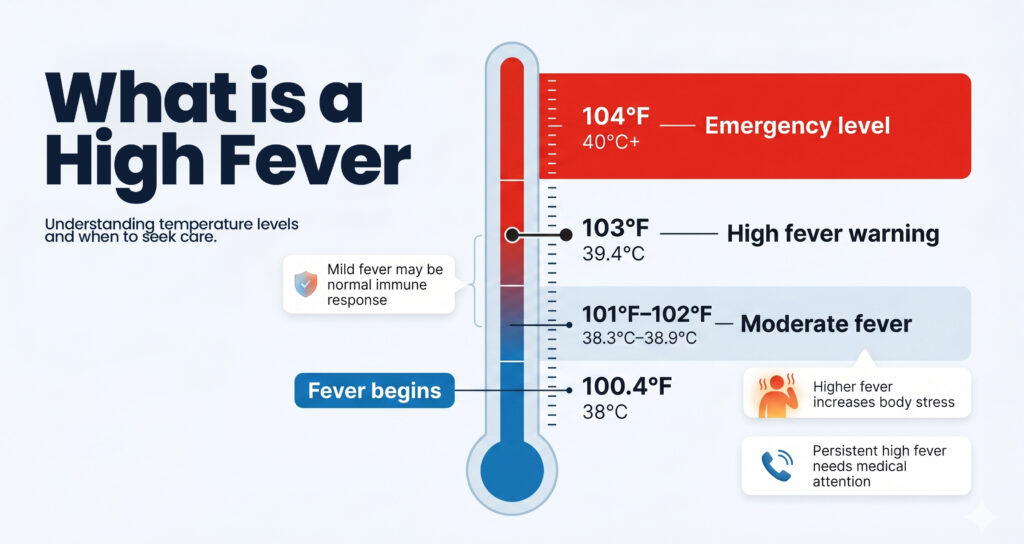
A high fever in adults refers to a significant rise in body temperature that signals the body may be fighting a strong infection or other serious condition. While mild fever can be a normal immune response, higher temperatures place more stress on the body and may indicate the need for medical attention. Recognizing fever levels helps determine when symptoms are becoming more serious. Understanding fever levels helps identify severity:
- 100.4°F (38°C) → Fever begins
- 101°F–102°F (38.3°C–38.9°C) → Moderate fever
- 103°F (39.4°C) → High fever warning
- 104°F (40°C) or higher → Emergency level
A high fever becomes more concerning when it does not improve with medication or continues rising. At this stage, the body is under significant stress and complications may develop quickly, and may require a high fever ER for prompt evaluation and treatment.
What Causes a Fever
Fever in adults can develop due to many different reasons, ranging from mild infections to serious and life-threatening conditions. It usually occurs when the immune system responds to an illness, infection, or physical stress. Identifying the underlying cause is important for proper and timely treatment.
Serious Infections
Conditions like pneumonia or sepsis occur when infection spreads in the body and triggers a strong immune response. These require urgent emergency care.
Viral Illnesses
Common viruses like influenza or COVID-19 can cause fever along with fatigue, body aches, and respiratory symptoms. Most cases are mild but can still become severe.
Heat Stroke
Overheating due to prolonged heat exposure or physical exertion can raise body temperature dangerously and lead to organ stress if not treated quickly.
Underlying Medical Conditions
Autoimmune disorders or chronic infections may also cause recurring or unexplained fever that requires further evaluation.
Fever Symptoms
Fever in adults can present with different symptoms depending on the severity of the underlying condition. While mild fever may only cause discomfort, more serious cases can affect energy levels, mental clarity, and overall body function. Recognizing warning signs early can help prevent complications, and checking ER near me can help ensure timely access to care when symptoms worsen.
High Fever With Chills
A dangerous fever often comes with intense chills or uncontrollable shivering. This may indicate the body is struggling to regulate temperature during a severe infection.
Confusion or Lethargy
Confusion, extreme tiredness, or difficulty staying awake may suggest the fever is affecting brain function. In severe cases, the person may appear disoriented or unresponsive.
Rapid Heartbeat or Breathing
A fast heartbeat or rapid breathing can signal dehydration, systemic infection, or early sepsis. These symptoms require immediate medical attention.
Fever Treatment
Fever treatment at home mainly focuses on reducing discomfort and supporting the body while it fights the underlying cause. In mild cases, simple care steps can help manage symptoms temporarily. However, if the fever is severe or getting worse, medical attention should not be delayed.
- Wear light, breathable clothing
- Drink water or electrolyte fluids to prevent dehydration
- Use fever-reducing medication like acetaminophen or ibuprofen if safe
- Rest in a cool, well-ventilated environment
These measures can help ease symptoms, but they do not treat the underlying cause of fever. If symptoms worsen or persist, emergency evaluation is necessary.
When to Go to the ER
Certain symptoms alongside fever indicate a medical emergency and require immediate evaluation. These warning signs often suggest a serious infection or complication that the body cannot manage on its own. Seeking timely emergency care at a 24/7 emergency room with an average wait time of 12 minutes can help prevent severe outcomes and ensure proper treatment.
- Chest pain or difficulty breathing may indicate a serious lung or heart infection
- Stiff neck or severe headache can be linked to conditions like meningitis that need urgent care
- Persistent vomiting or inability to keep fluids down can quickly lead to dehydration
- Signs of sepsis include confusion, rapid heartbeat, low blood pressure, and extreme weakness
- Sepsis is a medical emergency and requires immediate hospital treatment
When to Seek Emergency Care
High fever in adults should never be ignored when it becomes severe, persistent, or comes with unusual symptoms. While many cases are caused by mild infections, some may point to serious conditions such as pneumonia, sepsis, or heat-related illness that require urgent attention. Recognizing warning signs early can make a significant difference in preventing complications.
If you or a loved one is experiencing fever along with confusion, chest pain, breathing difficulty, or signs of dehydration, do not wait for it to improve on its own. Visit Exceptional Emergency Centers for immediate evaluation and timely emergency care to ensure safe recovery and peace of mind.
Key Takeaways
- A high fever in adults (103°F or above) may indicate a serious infection or medical condition that needs prompt evaluation.
- Fever is not a disease but a symptom of the body fighting infections, inflammation, or other health issues.
- Warning signs like confusion, rapid breathing, chest pain, or dehydration should never be ignored.
- Common causes include viral infections, bacterial infections, heat stroke, and underlying medical conditions.
- Emergency care is necessary when fever becomes severe, persistent, or does not improve with basic treatment.
FAQs
What temperature is considered a high fever in adults?
A high fever in adults is generally considered 103°F (39.4°C) or higher. At this level, the body may be under significant stress and should be monitored closely.
Can a high fever go away on its own?
Yes, mild to moderate fevers often resolve on their own as the body fights infection. However, high or persistent fever may require medical treatment.
When should I worry about a fever?
You should worry if fever is accompanied by chest pain, confusion, difficulty breathing, severe dehydration, or if it lasts more than a few days without improvement.