
As temperatures rise, outdoor activities, work routines, and daily travel can quickly increase your exposure to harmful heat and sunlight. Many people underestimate how fast the body can become dehydrated or overheated in extreme temperatures.
Heat-related conditions such as dehydration, sunburn, and heatstroke can develop rapidly and may become life-threatening if ignored, which is why recognizing early warning signs is critical for timely treatment and why emergency care may be required immediately if symptoms worsen. In such cases, visit Exceptional Emergency Centers in the Amarillo emergency room, emergency room Amarillo TX, emergency room Beaumont, TX, Fort Worth ER, emergency rooms in Orange County, Port Arthur emergency room, and Tyler emergency room for prompt evaluation and treatment when heat-related symptoms become severe.
Why Sun Protection Is Important in Summer
Summer sun safety is essential because UV exposure and high temperatures can cause skin damage, dehydration, and serious heat-related illness. Without protection, the body can quickly become overwhelmed, especially during prolonged outdoor exposure.
An NIH-backed study found that 37.1% of U.S. adults experienced at least one sunburn within a year, showing that harmful sun exposure remains common. The findings highlight the importance of consistent sun protection to reduce health risks.
Dangers of Excessive Summer Sun Exposure
Extended exposure to heat and UV rays can place significant stress on the body. These effects may start mildly but can quickly progress into serious medical conditions if not addressed early.
- Sunburn: Overexposure to UV rays can damage the skin, causing redness, pain, swelling, and peeling. Severe sunburns may increase the risk of long-term skin damage and skin cancer.
- Dehydration: Hot weather and excessive sweating can cause the body to lose fluids faster than they are replaced. This may lead to dizziness, fatigue, headaches, and weakness.
- Heat Exhaustion: Prolonged exposure to high temperatures can overwhelm the body’s cooling system. Common symptoms include heavy sweating, nausea, muscle cramps, and lightheadedness.
- Heatstroke: Heatstroke is a medical emergency that occurs when the body can no longer regulate its temperature. Symptoms may include confusion, loss of consciousness, and a dangerously high body temperature.
- Skin Cancer Risk: Repeated exposure to ultraviolet radiation can damage skin cells over time. This increases the likelihood of developing certain types of skin cancer later in life.
Heat Stroke vs Heat Exhaustion: What’s the Difference?
Both conditions are caused by heat exposure, but heatstroke is far more dangerous and requires emergency care.
- Body Temperature: Heat exhaustion typically causes a moderately elevated body temperature, while heat stroke often raises body temperature to 104°F (40°C) or higher.
- Mental Status: People with heat exhaustion usually remain alert, although they may feel weak or dizzy. Heat stroke can cause confusion, disorientation, slurred speech, or loss of consciousness.
- Sweating: Excessive sweating is common with heat exhaustion. In heat stroke, the skin may become hot and dry, although sweating can still occur in some cases.
- Symptoms: Heat exhaustion often causes fatigue, nausea, headaches, muscle cramps, and heavy sweating. Heat stroke may trigger severe headaches, rapid heartbeat, confusion, seizures, or fainting.
- Medical Attention: Heat exhaustion should be treated promptly with rest, cooling measures, and hydration. Heat stroke is a medical emergency that requires immediate treatment to prevent serious complications.
Also read: Tips to Avoid Heat Stroke
How to Protect Your Skin from the Sun
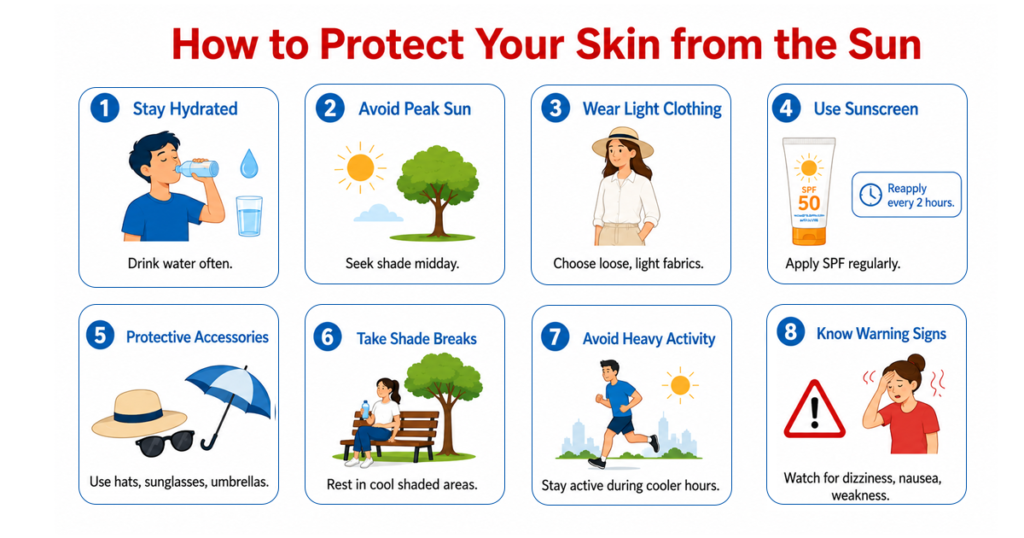
Protecting your skin from the sun is one of the most effective ways to prevent sun-related illnesses and long-term skin damage. Even on cloudy days, ultraviolet (UV) rays can affect your skin and increase health risks over time. Taking simple precautions can help you enjoy outdoor activities more safely while reducing the likelihood of painful burns and other complications.
1. Wear Broad-Spectrum Sunscreen
Applying a broad-spectrum sunscreen helps shield your skin from both UVA and UVB rays. Choose a product with an SPF of 30 or higher and apply it generously before going outdoors. Reapply every two hours or after swimming or sweating. Consistent use can significantly reduce the risk of sunburn and skin damage.
How Often Should You Reapply Sunscreen?
You should reapply sunscreen about every 2 hours to maintain proper UV protection. This ensures your skin stays protected throughout sun exposure.
2. Seek Shade During Peak Sun Hours
The sun’s rays are strongest between 10 a.m. and 4 p.m. Whenever possible, stay under a tree, umbrella, or covered area during these hours. Limiting direct sun exposure can help protect your skin and reduce heat-related stress. Planning outdoor activities earlier or later in the day is often safer.
3. Wear Protective Clothing
Lightweight, long-sleeved shirts and long pants provide an extra layer of protection from UV rays. Many clothing brands also offer garments with built-in UV protection. Loose-fitting fabrics can keep you comfortable while reducing sun exposure. Covering your skin is a simple yet effective preventive measure.
4. Use a Wide-Brimmed Hat
A wide-brimmed hat helps protect your face, ears, neck, and scalp from direct sunlight. These areas are commonly exposed and often overlooked when applying sunscreen. Choosing a hat with a brim of at least three inches provides better coverage. It can also help keep you cooler in hot weather.
5. Wear UV-Blocking Sunglasses
Your eyes can be damaged by prolonged exposure to ultraviolet rays. Sunglasses that block 100% of UVA and UVB rays help protect your vision and reduce eye strain. They also protect the delicate skin around your eyes from sun damage. Wearing them outdoors should be part of your daily routine.
6. Stay Hydrated
Proper hydration helps your body regulate temperature more effectively in hot weather. Drinking water throughout the day can reduce the risk of dehydration and heat-related illnesses. Avoid waiting until you feel thirsty to drink fluids. Staying hydrated supports overall health and comfort during outdoor activities.
7. Avoid Indoor Tanning
Tanning beds expose the skin to concentrated ultraviolet radiation that can increase the risk of skin cancer. They may also accelerate premature aging and skin damage. A tan is a sign of skin injury rather than healthy skin. Safer alternatives, such as self-tanning products, are available.
8. Protect Children from Direct Sun Exposure
Children’s skin is especially sensitive to UV damage. Encourage kids to wear hats, protective clothing, and sunscreen when spending time outdoors. Frequent shade breaks and proper hydration are also important. Establishing good sun safety habits early can benefit them for years to come.
9. Check Your Skin Regularly
Monitoring your skin for new or changing spots can help detect potential problems early. Pay attention to moles, freckles, or areas that look unusual. Early identification of skin changes allows for prompt medical evaluation if needed. Regular skin checks are an important part of long-term sun safety.
When to Go to the ER
Sun-related illnesses can become serious very quickly if warning signs are ignored. While mild symptoms may improve with rest and hydration, severe cases need immediate medical attention to prevent complications. Knowing when to seek emergency care can make a critical difference in recovery and safety, especially during extreme heat conditions.
- High body temperature above 104°F (40°C).
- Confusion, dizziness, or fainting.
- Severe dehydration (no urination, extreme thirst).
- Rapid heartbeat or breathing difficulty.
- Persistent vomiting or nausea.
- Hot, dry skin or lack of sweating.
- Seizures after heat exposure.
If your loved one is experiencing any of these dangerous signs, visit us at our Amarillo emergency room, emergency room Amarillo TX, emergency room Beaumont, TX, Fort Worth ER, emergency rooms in Orange County, Port Arthur emergency room, and Tyler emergency room without delay.
Sun Protection & Emergency Care | Exceptional Emergency Centers
Summer sun safety is important for preventing dehydration, sunburn, and serious heat-related conditions like heat exhaustion and heatstroke. Extreme temperatures can quickly strain the body, especially in children, older adults, and outdoor workers. Simple preventive steps can significantly reduce the risk of heat-related illness.
If symptoms like dizziness, weakness, confusion, or fatigue occur, they should not be ignored. Severe cases require immediate medical attention. Exceptional Emergency Centers provide fast, reliable emergency care for heat-related and other urgent conditions when every second matters.
Key Takeaways
- Heat exposure can quickly lead to dehydration, sunburn, and heatstroke.
- Heatstroke is a medical emergency requiring immediate ER care.
- Early symptoms include dizziness, fatigue, and nausea.
- Children, elderly, and outdoor workers are high-risk groups.
- Hydration and sun protection significantly reduce risk.
- Prompt emergency care prevents life-threatening complications.
Frequently Asked Questions
What is heat exhaustion?
Heat exhaustion is a heat-related condition caused by excessive heat and dehydration. It leads to sweating, dizziness, and weakness. It can worsen if not treated early.
How long does heat exhaustion last?
It usually improves within 1 to 2 days with rest and fluids. Cooling the body speeds up recovery. Severe cases may take longer.
How to treat sunburn?
Move out of the sun and cool the skin with water or a cold compress. Apply aloe vera or a gentle moisturizer. Stay hydrated and avoid further sun exposure.
How long does heatstroke last?
Heatstroke is a medical emergency that needs immediate treatment. Recovery can take several days to weeks. Fast medical care improves outcomes.
How To Prevent Heat Stroke?
Stay in shade, avoid peak sun hours, drink plenty of water, and wear light clothing to keep your body cool.
How To Prevent Heat Exhaustion?
Stay hydrated, take breaks in cool areas, and avoid heavy activity in extreme heat.
How Long Does Sunburn Last?
Mild sunburn lasts 3–5 days, while severe burns may take over a week to heal.
Does Sunscreen Expire?
Yes, sunscreen expires in about 2–3 years and becomes less effective after that.