

A sudden fever, body aches, and exhaustion can completely disrupt your routine and leave you wondering what’s happening. At that moment, “How long does the flu last?” becomes the first urgent question most people ask. The uncertainty often adds more stress when symptoms feel intense and unpredictable.
For many people, the flu can disrupt work, school, and daily life without warning. If symptoms worsen or do not improve after a few days, complications may be developing, and seeking prompt care at our Amarillo emergency room can help prevent more serious health risks.
What Is Flu?
The flu (influenza) is a contagious respiratory infection caused by influenza viruses that affect the nose, throat, and lungs. It spreads mainly through respiratory droplets when an infected person coughs or sneezes. Symptoms usually appear suddenly and can range from mild to severe, sometimes leading to complications.
According to a PubMed meta-analysis, seasonal influenza affects about 8%–11% of adults annually, with higher infection rates in children reaching up to ~12%–22% depending on exposure. This shows how easily the virus spreads and its significant yearly impact.
Flu Symptoms That Should Never Be Ignored
Some flu symptoms may seem typical at first, but certain warning signs can indicate a more serious infection or complications that need urgent medical attention.
- Difficulty breathing or shortness of breath.
- Persistent chest pain or pressure.
- High fever that does not improve with medication.
- Severe weakness or inability to stay awake.
- Confusion or sudden changes in alertness.
- Bluish lips or face indicating low oxygen levels.
- Severe dehydration (very little urination, dizziness).
- Symptoms that improve but suddenly return worse than before.
If you or a loved one experiences any of these warning signs, visit the ER for flu symptoms right away to receive prompt medical evaluation and treatment.
Also read: Flu A vs Flu B: Which is Worse?
How Long Does the Flu Last Usually
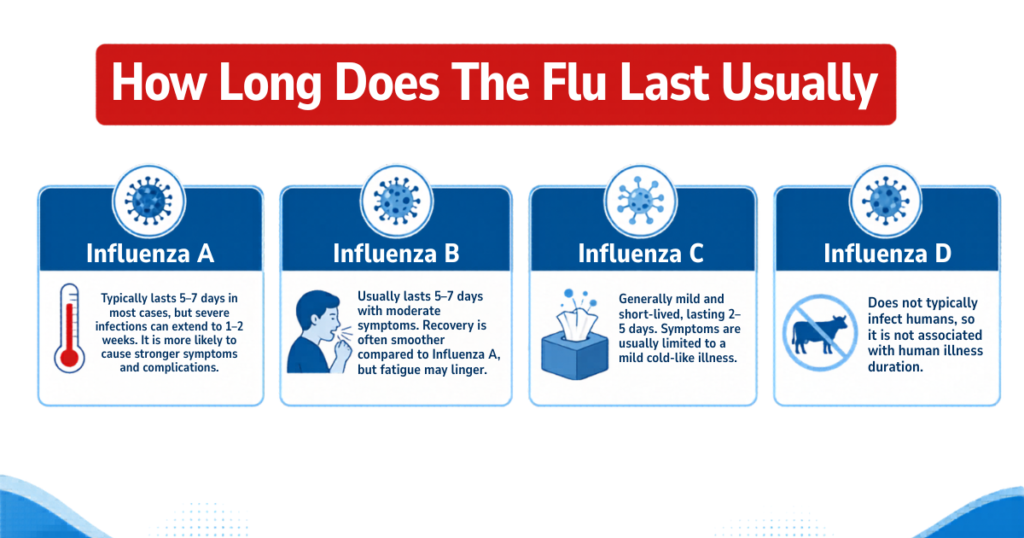
Most flu infections last around 5 to 7 days, but tiredness and cough can continue for up to 2 weeks. The exact duration depends on the type of influenza virus, immune system strength, and whether complications develop. Symptoms usually peak in the first few days and then gradually improve.
- Influenza A: Typically lasts 5–7 days in most cases, but severe infections can extend to 1–2 weeks. It is more likely to cause stronger symptoms and complications.
- Influenza B: Usually lasts 5–7 days with moderate symptoms. Recovery is often smoother compared to Influenza A, but fatigue may linger.
- Influenza C: Generally mild and short-lived, lasting 2–5 days. Symptoms are usually limited to a mild cold-like illness.
- Influenza D: Does not typically infect humans, so it is not associated with human illness duration.
How Long Does the Flu Last in Adults
In adults, flu symptoms usually last around 5 to 7 days, but fatigue, weakness, and cough can continue for up to 2 weeks. The severity depends on the immune system, flu type, and whether any complications develop. Symptoms are typically worse during the first 2–3 days before gradual improvement begins.
- Influenza A: In adults, it can last 5–7 days but may extend to 1–2 weeks in severe cases. Higher risk of complications like bronchitis or pneumonia can prolong recovery.
- Influenza B: Usually lasts 5–7 days with moderate symptoms. Most adults recover without complications, though tiredness may persist.
- Influenza C: Mild and short-lasting, generally 2–4 days. It often feels like a common cold and resolves quickly.
- Severe or Complicated Flu: Can last 1–2 weeks or longer, especially if secondary infections or underlying health conditions are present. Medical care may be needed.
How Long Does The Flu Last In Kids
- Influenza A in Kids: Usually lasts 5–7 days but may be more intense in children. High fever and fatigue are common and can lead to longer recovery.
- Influenza B in Kids: Typically lasts 4–7 days. Symptoms are similar but often slightly milder than Influenza A.
- Influenza C in Kids: Mild illness lasting 2–4 days. Often mistaken for a common cold with quick recovery.
- Complicated Cases in Children: Can last longer than 7–10 days if complications develop. Children may need closer monitoring if symptoms worsen or persist.
Also read: Can You Get the Flu Twice?
How Do You Test for the Flu
Flu testing helps confirm whether symptoms are caused by an influenza virus or another respiratory infection. Doctors usually recommend testing when symptoms are severe, at-risk patients are involved, or results may change treatment decisions such as starting antiviral medication early.
- Rapid Influenza Diagnostic Test (RIDT): A quick swab from the nose or throat that provides results in 10–15 minutes. It detects viral antigens but may have lower accuracy compared to lab tests.
- RT-PCR Test (Molecular Test): A highly accurate test that detects influenza genetic material. Results take a few hours to a day and are considered the most reliable for confirming flu.
- Respiratory Panel Testing: A broader lab test that checks for flu along with other viruses like COVID-19 and RSV. It is useful when symptoms overlap with multiple respiratory infections.
- Nasopharyngeal Swab Collection: A healthcare provider inserts a swab deep into the nose to collect a sample. It is the most common method used for both rapid and PCR testing.
When To Go To The ER
Most flu cases improve with rest and fluids, but some symptoms can signal serious complications that need emergency care. If symptoms worsen quickly or feel severe, do not delay seeking medical help.
- Difficulty Breathing or Shortness of Breath: Trouble breathing or air hunger needs urgent care.
- Chest Pain or Pressure: Ongoing chest pain may signal serious complications.
- Confusion or Severe Weakness: Sudden confusion or extreme weakness can indicate severe illness.
- High or Persistent Fever: Fever not improving with medication may suggest complications.
- Severe Dehydration: Dizziness or very low urination needs immediate attention.
- Bluish Lips or Face: A bluish tint indicates low oxygen and is an emergency.
If you or a loved one develops these symptoms, visit the closest emergency room near me for prompt treatment.
How To Treat The Flu
Flu treatment mainly focuses on relieving symptoms, supporting recovery, and preventing complications. Most healthy individuals recover at home with rest and proper hydration, but early treatment is important in severe cases or high-risk patients.
- Rest and Sleep: Getting adequate rest helps the immune system fight the virus more effectively and speeds up recovery.
- Hydration: Drinking water, oral rehydration solutions, and warm fluids helps prevent dehydration and soothes symptoms like sore throat and fever.
- Antiviral Medicines (Oseltamivir – Tamiflu, prescribed by the doctor): These medications may reduce the severity and duration of flu if started early, usually within 48 hours of symptom onset.
- Fever and Pain Relief (Paracetamol/Acetaminophen, recommended by the doctor): Helps reduce fever, headache, and body aches, improving comfort during illness.
- Cough Relief (Cough suppressants or expectorants, recommended by the doctor): May be used to manage persistent cough depending on symptom type and severity.
- Steam Inhalation and Humidifiers: Helps ease nasal congestion and breathing discomfort by keeping airways moist.
If flu symptoms become severe or complications develop, visit our ER for prompt evaluation and treatment. With ER wait times as low as 15 minutes, you can receive care without unnecessary delays.
Flu Treatment at Exceptional Emergency Centers
When flu symptoms start affecting your ability to work, rest, or breathe comfortably, timely medical care can help prevent complications and support faster recovery. At Exceptional Emergency Centers, we provide rapid evaluation, on-site testing, and personalized treatment to manage flu symptoms safely and effectively.
If you’re still asking “How long does the flu last and when should you seek treatment?”, the answer depends on how severe your symptoms are and how quickly care begins. Getting professional help at the right time can reduce recovery time and lower the risk of serious complications.
Key Takeaways
- Flu is a contagious respiratory infection that spreads easily and can range from mild to severe.
- Most flu cases last about 5 to 7 days, with fatigue and cough sometimes lasting up to 2 weeks.
- Influenza A usually lasts 5–7 days but can extend to 1–2 weeks in severe cases, while Influenza B typically lasts 5–7 days.
- Influenza C is usually mild and lasts about 2–4 days, and Influenza D does not typically infect humans.
- Warning signs like difficulty breathing, chest pain, or confusion require immediate emergency care.
- Early rest, hydration, and timely medical treatment can help reduce complications and speed up recovery.
Frequently Asked Questions
H3: What Is Flu B?
Influenza B is a type of flu virus that mainly infects humans and usually causes seasonal outbreaks. It is often milder than Flu A but can still lead to serious illness, especially in children and high-risk individuals.
What Is Flu A?
Influenza A is the most common and potentially most severe flu type. It can infect humans and animals and is responsible for seasonal epidemics and past pandemics.
Which Flu Is Worse, A Or B?
Influenza A is generally considered more severe because it spreads more easily and is more likely to cause complications and large outbreaks compared to Influenza B.
Is the Flu Spreadable?
Yes, the flu is highly contagious and spreads through respiratory droplets when an infected person coughs, sneezes, or talks.