
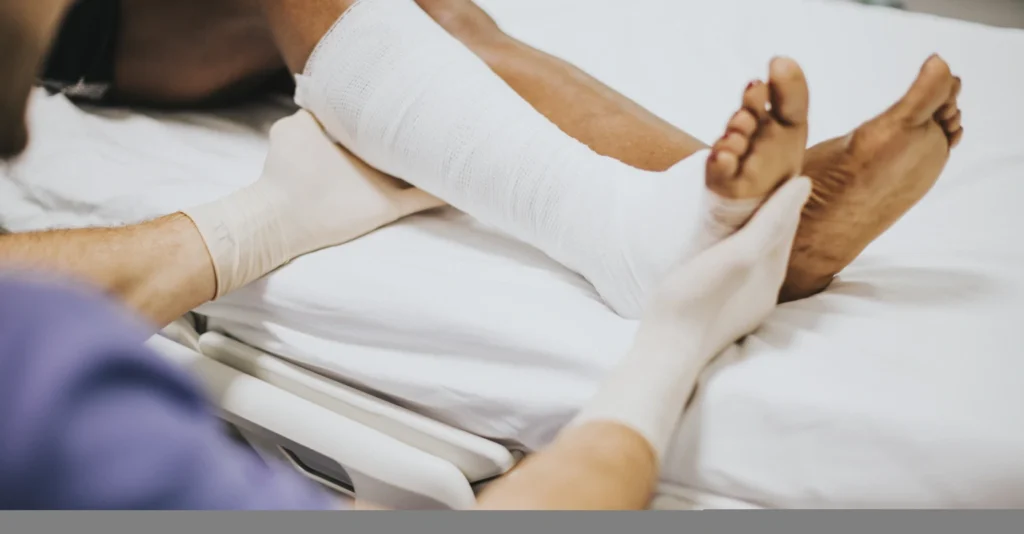
Broken bones are one of the most common medical emergencies seen in emergency rooms across the United States, affecting people of all ages, from young children to older adults. A fracture happens when the force applied to a bone exceeds what it can withstand, causing it to crack, split, or break completely, depending on the nature and intensity of the impact. Whether the injury results from a car accident, a sports collision, or simply a misstep on an uneven surface, the pain and disruption a broken bone causes can be immediate, severe, and frightening.
What many people do not realize is that not all fractures are obvious at first glance, and some broken bones can go unrecognized for days without proper imaging. If you are experiencing sharp localized pain, swelling, or difficulty using a limb after an injury, getting evaluated at an ER or seeking urgent care for fracture as soon as possible is the safest and smartest decision you can make.
What Is a Fractured Bone?
A fractured bone is a bone that has lost its structural integrity due to force, stress, or disease, resulting in a partial or complete break anywhere along its length. The term “fracture” and “broken bone” are used interchangeably in medicine and refer to the same type of injury, regardless of how severe the break actually is. According to the National Institutes of Health, fractures are one of the most frequently treated orthopedic injuries worldwide and can affect virtually any bone in the human body.
Warning Signs of a Broken Bone You Should Never Ignore
- Immediate and intense pain at the injury site that gets worse with any movement
- Rapid swelling and bruising appear around the injured area within minutes
- A visible deformity or unnatural positioning of the limb or joint
- A cracking or popping sound is heard at the moment of injury
- Difficulty or complete inability to bear weight or use the affected area
- Numbness, tingling, or coldness near the injury suggests nerve or blood vessel involvement
- Skin that is broken or punctured near the injury site, exposing the underlying tissue
Types of Bone Fractures
Bone fractures are classified based on the pattern of the break, the forces that caused it, and whether the skin remains intact. Knowing the different types helps medical professionals at an Amarillo emergency room determine the most appropriate and effective treatment plan for each specific injury.
- Closed Fracture: The bone breaks, but the skin remains intact with no open wound, making it less vulnerable to infection than other fracture types.
- Open Fracture: The broken bone pierces through the skin and is exposed to the outside environment, creating an immediate and serious risk of bone infection.
- Hairline Fracture: A very thin and partial crack in the bone, often caused by repetitive stress that may not show up clearly on a standard X-ray.
- Comminuted Fracture: The bone shatters into three or more pieces, typically from high-energy trauma such as a serious car accident or severe fall.
- Transverse Fracture: A straight horizontal break across the bone, usually caused by a sharp, direct blow to the affected area.
- Oblique Fracture: A diagonal break that runs at an angle across the bone, often resulting from a twisting or angled force applied during an injury.
- Greenstick Fracture: A partial break where the bone bends and cracks on one side without breaking all the way through, most commonly seen in young children.
Causes of Bone Fracture
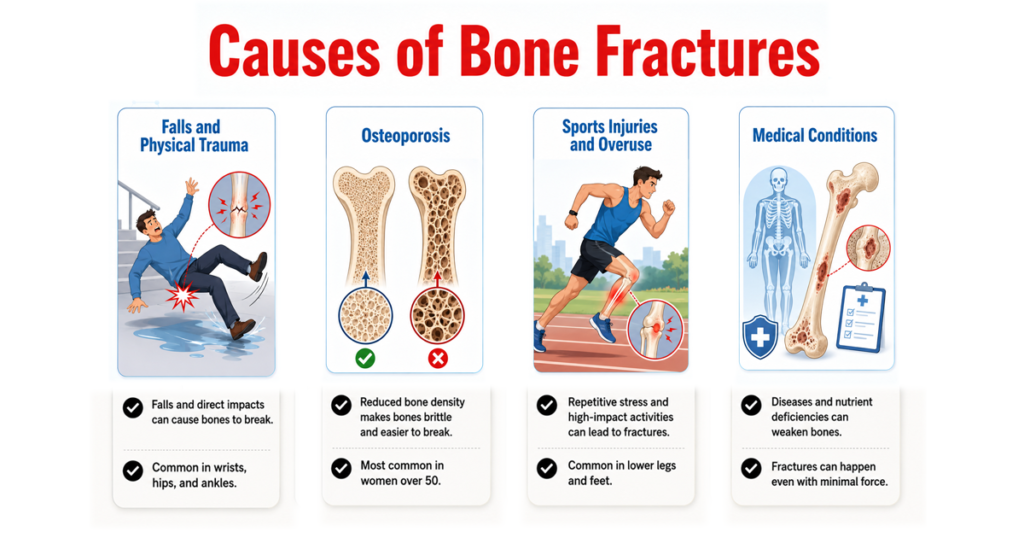
Fractures happen for many reasons, ranging from sudden trauma to gradual weakening of bone tissue over time. Identifying the cause is important not only for treatment but also for preventing future injuries.
Falls and Physical Trauma
Falls are the leading cause of fractures in both children and older adults, with wrists, hips, and ankles being the most commonly affected bones. The impact transfers force directly to the bone, and if that force exceeds its natural strength, a fracture occurs immediately. Older adults are especially vulnerable because age-related bone density loss makes their bones more susceptible to breaking even from minor falls.
Osteoporosis
Osteoporosis silently weakens bones by reducing their density, making them fragile enough to fracture from everyday activities that would not normally cause injury. According to the National Institute of Arthritis and Musculoskeletal and Skin Diseases, osteoporosis is responsible for more than 2 million fractures annually in the United States. Women over 50 are at particularly high risk because bone density declines significantly after menopause.
Sports Injuries and Overuse
High-impact sports and repetitive physical activities place significant stress on bones that can eventually lead to fractures over time. Stress fractures develop gradually when bones are not given adequate time to recover between intense training sessions. Runners, gymnasts, basketball players, and military recruits are most frequently affected by stress fractures in the lower legs and feet.
Medical Conditions
Conditions such as bone cancer, severe vitamin D deficiency, and genetic disorders like osteogenesis imperfecta compromise bone integrity and make fractures far more likely. These pathological fractures can occur with minimal or no trauma because the underlying disease has already significantly weakened the bone. Treating the underlying condition is just as important as treating the fracture itself to prevent recurrence.
Bone Fracture Symptoms You Mustn’t Ignore!
Recognizing the symptoms of a broken bone quickly can make a significant difference in treatment outcomes and the speed of recovery. While some fractures are immediately obvious, others can be subtle and easy to dismiss as a simple sprain or bruise without proper medical evaluation.
- Severe Localized Pain: Pain that is sharp, immediate, and precisely located at the injury site that worsens noticeably with any attempt to move or apply pressure.
- Swelling and Discoloration: Rapid onset swelling accompanied by bruising or discoloration that appears within minutes of the injury occurring.
- Deformity: An obvious abnormality in the shape or alignment of the limb that indicates the bone may have shifted significantly out of its normal position.
- Loss of Function: Inability to use, move, or bear weight on the injured area is one of the strongest indicators that a fracture has occurred.
- Neurological Symptoms: Tingling, numbness, or weakness near the fracture site suggests that nerves or blood vessels in the area may have been affected.
- Open Wound: Any break in the skin near the injury site that exposes deeper tissue requires immediate emergency evaluation without any delay.
How Long Does a Fractured Bone Take to Heal?
Healing time varies considerably depending on which bone is fractured, the severity of the break, the age of the patient, and whether any underlying conditions affect the body’s natural ability to repair bone tissue. Simple fractures in otherwise healthy adults typically take between 6 and 8 weeks to heal sufficiently with proper immobilization and rest. According to the National Library of Medicine, complex fractures involving multiple fragments, poor blood supply, or surgical repair can take anywhere from 3 to 6 months or longer to fully heal, and some patients require physical therapy for months afterward to fully restore normal strength and function.
How to Treat Bone Fractures
Treatment for a broken bone focuses on restoring the bone to its proper position, keeping it stable while it heals, managing pain effectively, and preventing complications that could affect long term recovery. The approach varies significantly depending on the location, type, and severity of the fracture.
- Casting and Splinting: The most common treatment for stable fractures, a cast or splint holds the bone in proper alignment and prevents movement while the bone heals naturally.
- Surgical Repair: Complex, unstable, or displaced fractures may require surgery to reposition bone fragments and secure them with metal plates, screws, nails, or rods.
- Pain Management: Anti-inflammatory medications and prescription pain relievers help control discomfort and reduce swelling during the initial stages of recovery.
- Traction: Used for certain femur or pelvis fractures to gently align the bone before definitive surgical or non-surgical treatment is applied.
- Physical Therapy: Rehabilitation exercises are prescribed after immobilization to rebuild muscle strength, restore flexibility, and regain a full range of motion.
- Nutritional Support: Adequate calcium and vitamin D intake is encouraged throughout recovery to support faster and stronger bone tissue regeneration.
- Management of Underlying Conditions: Conditions like osteoporosis or bone cancer that contributed to the fracture must be addressed alongside the fracture itself to prevent future breaks.
When to Go to the ER?
Some broken bones can wait for a scheduled appointment, but certain fractures and associated symptoms demand immediate emergency evaluation to prevent serious and potentially permanent complications from developing.
- Visible bone protruding through the skin or an open wound near the fracture site
- Severe deformity, significant shortening, or an obviously displaced limb after an injury
- Complete inability to move or bear any weight on the affected area whatsoever
- Signs of nerve damage, including numbness, tingling, or loss of sensation near the injury
- Fractures accompanied by significant blood loss, pale skin, or signs of shock
- Any suspected fracture of the head, neck, or spine following trauma
- Fractures in elderly patients, young children, or people with known bone conditions
Bone Fracture Care at Exceptional Emergency Center
Broken bones require fast and accurate evaluation to ensure proper healing and prevent long-term complications from developing. At Exceptional Emergency Centers, our team provides immediate imaging, expert diagnosis, and comprehensive treatment for all types of bone fractures. Whether you are dealing with a simple break or a complex fracture requiring urgent intervention, we are equipped to stabilize the injury, manage your pain, and get you on the right path to a complete recovery as quickly as possible.