

Key Takeaways
- Yellow mucus often indicates your immune system is fighting infection, irritation, or inflammation.
- Changes in mucus color can result from infections, allergies, or environmental irritants.
- Persistent or worsening symptoms may require evaluation at our emergency room in Livingston.
- Early intervention prevents complications and ensures proper treatment.
- Both medical and natural remedies can help clear thick yellow mucus and support respiratory health.
What Does Yellow Mucus Mean?
Yellow mucus indicates your immune system is responding to infection or irritation. A study found that over 80% of dark yellow or greenish sputum samples contained bacteria, compared with only 6% of lighter-colored mucus. This shows color can hint at bacterial presence, but it isn’t definitive. Viral infections or minor irritation can also cause yellow mucus.
What Does Yellow Mucus Indicate?
- Your immune system is actively fighting germs, irritants, or inflammation.
- Yellow color comes from dead white blood cells in mucus.
- Seen in colds, sinus infections, or allergies.
- Persistent or worsening mucus may indicate bacterial infection.
- Color alone cannot confirm the infection type.
Also Read: Why Is My Mucus Black
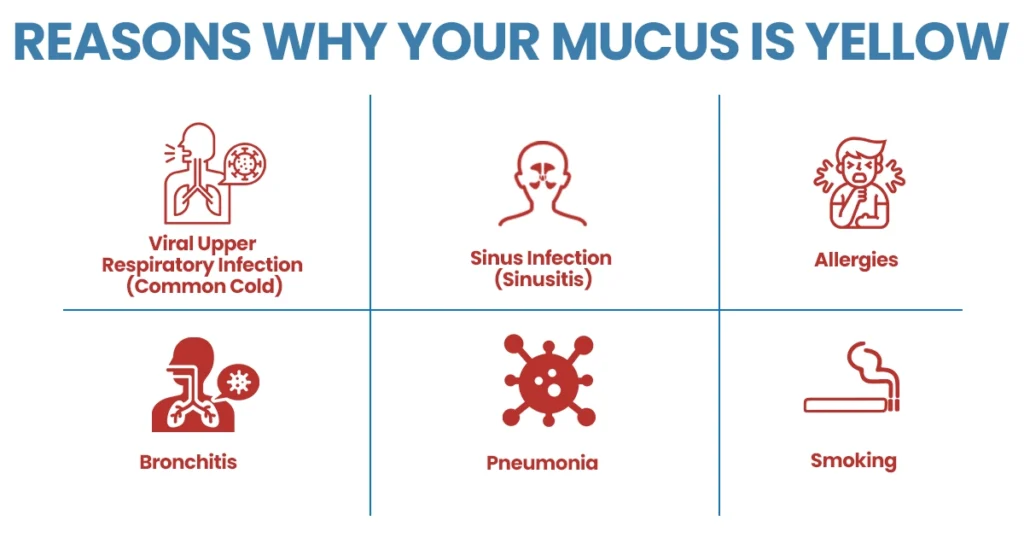
Reasons Why Your Mucus Is Yellow
Mucus changes color when your immune system reacts to pathogens, allergens, or irritants. Yellow mucus, whether yellow mucus in throat, thick yellow mucus from nose, or yellow liquid from nose, signals immune activity. While often harmless, monitoring symptoms helps differentiate between viral, bacterial, or allergy-related causes. Recognizing common causes ensures timely care and management.
Viral Upper Respiratory Infection (Common Cold)
Viral infections, like the common cold, often start with clear mucus that gradually turns into yellow nasal phlegm. The yellow color results from dead white blood cells fighting the virus. Symptoms include sneezing, sore throat, mild fever, and fatigue. Most cases improve within 7–10 days without antibiotics.
Treatment
- Decongestants (e.g., pseudoephedrine).
- Supportive medications for cough and congestion.
Also Read: Is an Upper Respiratory Infection Contagious
Sinus Infection (Sinusitis)
Sinus infections can cause thick yellow mucus from the nose or yellow mucus in the throat due to sinus inflammation and fluid buildup. Yellow mucus reflects immune activity against infection. Symptoms include facial pressure, nasal congestion, and headaches. Severe or persistent bacterial sinusitis requires medical evaluation.
Treatment
- Antibiotics for confirmed bacterial sinusitis.
- Nasal corticosteroids (e.g., fluticasone).
- ENT referral for chronic or severe cases.
Also Read: Sinus Headache
Allergies
Allergic reactions can trigger excess mucus production, sometimes leading to yellow mucus from the throat or nose. The yellow color comes from immune cells and debris in the mucus. Symptoms include sneezing, itchy eyes, and watery discharge. Continued allergen exposure can prolong yellow mucus production.
Treatment
- Antihistamines (e.g., cetirizine, loratadine).
- Nasal corticosteroids (e.g., budesonide).
- Immunotherapy for chronic allergy management.
Bronchitis
Bronchitis inflames the bronchial tubes, producing yellow phlegm color when coughing. The mucus thickens as immune cells fight infection. Symptoms include persistent cough, mild chest discomfort, and fatigue. Viral bronchitis usually improves with supportive care; bacterial cases may require antibiotics.
Treatment
- Expectorants (e.g., guaifenesin).
- Bronchodilators if wheezing is present.
- Antibiotics only for confirmed bacterial bronchitis.
Pneumonia
Pneumonia can produce green and yellow snot as the lungs become infected. Yellow mucus reflects white blood cells fighting pathogens. Symptoms include fever, chills, shortness of breath, and chest pain. Prompt medical care is essential to prevent complications.
Treatment
- Antibiotics for bacterial pneumonia.
- Hospital care for moderate to severe cases.
- Oxygen therapy if oxygen saturation is low.
Learn More About: Pneumonia Symptoms and Facts
Smoking
Smoking irritates the respiratory tract and increases mucus production, often causing dark yellow mucus. Chronic exposure damages cilia, reducing mucus clearance and causing a persistent cough. Symptoms include phlegm buildup and nasal congestion. Quitting smoking helps restore normal mucus color and lung function.
Treatment
- Smoking cessation programs.
- Prescription aids (e.g., varenicline).
- Pulmonary rehabilitation for chronic lung changes.
When to See a Doctor
Yellow mucus is often harmless, but severe, persistent, or unusual symptoms require medical care. Early evaluation prevents complications and ensures proper treatment.
- High fever lasting more than 3 days.
- Severe facial pain or pressure.
- Shortness of breath or wheezing.
- Blood in mucus or nasal blood mucus.
- Chest pain, dehydration, or confusion.
If these occur, or your yellow mucus in your throat or nose persists, contact Exceptional Emergency Centers for timely evaluation.
Natural Remedies for Yellow Mucus
Natural remedies support mucus clearance and soothe irritated tissues. They work alongside medical care to help relieve symptoms, improve comfort, and thin mucus for easier expulsion.
- Warm Steam Inhalation: Loosens thick yellow mucus, opens nasal passages, and eases breathing.
- Hydration with Warm Liquids: Thins mucus, reducing the stickiness of the yellow liquid from the nose.
- Saltwater Gargle: Soothes yellow mucus from throat irritation and flushes mucus.
- Humidifier Use: Moist air prevents thick yellow mucus from the nose from drying out.
- Spicy Foods: Temporarily increase nasal secretions to help clear snot that is yellow or congested.
Care for Yellow Mucus at Exceptional Emergency Centers
If you’re noticing persistent yellow mucus and wondering why my mucus is yellow? It’s natural to feel concerned. While this symptom often reflects your body fighting irritation or infection, it can sometimes indicate a bacterial or respiratory issue that requires prompt attention. Early evaluation helps ensure proper diagnosis and effective care.
At Exceptional Emergency Centers, our compassionate medical team provides thorough, personalized emergency care for patients experiencing mucus changes. From assessing thick yellow mucus from the nose to managing yellow mucus in the throat, we offer expert guidance and treatment plans to support your comfort, health, and recovery.