

Noticing changes in your mucus color, like green and yellow snot or dark green mucus, can be concerning. Many people experience coughing with greenish phlegm and wonder if it indicates something serious. A common question is Does Green Mucus Mean Infection, as patients want to know whether medical attention is needed.
At our emergency room in Harlingen, we see patients with greenish, thick phlegm who are unsure if it’s serious. Mucus color alone isn’t enough to determine the cause; other symptoms, duration, and overall health are important in deciding when to seek care.
What Does Green Mucus Mean?
Green mucus forms when your immune system sends white blood cells to combat infection or irritation. These cells release enzymes that can turn mucus green in mucus or green discharge. Although mucus that is green, often occurs with infections, color alone doesn’t confirm the cause. A PubMed study found green or yellow sputum is 79% sensitive for bacterial infections, though many cases aren’t bacterial. This shows that green in mucus reflects immune activity but not necessarily a bacterial infection.
Symptoms of Green Mucus
- Thick, greenish phlegm.
- Coughing with greenish phlegm.
- Nasal congestion or sinus pressure.
- Sore throat or post‑nasal drip.
- Mild fatigue or general discomfort.
Does Green Snot Mean Infection?
Not always. Green snot does not automatically indicate an infection. Often, it reflects your immune system responding to viral infections or irritants. Many viral colds produce green snot or dark green mucus, and antibiotics are usually unnecessary. Evaluating symptom duration, severity, and associated signs helps determine whether medical care is required.
Infections Linked to Green Mucus
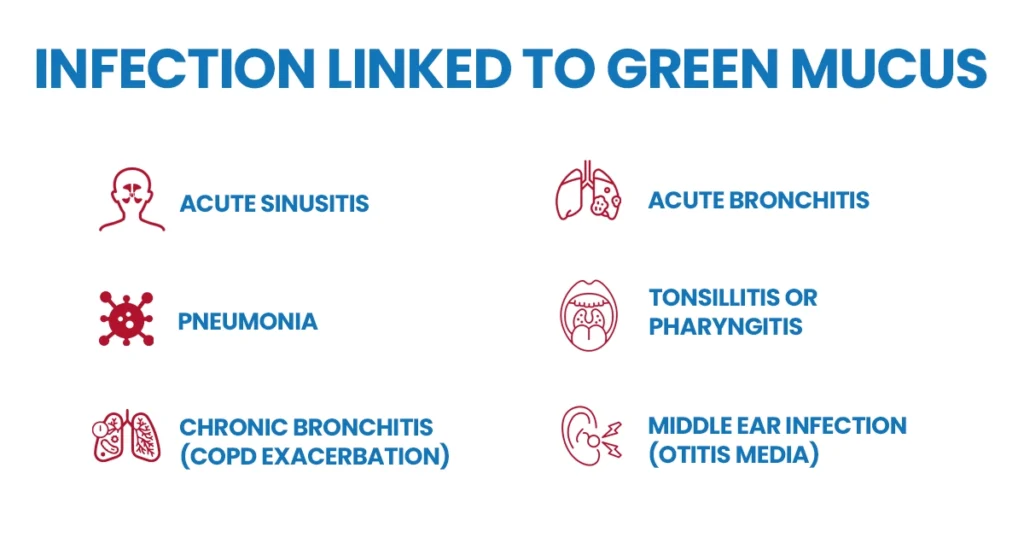
Green mucus can appear with several infections, as it reflects inflammation and immune activity in the respiratory system. While the color signals your body is fighting irritants or pathogens, it doesn’t always identify the exact cause. Recognizing the infection type and related symptoms helps guide proper treatment.
Acute Sinusitis
Acute sinusitis occurs when the sinuses become inflamed, often due to viral or bacterial infections. Patients may notice green and yellow snot, facial pressure, nasal congestion, and post-nasal drip. The colour green signifies immune cells at work. Bacterial cases typically last longer than 10 days.
Treatment:
- Saline nasal irrigation to clear mucus.
- Decongestants (e.g., oxymetazoline) for short-term relief.
- Pain relievers like ibuprofen or acetaminophen.
- Antibiotics (e.g., amoxicillin‑clavulanate) if bacterial.
- Warm compresses and hydration.
Acute Bronchitis
Bronchitis inflames the bronchial tubes, often following a cold. It can lead to increased mucus production, which may appear green or yellow as your immune system fights the infection. Patients may produce coughing with greenish phlegm or green snot, accompanied by chest discomfort and fatigue. Most cases are viral, but some may involve bacteria.
Treatment:
- Rest and increased fluid intake.
- Expectorants like guaifenesin to thin mucus.
- Humidified air (steam inhalation or humidifier).
- Avoid smoking and irritants.
- Antibiotics only if bacterial infection is confirmed.
Pneumonia
Pneumonia is a lung infection causing dark green mucus, fever, chest pain, and fatigue. It can significantly reduce oxygen exchange in the lungs, making prompt treatment critical. It can be bacterial, viral, or fungal, affecting air sacs and oxygen exchange. Early detection and treatment are crucial.
Treatment:
- Antibiotics (e.g., azithromycin, doxycycline) for bacterial cases.
- Antiviral medication for certain viral causes.
- Oxygen therapy for severe breathing difficulty.
- Hospitalization for critical cases.
Chronic Bronchitis (COPD Exacerbation)
Chronic bronchitis is long-term inflammation of the airways in COPD. Flare-ups often worsen coughing and can increase production of thick, greenish phlegm. Flare-ups may produce greenish, thick phlegm and worsen coughing. Environmental irritants or infections can trigger these episodes. Green color indicates an immune response, but not always a bacterial infection.
Treatment:
- Bronchodilators (e.g., albuterol) to open airways.
- Corticosteroids to reduce inflammation.
- Antibiotics if bacterial infection is suspected.
- Pulmonary rehabilitation and airway clearance techniques.
- Avoiding triggers like smoke or pollution.
Tonsillitis or Pharyngitis
Tonsillitis or pharyngitis is inflammation of the throat or tonsils, often caused by viruses or bacteria. Green snot occurs when immune cells respond to the infection in the throat and nasal passages. Green snot and coughing up green phlegm may appear with a sore throat, difficulty swallowing, and swollen lymph nodes. White blood cells fighting infection contribute to the green color.
Treatment:
- Pain relievers (ibuprofen or acetaminophen).
- Saltwater gargles for throat comfort.
- Antibiotics (e.g., penicillin or amoxicillin) if bacterial infection is confirmed.
- Hydration and rest.
- Soft foods to ease swallowing.
Middle Ear Infection (Otitis Media)
Middle ear infections often follow colds or sinus infections, causing fluid behind the eardrum. The infection can also affect nasal mucus, making it appear green as it drains. Patients may notice green discharge in the ear or green mucus from nasal drainage. Symptoms include ear pain, mild fever, and reduced hearing.
Treatment:
- Pain management (acetaminophen or ibuprofen).
- Antibiotics (e.g., amoxicillin) if bacterial infection.
- Warm compress for ear comfort.
- ENT follow-up for recurrent infections.
- Proper nasal care to reduce fluid buildup.
When is Green Mucus an Emergency?
Green mucus alone is rarely an emergency, but it can indicate serious illness if accompanied by severe symptoms. Prompt medical attention is required when red-flag signs appear. Emergency signs include:
- Difficulty breathing or shortness of breath.
- Persistent high fever.
- Chest pain or pressure.
- Confusion, dizziness, or lightheadedness.
- Coughing up blood.
If you notice these signs along with mucus that is green or dark green, contact the Exceptional Emergency Centers immediately.
Care for Green Mucus at Exceptional Emergency Centers
Are you wondering, “Does green mucus mean infection?” Persistent or thick green mucus can signal infection, irritation, or other respiratory concerns. Early evaluation helps determine the cause and ensures appropriate treatment. At Exceptional Emergency Centers, our team provides fast, expert care to address your symptoms and protect your respiratory health. Our clinicians use advanced diagnostics to identify the underlying cause of green mucus and related symptoms. We offer personalized treatment plans, from relieving congestion to managing infections, ensuring you get safe and effective emergency care when you need it most.