

Diarrhea is one of the most common digestive complaints there is, and the overwhelming majority of cases are caused by infections, food sensitivities, medications, or stress rather than anything life-threatening. But when diarrhea becomes frequent, persistent, and does not respond to the usual remedies, it is natural to wonder whether something more serious might be behind it. The honest answer is that while frequent diarrhea is rarely a sign of cancer, there are specific patterns and accompanying symptoms that genuinely warrant prompt medical evaluation rather than continued watchful waiting at home.
Understanding when diarrhea crosses from a nuisance into a potential warning sign, which cancers are commonly associated with bowel changes, and when symptoms require emergency evaluation can help you make faster, more informed decisions about your digestive health. Our Beaumont ER provides prompt evaluation and treatment when diarrhea symptoms become severe or concerning.
Can Diarrhea Be a Symptom of Cancer?
Yes, diarrhea can be a symptom of cancer, but diarrhea alone is not a reliable indicator and is far more commonly caused by benign conditions. When it is persistent beyond four weeks, accompanied by specific warning signs, or represents an unexplained change in normal bowel habits, medical investigation becomes essential. According to the National Cancer Institute, diarrhea is recognized both as a potential cancer symptom and as a side effect of certain cancer treatments.
What Types of Cancer Cause Frequent Diarrhea?
Several cancers affecting the digestive system and hormone-producing organs are associated with persistent diarrhea as a primary symptom.
Colorectal Cancer
Colorectal cancer is the most commonly associated cancer when persistent bowel habit changes occur, including frequent diarrhea, constipation, or alternating episodes of both. As a tumor grows inside the colon or rectum, it disrupts normal stool movement and causes changes in consistency, frequency, and urgency. Any bowel habit change lasting more than four weeks with blood in the stool or unexplained weight loss should be evaluated with an abdominal CT scan without delay.
Pancreatic Cancer
Pancreatic cancer causes digestive disruption, including diarrhea, because tumors interfere with the enzymes needed to break down fats and proteins. The resulting malabsorption produces pale, greasy, foul-smelling stools that are often misattributed to dietary issues for months before a diagnosis is made. Persistent digestive symptoms combined with jaundice, upper abdominal pain, or unexplained weight loss always warrant prompt investigation.
Neuroendocrine Tumors and Lymphoma
Carcinoid tumors produce hormones that directly trigger diarrhea and can go undiagnosed for years because the symptom seems so ordinary and non-specific. Gastrointestinal lymphoma disrupts absorption and causes chronic inflammation, producing persistent loose stools, cramping, and significant unintended weight loss. Both conditions are consistently missed because diarrhea is attributed to more common causes long before a serious diagnosis is considered.
What Are the Warning Signs of Cancer-Related Diarrhea?
Most diarrhea is not related to cancer, but certain patterns and accompanying symptoms distinguish cancer-related bowel changes from routine digestive upset and should prompt immediate medical evaluation.
- Diarrhea persisting for more than four weeks without a clear identifiable cause, like infection, food sensitivity, or medication
- Blood in the stool, whether bright red or dark and tarry, always requires same-day or emergency evaluation
- Unexplained and unintentional weight loss occurring alongside persistent diarrhea without any dietary change
- Narrow or pencil-thin stools that represent a change from normal stool consistency and shape
- A persistent feeling of incomplete evacuation after bowel movements
- Severe abdominal pain or cramping that accompanies diarrhea episodes and does not resolve between them
- Diarrhea combined with a high fever in adults that does not respond to medication and has no obvious infectious cause
- Extreme and disproportionate fatigue developing alongside ongoing digestive symptoms
If diarrhea is accompanied by severe or worsening abdominal pain, seek an abdominal pain ER or urgent care evaluation to identify the cause and prevent complications.
Frequent Diarrhea vs Normal Diarrhea: When to Be Concerned?
Not all diarrhea is created equal, and understanding the difference between a passing bout and a pattern that warrants investigation is one of the most important distinctions to make before deciding whether to seek medical evaluation.
- Duration: Normal diarrhea from infection or food issues typically resolves within 1 to 3 days. Diarrhea lasting more than 2 weeks is considered persistent and warrants evaluation, while diarrhea lasting more than 4 weeks is considered chronic and always requires investigation
- Blood: Normal diarrhea does not contain blood. Any blood in the stool, regardless of the amount or color, is a red flag that should never be attributed to diarrhea alone without professional evaluation
- Associated symptoms: Normal diarrhea does not cause significant weight loss, persistent pain, or fever lasting more than 48 hours. When any of those accompany diarrhea, the symptom picture is no longer routine
- Response to treatment: Normal diarrhea improves with hydration, dietary modification, and time. Diarrhea that persists despite appropriate home treatment and returns consistently is telling you something important about what is happening inside your body
What Other Conditions Can Cause Frequent Diarrhea?
Before assuming a cancer connection, it is important to know that frequent diarrhea is far more commonly caused by a range of other conditions that are entirely treatable with the right diagnosis and management approach.
- Irritable Bowel Syndrome: One of the most common causes of chronic diarrhea, IBS produces recurring bowel changes driven by gut motility issues rather than structural disease or cancer
- Inflammatory Bowel Disease: Crohn’s disease and ulcerative colitis both cause significant and recurring diarrhea that can include blood, and must be distinguished from cancer through proper diagnostic testing
- Infections: Bacterial, viral, and parasitic infections can all cause prolonged diarrhea that outlasts the acute illness phase and persists for weeks without proper treatment
- Food intolerances: Lactose intolerance, gluten sensitivity, and other food-related conditions produce consistent diarrhea that correlates with dietary patterns
- Medications: Antibiotics, blood pressure medications, antacids, and certain chemotherapy agents all list diarrhea as a common side effect that resolves when the medication is changed or discontinued
Diarrhea Warning Signs That Should Never Be Ignored
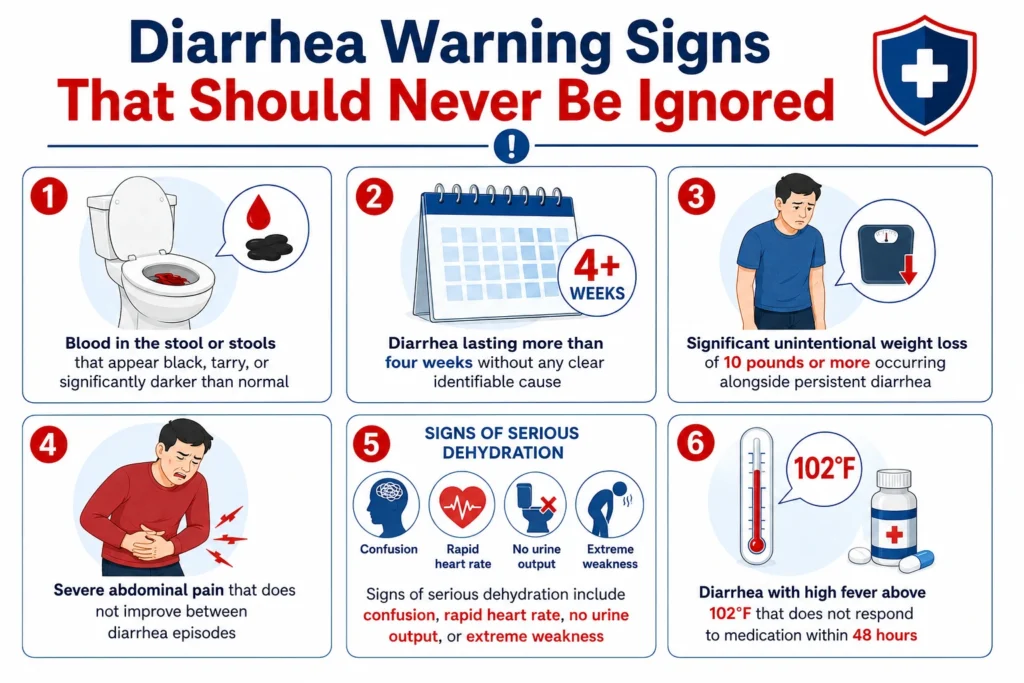
Certain combinations of diarrhea and accompanying symptoms signal that something serious may be happening and require immediate medical evaluation rather than home management.
- Blood in the stool or stools that appear black, tarry, or significantly darker than normal
- Diarrhea lasting more than four weeks without any clear identifiable cause
- Significant unintentional weight loss of 10 pounds or more occurring alongside persistent diarrhea
- Severe abdominal pain that does not improve between diarrhea episodes
- Signs of serious dehydration include confusion, rapid heart rate, no urine output, or extreme weakness
- Diarrhea with high fever above 102°F that does not respond to medication within 48 hours
If you are experiencing these warning signs and searching for the closest emergency room near me, seek immediate medical care for proper evaluation and treatment.
When to Go to the ER?
Most diarrhea can be managed at home, but certain situations require emergency evaluation without delay. Visit the ER near me immediately if any of the following are present:
- Blood in the stool or black tarry stools that appeared suddenly
- Severe abdominal pain accompanying diarrhea that is worsening rather than improving
- Signs of serious dehydration, including no urine output, confusion, or rapid heart rate
- High fever above 102°F alongside persistent diarrhea that is not responding to medication
- Diarrhea following recent travel, combined with fever and severe cramping
Exceptional Emergency Centers provide 24/7 emergency evaluation with rapid blood work, imaging, including abdominal CT scans, and comprehensive diagnostic assessment for patients with persistent or severe diarrhea symptoms.
Digestive Emergency Care at Exceptional Emergency Centers
Persistent or severe diarrhea deserves proper medical evaluation instead of prolonged self-treatment while symptoms continue to worsen. With a 24/7 emergency room available, Exceptional Emergency Centers provide fast diagnostic workups, including blood panels, stool testing, and imaging, to identify the underlying cause of diarrhea and begin the right treatment without delay. Whether symptoms are caused by an infection, inflammatory condition, or another serious concern, our team is available around the clock to evaluate and treat digestive emergencies with speed and thoroughness.
Key Takeaways
- Frequent diarrhea can be a sign of cancer, but it is far more commonly caused by infections, IBS, inflammatory bowel disease, or food intolerances
- Cancers most commonly associated with diarrhea include colorectal cancer, pancreatic cancer, and neuroendocrine tumors
- Warning signs that distinguish cancer-related diarrhea include blood in the stool, unexplained weight loss, and diarrhea lasting more than four weeks
- Normal diarrhea resolves within 1 to 3 days and does not include blood, significant weight loss, or persistent abdominal pain
- Blood in the stool, severe dehydration, and high fever, alongside diarrhea, all require immediate emergency evaluation
- Early medical evaluation of persistent bowel changes is always the safest and most protective approach, regardless of what is ultimately causing the symptoms