
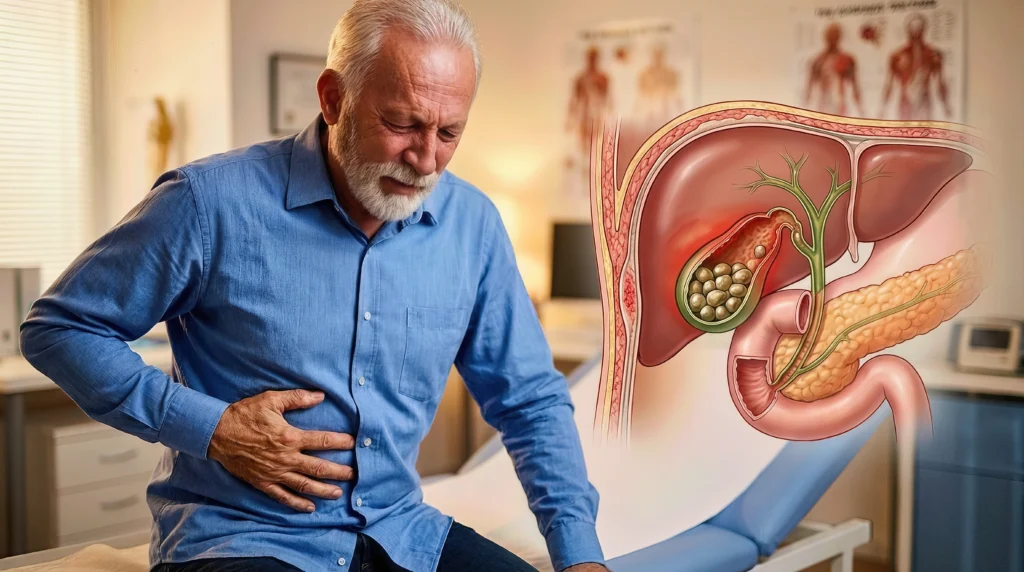
Sudden pain in the upper right side of your belly after a heavy meal can be alarming. One common cause is gallstones, hard deposits that form in the gallbladder. Many people have gallstones without knowing it, but when a stone blocks a duct, the pain can be intense.
Knowing what causes gallstones and how to recognize a gallbladder attack can help you get the right care at the right time.
If you have severe abdominal pain with fever or vomiting, our emergency room Port Arthur residents trust is open 24/7 with an ER wait time of 15 minutes or less.
What Is The Gallbladder?
The gallbladder is a small, pear-shaped organ under the liver on the right side of your abdomen. It stores bile, a digestive fluid made by the liver that helps break down fats. When you eat, especially fatty foods, the gallbladder squeezes bile into the small intestine through a series of ducts.
What Causes Gallstones?
Gallstones form when the substances in bile become unbalanced and harden into stones. They can be as small as a grain of sand or as large as a golf ball. The main causes include:
- Too much cholesterol in bile: the most common cause. Most gallstones in the U.S. are cholesterol stones.
- Too much bilirubin in bile: this can happen with liver disease, certain blood disorders, or infections, forming pigment stones.
- A gallbladder that does not empty well: when bile sits too long, it becomes concentrated and more likely to form stones.
Risk Factors For Gallstones
- Being female: estrogen raises cholesterol levels in bile.
- Age over 40.
- Pregnancy or hormone therapy.
- Obesity.
- Rapid weight loss: including after weight-loss surgery or very low-calorie diets.
- Diets high in fat and low in fiber.
- Diabetes.
- Family history of gallstones.
- Certain ethnic backgrounds: including Hispanic and Native American heritage.
According to the NIDDK, about 10 to 15 percent of people in the United States have gallstones.
Symptoms Of A Gallbladder Attack
Most gallstones cause no symptoms. But when a stone blocks a bile duct, it can trigger a gallbladder attack, also called biliary colic. Symptoms include:
- Sudden, intense pain in the upper right or center of the abdomen.
- Pain that spreads to the back or right shoulder blade.
- Pain that lasts from 30 minutes to several hours.
- Nausea and vomiting.
- Pain that often starts after a fatty or large meal, or at night.
Complications Of Gallstones
When a stone stays stuck, it can lead to serious problems:
- Cholecystitis: inflammation and infection of the gallbladder.
- Choledocholithiasis: a stone blocking the common bile duct, which can cause jaundice.
- Cholangitis: a serious infection of the bile ducts.
- Gallstone pancreatitis: inflammation of the pancreas, which can be life-threatening.
When To Go To The ER
Call 911 or go to the ER right away if you have:
- Abdominal pain lasting more than a few hours.
- Fever and chills with belly pain.
- Yellowing of the skin or eyes.
- Dark urine or pale stools.
- Severe pain that makes it hard to sit still.
- Vomiting that will not stop.
Stomach pain has many causes, including appendicitis, ulcers, and kidney stones. Visiting an ER for stomach pain gives you access to ultrasound, CT imaging, and lab tests in one visit.
How Gallstones Are Diagnosed
An abdominal ultrasound is the most common test for gallstones. Blood tests can show signs of infection, liver problems, or pancreatitis. In some cases, doctors may order a CT scan, a HIDA scan, or an MRI of the bile ducts.
Treatment Options
- Watchful waiting: for gallstones that cause no symptoms.
- Pain control and IV fluids: during an attack.
- Antibiotics: if there is an infection.
- Gallbladder removal surgery (cholecystectomy): the most common treatment for repeated attacks, usually done with small incisions.
- ERCP: a procedure to remove stones from the bile duct.
After an ER visit, follow-up with a surgeon or an abdominal pain specialist near me can help you decide the best long-term plan.
How To Lower Your Risk
- Maintain a healthy weight and avoid crash diets.
- Eat more fiber from fruits, vegetables, and whole grains.
- Choose healthy fats and limit fried foods.
- Stay physically active.
- Do not skip meals for long periods.
Frequently Asked Questions
Can Gallstones Go Away On Their Own?
Small stones may pass on their own, but most gallstones do not dissolve without treatment.
Can You Live Without A Gallbladder?
Yes. Bile flows directly from the liver to the intestine, and most people digest food normally after surgery.
What Foods Trigger Gallbladder Attacks?
Fatty, fried, and greasy foods are common triggers, especially large meals.
Are Gallstones Dangerous?
Silent gallstones are usually not dangerous, but blocked ducts can lead to infection and pancreatitis.
Fast Abdominal Pain Care In Port Arthur
Gallbladder attacks can be extremely painful, and some complications need urgent treatment. Exceptional Emergency Center serves Port Arthur, Nederland, Groves, and the Golden Triangle with board-certified physicians and on-site imaging.
If you need an emergency room near me, we are open 24/7. For life-threatening emergencies, call 911 right away.