
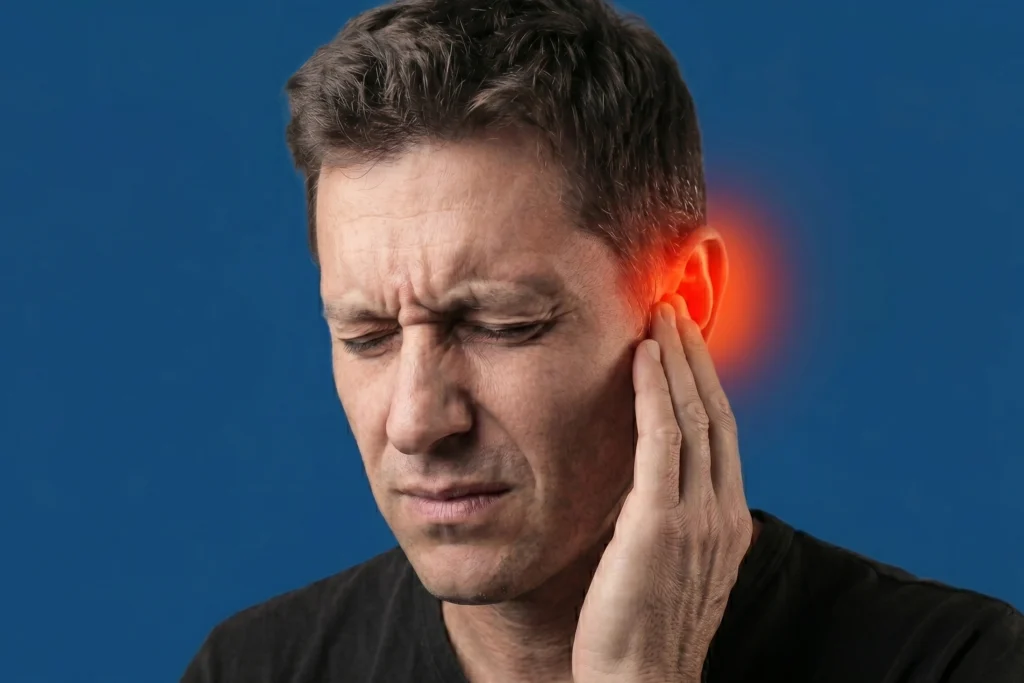
Experiencing sudden ear pain or noticing changes in your hearing can be unsettling, especially when it happens without warning. It is natural to feel worried, frustrated, or even frightened when something feels different with your ear. Knowing when to seek medical attention can make a significant difference in protecting your hearing and preventing further complications.
A ruptured eardrum (perforated eardrum) is not always a medical emergency, but certain symptoms require prompt evaluation. Severe pain, sudden hearing loss, bleeding or fluid draining from the ear, dizziness, or symptoms after a head injury should never be ignored. Visit our emergency rooms in Orange County for timely evaluation to reduce the risk of infection, hearing problems, and other complications.
What Does A Ruptured Eardrum Feel Like?
A ruptured eardrum often causes sudden, sharp ear pain, followed by muffled hearing or a feeling of pressure in the ear. Some people also experience ringing in the ear (tinnitus), dizziness, or fluid and bloody drainage. If these symptoms develop after an injury, loud noise, or pressure change, seek prompt medical evaluation to help prevent complications.
Study: A prospective observational study published in PubMed Central (PMC/NIH) found that 88.6% of traumatic eardrum perforations healed spontaneously within 12 weeks, although larger or marginal perforations were less likely to heal on their own.
Dangerous Eardrum Rupture Signs To Watch For
- Sudden or severe hearing loss.
- Heavy bleeding or pus-like drainage from the ear.
- Severe or worsening ear pain.
- Persistent dizziness, vertigo, or loss of balance.
- Facial weakness or difficulty moving one side of the face.
- High fever with increasing ear pain or drainage.
- Symptoms after a serious head injury or blast injury.
- Persistent ringing in the ear (tinnitus) that worsens.
- Nausea or vomiting accompanied by severe dizziness.
- Clear fluid leaking from the ear after head trauma.
If you are experiencing severe ear symptoms, prompt evaluation can help relieve discomfort and prevent complications. Treatment for earache can provide the appropriate care needed to address pain, infection, and underlying ear concerns.
What Causes A Ruptured Eardrum?
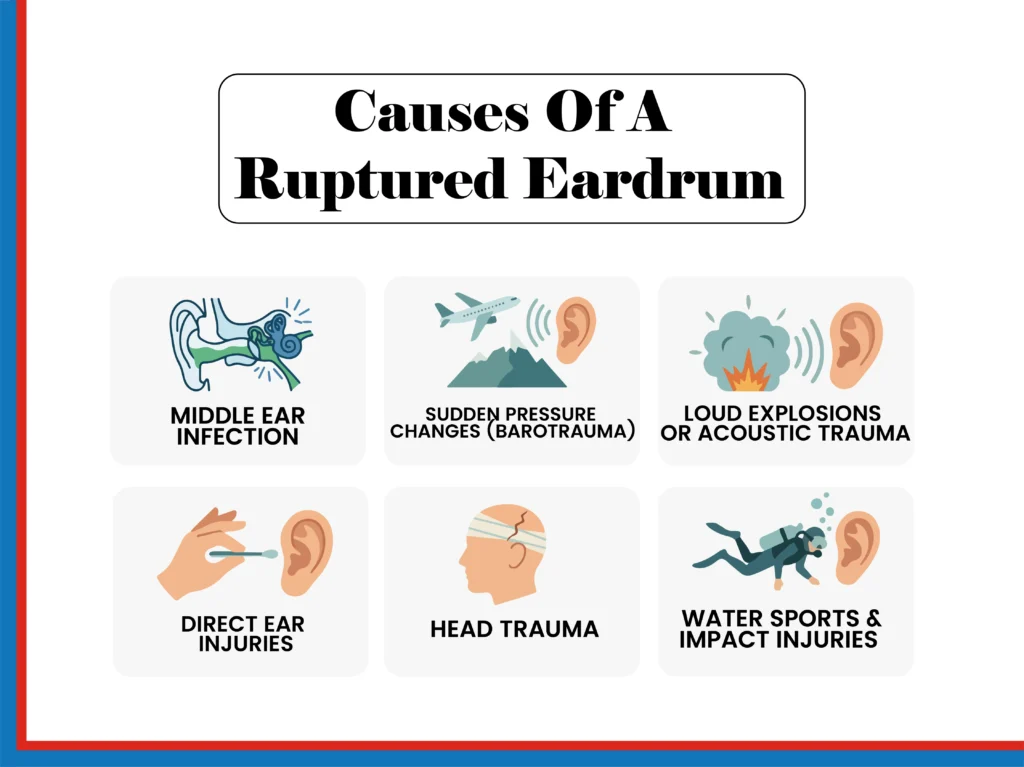
A ruptured eardrum can occur when the thin membrane inside the ear is exposed to excess pressure, infection, or physical injury. While some cases heal on their own, others may lead to pain, hearing changes, or infection if not treated promptly. Understanding the triggers helps in early recognition and timely medical care.
- Middle Ear Infections: A buildup of fluid and pressure behind the eardrum during a middle ear infection can cause the membrane to tear. This is one of the most common causes, especially in children.
- Sudden Pressure Changes (Barotrauma): Rapid changes in air or water pressure during flying, scuba diving, or explosions can place excessive stress on the eardrum, leading to a rupture.
- Loud Explosions Or Acoustic Trauma: Exposure to extremely loud sounds, such as fireworks, gunshots, or blasts, can damage the delicate structures of the ear and tear the eardrum.
- Direct Ear Injuries: Inserting cotton swabs, hairpins, or other objects into the ear canal can accidentally puncture the eardrum and cause pain, bleeding, and hearing changes.
- Head Trauma: A serious blow to the head or skull fracture can damage the ear and result in a ruptured eardrum, often requiring immediate medical evaluation.
- Water Sports Or Impact Injuries: A hard slap to the ear, diving accidents, or high-impact water sports can create enough force to rupture the eardrum.
When To Go To The ER
A ruptured eardrum does not always require emergency care, but certain symptoms may indicate serious damage or complications that need immediate medical attention. If symptoms appear suddenly or worsen quickly, it is important not to delay evaluation, as early treatment can help prevent infection, permanent hearing loss, or further injury.
- Sudden or complete hearing loss in one or both ears.
- Severe ear pain that does not improve or worsens quickly.
- Heavy bleeding or thick pus-like discharge from the ear.
- Intense dizziness, spinning sensation (vertigo), or loss of balance.
- Clear fluid leaking from the ear after a head injury.
- Facial weakness, drooping, or difficulty moving facial muscles.
- High fever with worsening ear symptoms or drainage.
- Recent head trauma or blast injury followed by ear symptoms.
If these warning signs appear after an injury or infection, seek immediate medical attention. Visit the closest emergency room near me for proper evaluation and treatment to protect your hearing and overall ear health.
Ruptured Eardrum Treatment
A ruptured eardrum can be distressing, especially when it affects hearing, balance, or causes fluid discharge from the ear. Many cases improve with proper care and time, but the healing process depends on the size of the perforation and the underlying cause.
- Over The Counter Pain Relief: Mild pain is often managed with OTC medications such as acetaminophen or ibuprofen; most doctors recommend these for short-term pain control and inflammation relief.
- Antibiotic Ear Drops: If infection is present or suspected, doctors may prescribe antibiotic ear drops; most doctors recommend these to prevent or treat bacterial complications in the middle ear.
- Paper Patch Procedure: A doctor may place a small medicated paper patch over the tear to encourage natural healing; most doctors recommend this for small or slow-healing perforations.
- Surgical Repair (Tympanoplasty): In cases where the eardrum does not heal on its own, surgery may be required to close the hole and restore hearing function; most doctors recommend this for persistent or large ruptures.
- Keeping The Ear Dry: Avoiding water entry during bathing or swimming helps prevent infection and supports healing; most doctors recommend strict moisture protection during recovery.
- Avoiding Ear Insertion: Patients are advised not to insert cotton swabs or objects into the ear canal, as this can worsen the injury; most doctors recommend allowing the ear to heal naturally without interference.
Ruptured Eardrum Care At Exceptional Emergency Centers
If you are experiencing a ruptured eardrum (perforated eardrum), timely medical attention is essential to prevent infection, worsening pain, or long-term hearing issues. Even mild symptoms can sometimes indicate deeper damage that needs proper evaluation. With our ER wait time of 12 minutes, patients can receive prompt care to reduce complications and support safer healing of the eardrum.
At Exceptional Emergency Centers, we provide prompt and evidence-based care for ear injuries, including ruptured eardrums. Our medical team carefully evaluates your condition, manages pain and infection risk, and guides you toward the most appropriate treatment plan. Seeking immediate care ensures better recovery outcomes and helps protect your long-term ear health and hearing function.
Key Takeaways
- A ruptured eardrum can cause sudden pain, muffled hearing, and ear drainage.
- Common symptoms include tinnitus, dizziness, and pressure in the ear.
- Most cases heal naturally, but some require medical procedures or surgery.
- Infections, pressure changes, loud noise, or injury are leading causes.
- Severe symptoms like bleeding, vertigo, or hearing loss need urgent care.
- Early diagnosis helps prevent complications and long-term hearing damage.
Frequently Asked Questions
What Side Should I Sleep On With A Ruptured Eardrum?
Sleeping with the affected ear facing upward is usually recommended to reduce pressure and allow any fluid to drain more comfortably. Keeping your head slightly elevated may also help ease discomfort during recovery.
Is A Ruptured Eardrum Painful?
Yes, a ruptured eardrum can cause sudden sharp pain, especially when the tear occurs. Some people may also experience hearing changes, ringing, dizziness, or ear drainage depending on the cause and severity.
How Long Does A Ruptured Eardrum Take To Heal?
Most small eardrum perforations heal within a few weeks, but larger tears may take longer to recover. Healing time depends on the size of the rupture, cause, and presence of infection.
Can A Ruptured Eardrum Heal On Its Own?
Yes, many ruptured eardrums heal naturally with proper care and protection. Keeping the ear dry and following medical advice can support healing, while some larger or persistent tears may need treatment.
Do Ear Infections Go Away On Their Own?
Yes, many ear infections, especially mild viral infections, can go away on their own as the immune system fights off the infection. Symptoms often improve within a few days. However, persistent pain, high fever, fluid drainage, or signs of a bacterial infection may require medical treatment.