

Appendicitis is one of the most frequent reasons people seek emergency medical care, and without prompt treatment, it can develop into serious complications within a short time. It occurs when the appendix, a small tube-shaped structure attached to the large intestine in the lower right abdomen, becomes inflamed and infected beyond what the body can control. Recognizing early signs and understanding the condition can help you seek care before it becomes dangerous. Our ER in Fort Worth provides timely evaluation and treatment for suspected appendicitis and severe abdominal pain.
The condition can develop at any age, but is most commonly seen in people between 10 and 30. Once the inflammation begins, it will not improve without medical intervention, which makes knowing the warning signs and responding quickly essential for anyone experiencing sudden or unexplained pain alongside nausea or digestive discomfort.
What Is Appendicitis?
Appendicitis is the inflammation of the appendix, a small pouch that sits where the small and large intestines meet in the lower right side of the abdomen. According to MedlinePlus, it is the most common reason for emergency abdominal surgery in the United States, affecting roughly 1 in 500 people annually. When the appendix becomes blocked, bacteria multiply rapidly within it, causing increasing pressure, swelling, and infection that demands urgent medical evaluation to prevent the appendix from rupturing.
What Are the Symptoms Of Appendicitis?
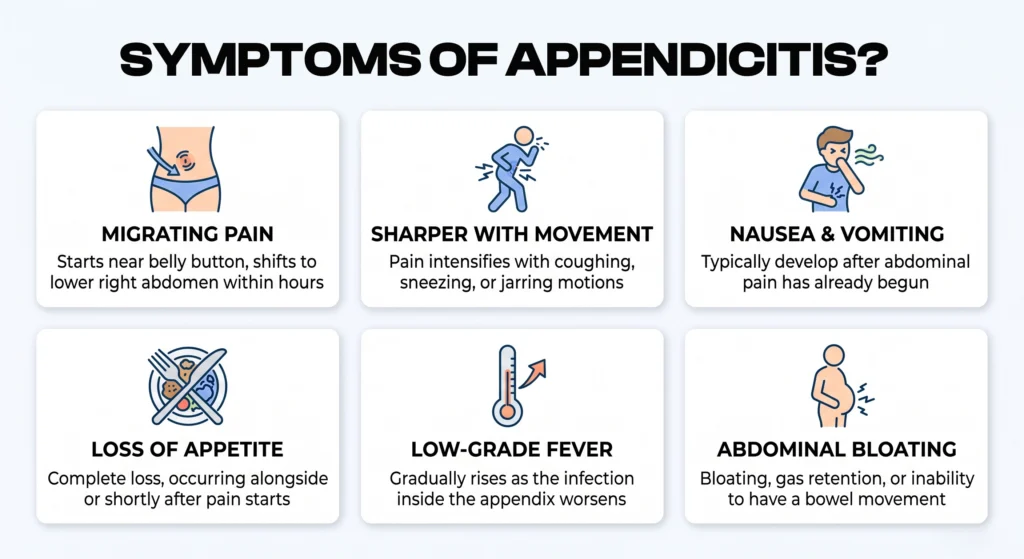
Symptoms of appendicitis tend to develop gradually over 6 to 24 hours and become progressively worse the longer treatment is delayed. Catching these warning signs early is the most effective way to avoid serious complications.
- Pain that starts near the belly button and migrates to the lower right side of the abdomen within hours
- Pain that becomes significantly sharper with movement, coughing, sneezing, or any jarring motion
- Nausea and vomiting typically develop after the abdominal pain has already begun
- Complete loss of appetite, alongside or shortly after the pain starts
- A low-grade fever that gradually rises as the infection inside the appendix worsens
- Bloating, gas retention, or an inability to have a bowel movement, alongside abdominal discomfort
If you experience these symptoms, especially worsening abdominal pain or fever, seek prompt medical evaluation. An ER for abdominal pain can provide timely assessment to identify the cause and begin appropriate treatment before complications develop.
What Causes Appendicitis?
Appendicitis almost always begins with something blocking the narrow opening of the appendix, creating an environment where bacteria can multiply without restriction. Several different factors can trigger this blockage.
Hardened Stool Blockage
The most common cause of appendicitis is a hardened mass of stool known as a fecalith that becomes lodged inside the appendix and prevents it from draining normally. Once drainage is restricted, bacteria already present in the digestive system begin multiplying rapidly and cause the appendix to swell, fill with pus, and become increasingly painful. This process escalates quickly and requires surgical removal of the appendix before it has the chance to rupture.
Infection-Triggered Lymph Node Swelling
In some cases, an infection elsewhere in the body causes the lymph nodes surrounding the appendix to enlarge significantly and press against its opening from the outside. This external compression restricts drainage just as effectively as an internal blockage and creates the same conditions for bacterial overgrowth and inflammation to develop inside the appendix. Gastrointestinal illnesses, respiratory infections, and other bacterial or viral conditions can all trigger this type of lymph node response in susceptible individuals.
Inflammatory Bowel Disease
Chronic conditions like Crohn’s disease and ulcerative colitis cause ongoing inflammation throughout the gastrointestinal tract that can extend directly to the appendix and trigger appendicitis. The persistent tissue inflammation associated with these conditions makes the appendix significantly more vulnerable to blockage and infection than it would be in someone without an underlying bowel disorder. Anyone with a known history of inflammatory bowel disease should treat any sudden or worsening lower abdominal pain with immediate urgency and seek evaluation without delay.
Abdominal Injury or Trauma
In less common cases, a direct blow or physical injury to the abdomen can disturb the normal function of the appendix and trigger inflammation that progresses into a full appendicitis episode over the following hours. Trauma alters the tissue environment and can create conditions that allow bacterial overgrowth to develop inside the appendix even when no classic blockage is present. Any new or worsening abdominal pain following physical trauma should be evaluated promptly to rule out appendicitis before symptoms have time to escalate.
Who Is At Risk For Appendicitis?
While appendicitis can happen to anyone, specific factors increase the likelihood of developing it at some point in life.
- Age: Most cases occur between the ages of 10 and 30, though no age group is completely immune
- Sex: Males are statistically slightly more likely to develop appendicitis than females
- Family history: Those with close relatives who had appendicitis face a modestly higher personal risk
- Inflammatory bowel disease: Crohn’s disease and colitis elevate the risk of appendicitis occurring
- Prior gastrointestinal infections: Repeated infections can cause recurring lymph node swelling near the appendix
How Is Appendicitis Diagnosed?
Diagnosing appendicitis involves a physical examination, blood tests for elevated infection markers, and imaging to confirm the diagnosis and rule out other causes of abdominal pain.
- Physical Exam: Doctors check for localized tenderness and rebound pain in the lower right abdomen, which are classic indicators of appendiceal inflammation.
- Blood Tests: An elevated white blood cell count confirms active infection and supports the clinical diagnosis alongside presenting symptoms.
- CT Scan: An abdominal CT scan is the most reliable imaging tool for confirming appendicitis in adults quickly and accurately.
- Ultrasound: Preferred for children and pregnant patients to confirm the diagnosis while limiting radiation exposure.
How Is Appendicitis Treated?
Treatment for appendicitis depends entirely on how far the condition has progressed, but prompt medical intervention is always required regardless of the stage.
- Laparoscopic Appendectomy: The most common approach, using small incisions and a camera to remove the appendix with minimal recovery time
- Open Surgery: Used for more complex cases, particularly when the appendix has already ruptured or significant abdominal contamination is present
- Antibiotics: In select mild cases without rupture, antibiotics may control infection before surgery or serve as an alternative in carefully evaluated patients
- Emergency Surgery: A ruptured appendix requires immediate intervention to remove the appendix, drain abscesses, and clean the abdominal cavity thoroughly
When To Go To The ER
Appendicitis is a condition that will not resolve without medical treatment and becomes increasingly dangerous with every hour it goes unaddressed. Visit Exceptional Emergency Centers immediately if you experience any of the following.
- Sudden sharp pain in the lower right abdomen that is getting worse rather than better over time
- Fever alongside worsening abdominal pain, nausea, and loss of appetite
- Pain so severe that it prevents you from standing straight or moving comfortably
- A rigid or tender abdomen that is painful when pressed in the lower right area
- Vomiting alongside persistent lower right abdominal pain that has lasted more than a few hours
- Any concern about appendicitis in a child presenting with stomach pain and high fever
If you suspect appendicitis or your symptoms are becoming more severe, do not delay care. Visit the closest emergency room near me for prompt evaluation and treatment to reduce the risk of serious complications.
Appendicitis Care At Exceptional Emergency Centers
Appendicitis moves fast, and every hour without treatment raises the risk of rupture and serious complications that are far harder to manage. With our 24/7 emergency room at Exceptional Emergency Centers, our medical team is available around the clock to provide fast evaluation, advanced imaging, and expert emergency care for patients with suspected appendicitis. Do not wait for symptoms to worsen on their own. Visit Exceptional Emergency Centers today for the prompt diagnosis and treatment this condition demands.