
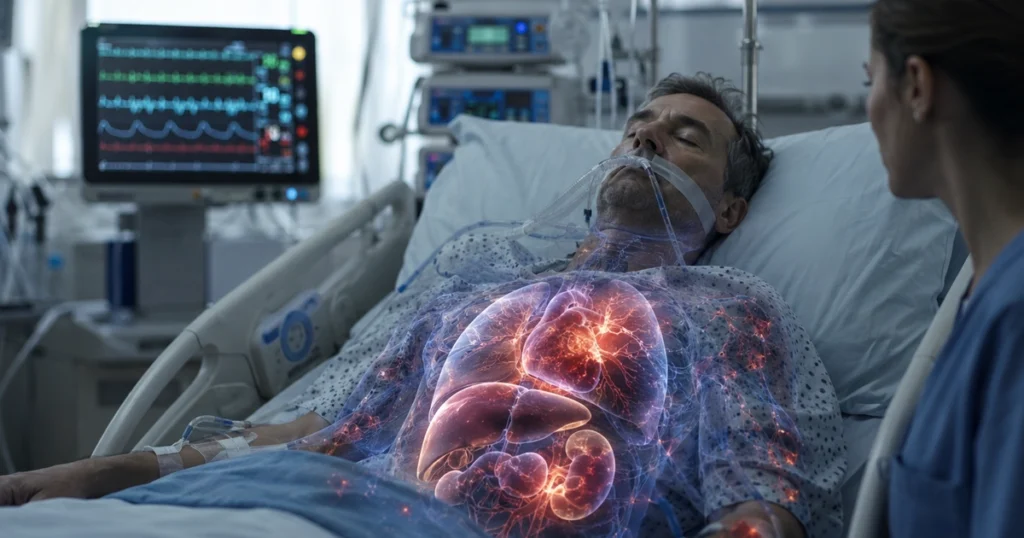
Sepsis is one of those medical emergencies that sounds like something that could spread, partly because of how severe and sudden it appears, and partly because it is often diagnosed in hospital settings where contagion feels like a real concern. If someone you know has been diagnosed with sepsis, it is completely natural to wonder whether you need to take precautions to protect yourself. The answer is straightforward but comes with an important nuance that everyone should understand clearly before drawing any conclusions.
Sepsis itself is not contagious. It is not caused by a single pathogen that spreads from person to person. Instead, it is a life-threatening response to an infection already present in the body. Some infections that can trigger sepsis may spread to others, making timely care at an emergency room Beaumont TX important for preventing serious complications.
What Is Sepsis?
Sepsis occurs when the body’s immune response to an infection spirals out of control and begins attacking healthy tissues and organs rather than staying focused on the original source of infection. It is not the infection itself, but the body’s dysregulated reaction to one, and this distinction is precisely why sepsis cannot be transmitted between people. According to the Centers for Disease Control and Prevention, sepsis affects more than 1.7 million adults in the United States each year and contributes to approximately 350,000 deaths, making it one of the most urgent medical emergencies in the country.
Is Sepsis Contagious From Person to Person?
No. Sepsis cannot be spread through physical contact, airborne droplets, shared surfaces, or any other transmission route. Because sepsis is a response generated inside a specific person’s body rather than a discrete infectious organism, there is nothing to catch from someone who has it. Sitting with a sepsis patient, caring for them, or sharing a room with them does not put you at risk of developing sepsis yourself.
The reason hospital staff sometimes wear protective equipment around sepsis patients has nothing to do with protecting visitors from catching sepsis. It is about protecting the patient, whose immune system is already overwhelmed, from being exposed to additional infections from caregivers or the surrounding environment.
Can the Infections That Cause Sepsis Spread?
This is the part of the answer that carries real practical importance. While sepsis cannot spread between people, many of the underlying infections that can trigger it are capable of spreading, and that is what people genuinely need to be aware of when someone they know has been hospitalized with sepsis.
- Strep throat is one of the most common bacterial infections that can escalate to sepsis, and it spreads readily through respiratory droplets from an infected person to those in close contact
- Pneumonia caused by bacterial pathogens like Streptococcus pneumoniae is both contagious and a well-documented trigger for sepsis, particularly in older adults and people with compromised immune systems
- Urinary tract infections are generally not contagious from person to person, but can trigger sepsis when bacteria ascend to the kidneys and are left untreated long enough to enter the bloodstream
- Skin infections like cellulitis and wound infections can occasionally spread through direct contact with infected tissue, but more commonly develop from a person’s own skin bacteria entering through breaks in the skin
The key point is that contracting one of these infections does not mean you will develop sepsis, but it can create the conditions for it to occur, especially in people with weakened immune systems, chronic conditions, or other risk factors. Seek evaluation at an emergency room for fever if an infection is accompanied by concerning symptoms.
What Are the Symptoms of Sepsis?
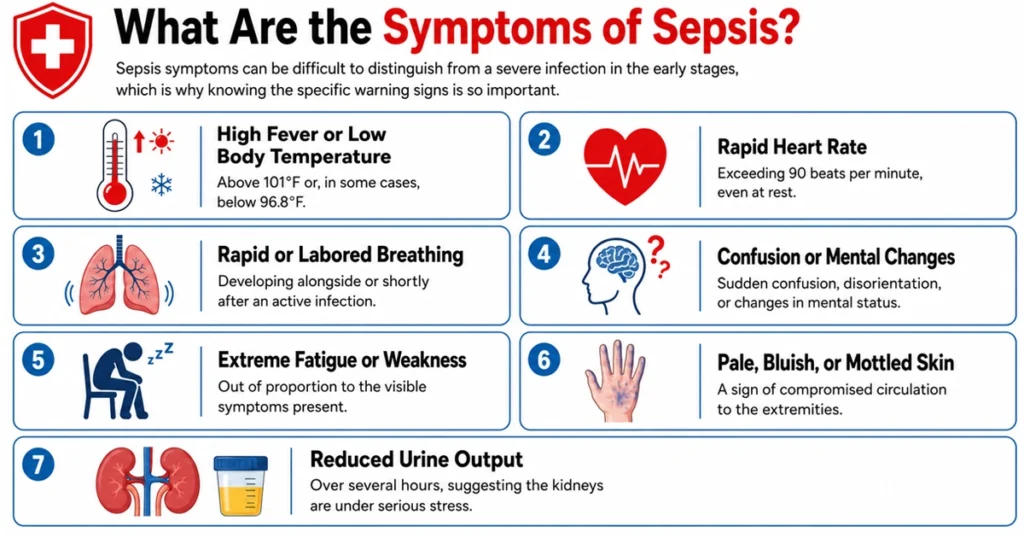
Sepsis symptoms can be difficult to distinguish from a severe infection in the early stages, which is why knowing the specific warning signs that indicate the body has moved beyond a normal immune response is so important.
- High fever above 101°F or, in some cases, an unusually low body temperature below 96.8°F
- Rapid heart rate exceeding 90 beats per minute, even at rest or without obvious physical exertion
- Rapid or labored breathing that develops alongside or shortly after any active infection
- Sudden confusion, disorientation, or changes in mental status in someone who was recently alert and functioning normally
- Extreme fatigue or weakness that is out of proportion to the visible symptoms present
- Skin that appears pale, bluish, or mottled, which signals compromised circulation to the extremities
- Significantly reduced urine output over several consecutive hours, suggesting the kidneys are under serious stress
Any of these symptoms appearing during or after an active infection requires immediate emergency evaluation. Do not wait for symptoms to improve on their own; visit an emergency room near me for prompt care.
Who Is Most at Risk for Sepsis?
Sepsis can develop from any infection in any person, but the following groups face a substantially elevated risk of both developing it and experiencing its most severe outcomes.
Older Adults Over 65
The aging immune system responds more slowly and less effectively to infections, allowing what might be a manageable illness in a younger adult to escalate rapidly in an older one. Even routine infections like urinary tract infections or pneumonia can become life-threatening in older adults when not identified and treated promptly. Older patients also frequently present with atypical or less obvious symptoms, making clinical evaluation especially important when any new infection develops.
Infants and Young Children
Infants under one year old have immune systems that are still developing and cannot mount the kind of aggressive response needed to contain serious bacterial infections before they spread systemically. High fever in an infant, particularly in the first three months of life, should always be treated as a potential emergency because the risk of rapid deterioration is significantly higher than in older children or adults. Prompt evaluation rather than watchful waiting is always the right response when fever appears in a very young infant.
People With Underlying Chronic Conditions
Diabetes, kidney disease, liver disease, cancer, and cardiovascular disease all compromise the immune system’s ability to contain infections before they become systemic. A person with a high fever in adults context who also has one of these conditions should be evaluated more urgently than someone without those risk factors, since their baseline immune function may already be reduced. Managing chronic conditions consistently and seeking prompt care for any new infection are the most effective preventive strategies for this group.
How Is Sepsis Treated?
Sepsis treatment is time sensitive and requires immediate hospitalization, since the condition can progress from serious to fatal within a matter of hours without aggressive medical intervention.
- Intravenous antibiotics are started immediately when sepsis is suspected, before laboratory culture results are available, to begin targeting the most likely bacterial source as quickly as possible
- IV fluid resuscitation restores blood volume and helps maintain adequate organ perfusion and blood pressure throughout the acute phase of treatment
- Vasopressors are medications administered when IV fluids alone are insufficient to bring blood pressure to a safe and stable level in cases of severe sepsis or septic shock
- Oxygen therapy or mechanical ventilation supports respiratory function when the lungs are affected by the underlying infection or the inflammatory cascade of sepsis itself
- Source control addresses the original infection through targeted antibiotics, surgical drainage of abscesses, or removal of infected tissue when necessary to stop the systemic response at its root
Sepsis Warning Signs That Should Never Be Ignored
These specific symptoms developing during or after any active infection signal that sepsis may already be underway and require emergency care without any delay.
- Sudden confusion or significant change in mental status during or following an illness
- Fever above 103°F or an abnormally low temperature below 96.8°F that does not respond to treatment
- Rapid heart rate or labored breathing developing alongside a known or suspected infection
- Pale, mottled, or bluish skin appearing during a febrile illness
- No urine output or dramatically reduced output over several consecutive hours
- Dizziness, near fainting, or extreme weakness that prevents normal functioning
If you notice these warning signs during an infection, seek emergency care without delay. With ER wait times of 12 minutes, patients can receive timely evaluation and treatment to help identify sepsis early and reduce the risk of life-threatening complications.
When to Go to the ER?
If any of the warning signs above develop alongside an active infection, immediate emergency evaluation is the only appropriate response. Do not wait to see if symptoms stabilize on their own. Visit the ER near me immediately if fever is accompanied by confusion, rapid heart rate, difficulty breathing, skin color changes, or any significant deterioration in physical condition. Exceptional Emergency Centers provide 24/7 emergency care with rapid diagnostic testing, IV antibiotic therapy, and continuous organ function monitoring for patients with suspected sepsis.
Sepsis Care at Exceptional Emergency Centers
Sepsis can move from an active infection to life-threatening organ failure faster than most people expect, which is precisely why emergency evaluation at the first sign of systemic deterioration saves lives. At Exceptional Emergency Centers, our team is equipped to identify sepsis early, begin IV antibiotics and fluid resuscitation immediately, and monitor organ function closely throughout treatment. Whether your symptoms began with a respiratory illness, a urinary infection, a skin infection, or another source, we are available around the clock to provide the fast and comprehensive care that sepsis demands.
Key Takeaways
- Sepsis is not contagious and cannot be transmitted from one person to another under any circumstances
- Sepsis is the body’s extreme immune overreaction to an existing infection, not an infection itself
- Some infections that can trigger sepsis, like strep throat and pneumonia, are contagious and can spread to others
- Older adults, infants, and people with chronic conditions face the highest risk of developing sepsis
- Symptoms, including sudden confusion, rapid heart rate, high fever, and pale skin, require immediate ER evaluation
- Early IV antibiotic treatment and fluid resuscitation dramatically improve survival outcomes when sepsis is identified promptly