

If you or someone you love has experienced a seizure, it’s normal to feel frightened and uncertain about what happened. Learning about the **types of seizures** can help you recognize symptoms, understand what they mean, and know when medical evaluation is necessary. The more informed you are, the better prepared you’ll be to respond appropriately.
Although some seizures stop within seconds or minutes, others can become life-threatening emergencies. A seizure lasting longer than five minutes, repeated seizures without recovery, or seizures accompanied by breathing problems or injury require immediate care at a Port Arthur emergency room. Acting quickly can help prevent serious complications and improve outcomes.
What Is A Seizure?
A seizure is a sudden, uncontrolled burst of abnormal electrical activity in the brain that temporarily disrupts how brain cells communicate. Depending on the area of the brain involved, it can affect movement, awareness, behavior, emotions, sensations, or consciousness. Seizures can occur as a single event or as part of a neurological condition such as epilepsy, and not every person who has one seizure has epilepsy.
According to the CDC, about 1 in 10 people (10%) will experience a seizure at some point during their lifetime, making seizures more common than many people realize.
Seizure Types
Seizures are broadly classified based on how and where they start in the brain and how they affect awareness and behavior. They can range from brief and subtle episodes to more intense events involving loss of consciousness or full-body movements. Understanding this classification is important because it helps guide diagnosis and treatment. Seizure doctors near me use clinical history, EEG findings, and imaging to determine the specific pattern of seizure activity.
Types Of Seizures In Adults
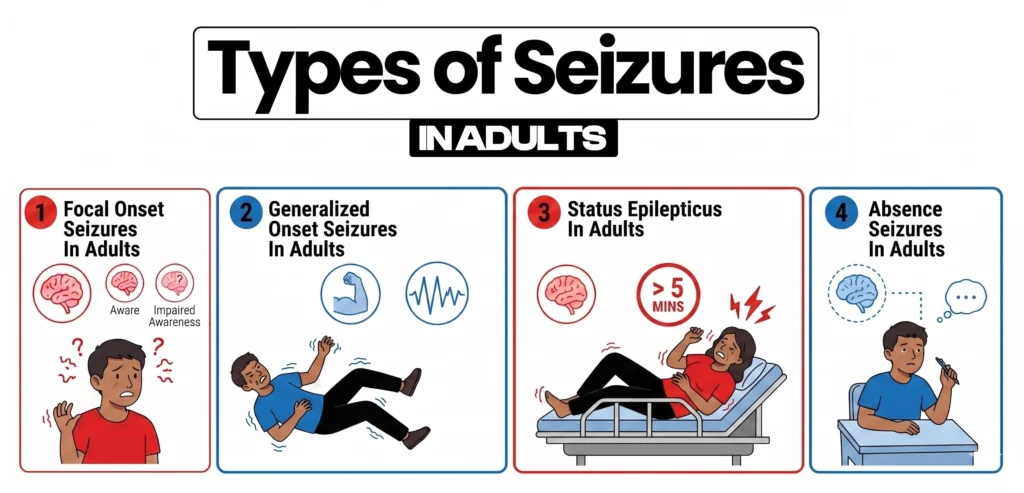
Seizures in adults are generally categorized based on their onset and how they spread through the brain. The presentation can vary widely, from subtle sensory changes to noticeable physical symptoms or impaired awareness. Adult seizure patterns are often influenced by underlying health conditions such as brain injury or neurological disease. A proper medical evaluation is essential to identify the cause and guide treatment.
Focal Onset Seizures In Adults
Focal onset seizures begin in a specific area of the brain and may affect only one part of the body or one type of function. Symptoms can include twitching, unusual sensations, or changes in perception without full loss of consciousness. Some individuals may remain fully aware, while others experience confusion or altered awareness. These seizures often provide important clues about the location of brain activity involved.
Generalized Onset Seizures In Adults
Generalized onset seizures affect both sides of the brain from the start and usually impact consciousness. They may cause sudden stiffening, jerking movements, or brief periods of unresponsiveness. These seizures can appear without warning and may lead to temporary confusion afterward.
Status Epilepticus In Adults
Status epilepticus is a medical emergency where a seizure lasts longer than five minutes or occurs repeatedly without recovery. It can lead to serious complications, including brain injury if not treated quickly. Patients may lose consciousness and require urgent hospital care and medication. Immediate emergency treatment is critical to prevent life-threatening outcomes.
Absence Seizures In Adults
Absence seizures in adults are less common but can still occur and involve brief lapses in awareness. The person may appear to stare blankly for a few seconds and then resume normal activity without remembering the event. These episodes are often subtle and may go unnoticed for some time. They can affect daily functioning if they occur frequently.
Types Of Seizures In Children
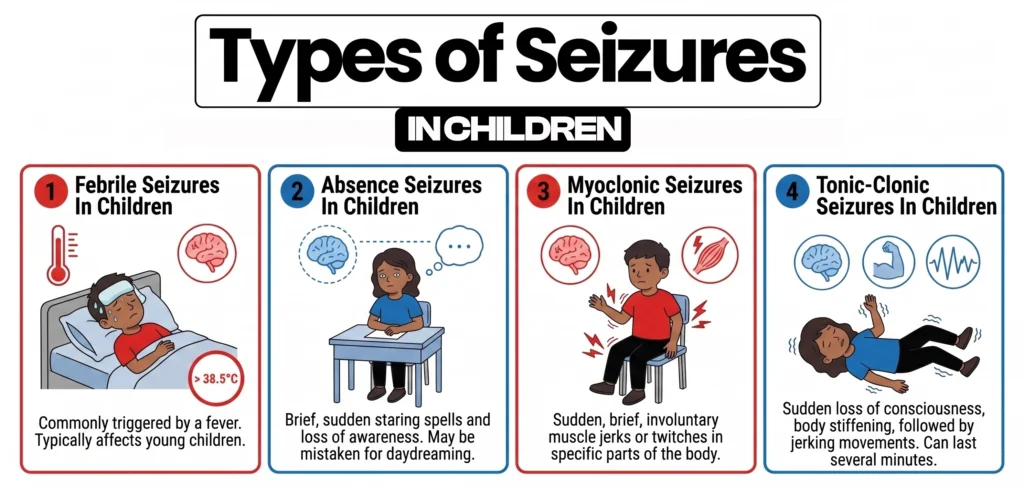
Seizures in children vary depending on brain development, age, and underlying causes. Some are triggered by fever or temporary illness, while others are linked to genetic or neurological conditions. They may present as brief staring spells, body stiffening, or rhythmic jerking movements, regardless of ER wait times.
Febrile Seizures In Children
Febrile seizures occur in young children and are triggered by a sudden rise in body temperature, usually due to infection. They are often brief and involve shaking or loss of awareness during fever episodes. Although frightening for parents, most febrile seizures are not linked to long-term brain damage. Medical evaluation is still important to rule out serious infections.
Absence Seizures In Children
Absence seizures in children appear as brief staring spells where the child may stop activity suddenly and then resume as if nothing happened. These episodes last only a few seconds but can occur multiple times a day. They are often mistaken for daydreaming or inattention in school settings.
Myoclonic Seizures In Children
Myoclonic seizures involve sudden, brief muscle jerks that can affect one or multiple parts of the body. These movements are usually quick and may happen in clusters, often after waking up. Children may drop objects or appear startled without warning. Proper diagnosis is important as these seizures can be part of broader epilepsy syndromes.
Tonic-Clonic Seizures In Children
Tonic-clonic seizures involve stiffening of the body followed by rhythmic jerking movements and loss of consciousness. They can last several minutes and are often followed by confusion or fatigue. These seizures are more dramatic and usually require immediate medical attention.
When To Go To The ER
A seizure can become a medical emergency when it lasts longer than expected or is followed by dangerous symptoms that suggest brain or body stress. Immediate care at an emergency room near me is important because prolonged or repeated seizures can reduce oxygen supply to the brain and lead to serious complications. If there is any uncertainty about severity, it is always safer to seek emergency evaluation rather than wait.
- Seizure lasts longer than 5 minutes.
- Another seizure starts immediately after the first without recovery.
- Difficulty breathing or turning blue during or after a seizure.
- Serious injury occurs during the seizure (head injury, fractures, bleeding).
- First-ever seizure with no known diagnosis.
- Seizure occurs in pregnancy or in a person with diabetes.
- Confusion or unresponsiveness continues long after the seizure ends.
How To Treat Seizures
Seizure treatment depends on the type of seizure, its cause, frequency, and the person’s overall health. A proper medical evaluation helps create a treatment plan to reduce seizures, improve safety, and prevent complications. Many people can manage seizures effectively with the right care and follow-up.
- Anti-Seizure Medications: Most doctors recommend antiseizure medicines like levetiracetam, lamotrigine, or valproate to help control abnormal brain activity. The right medication depends on the person’s seizure type and medical history.
- Emergency Rescue Medications: Most doctors recommend rescue medicines such as midazolam or diazepam for some people at risk of prolonged seizures. These medicines may help stop a seizure when used as prescribed.
- Lifestyle Changes: Getting enough sleep, managing stress, avoiding triggers, and taking medications regularly can help reduce seizure episodes.
- Vagus Nerve Stimulation (VNS): VNS uses a small implanted device to send signals to the brain and may help people whose seizures do not improve with medication.
- Epilepsy Surgery: Surgery may be considered for some patients when seizures start from a specific brain area and do not respond to other treatments.
- Ketogenic Diet Therapy: A medically supervised ketogenic diet may help reduce seizures in some people, especially children with certain epilepsy conditions.
- Seizure First Aid: Keep the person safe, move harmful objects away, place them on their side if possible, and never put anything in their mouth during a seizure.
Seizure Types Care At Exceptional Emergency Centers
If you or a loved one experiences seizure symptoms like sudden loss of awareness or uncontrolled movements, seek immediate care. Delays can increase risks and complications. At Exceptional Emergency Centers, our team provides fast evaluation, diagnosis, and stabilization for seizure emergencies.
At Exceptional Emergency Centers, we identify the underlying cause and guide proper treatment planning. Understanding the types of seizures helps ensure accurate diagnosis and better outcomes. Our focus is quick, compassionate, and evidence-based emergency care.
Key Takeaways
- Seizures are caused by sudden abnormal electrical activity in the brain and can affect awareness, movement, and behavior.
- Seizure episodes vary widely, and symptoms depend on the area of the brain involved.
- Both adults and children can experience seizures, but causes and triggers may differ between age groups.
- Some seizures are mild and brief, while others can become medical emergencies requiring immediate care.
- Early recognition and timely medical attention can significantly reduce complications and improve outcomes.
- Treatment is individualized and may include medications, lifestyle changes, or advanced medical procedures.
Frequently Asked Questions
What Causes Seizures?
Seizures occur when there is a sudden disruption of normal electrical activity in the brain. Common causes include epilepsy, head trauma, stroke, infections, brain tumors, fever, changes in blood sugar, or certain medications. In some cases, the cause remains unknown even after medical evaluation.
What Does A Seizure Feel Like?
A seizure can feel different depending on the person and the area of the brain affected. Some people may experience warning signs like unusual smells, tingling, confusion, or a sudden feeling of fear, while others may have muscle jerking, staring episodes, or loss of consciousness.
What To Do If Someone Has A Seizure?
During a seizure, keep the person safe by clearing the area around them and preventing injury. Place them on their side if possible, loosen tight clothing, and avoid putting anything in their mouth. Get emergency medical help if the seizure lasts longer than 5 minutes, happens repeatedly, or causes breathing difficulties.