

If you or someone you love is dealing with a persistent cough, chest congestion, or breathing discomfort, it is understandable to wonder, is bronchitis contagious? Acute bronchitis can be contagious when a virus causes it, while chronic bronchitis is not contagious.
If your symptoms include severe shortness of breath, chest pain, wheezing, high fever, or worsening breathing, do not ignore them. Visit our Tyler ER for prompt emergency care when respiratory symptoms become severe.
What Is Bronchitis?
Bronchitis occurs when the lining of the bronchial tubes becomes inflamed, causing swelling and increased mucus production that can trigger a persistent cough. Acute bronchitis, often called a chest cold, usually develops after a respiratory infection and generally improves within a few weeks.
Chronic bronchitis is a long-term condition associated with repeated airway irritation, especially from smoking. A review published in Canadian Family Physician reports that viruses cause 85%–95% of acute bronchitis cases in otherwise healthy adults.
Bronchitis Symptoms You Should Never Ignore
- Severe shortness of breath or difficulty getting enough air.
- New, severe, or persistent chest pain.
- Coughing up blood or blood-streaked mucus.
- High or persistent fever that does not improve.
- Worsening wheezing or difficulty breathing.
- Bluish or gray lips or face.
- Confusion, unusual drowsiness, or sudden mental changes.
- Symptoms lasting longer than three weeks.
What Causes Contagious Bronchitis?
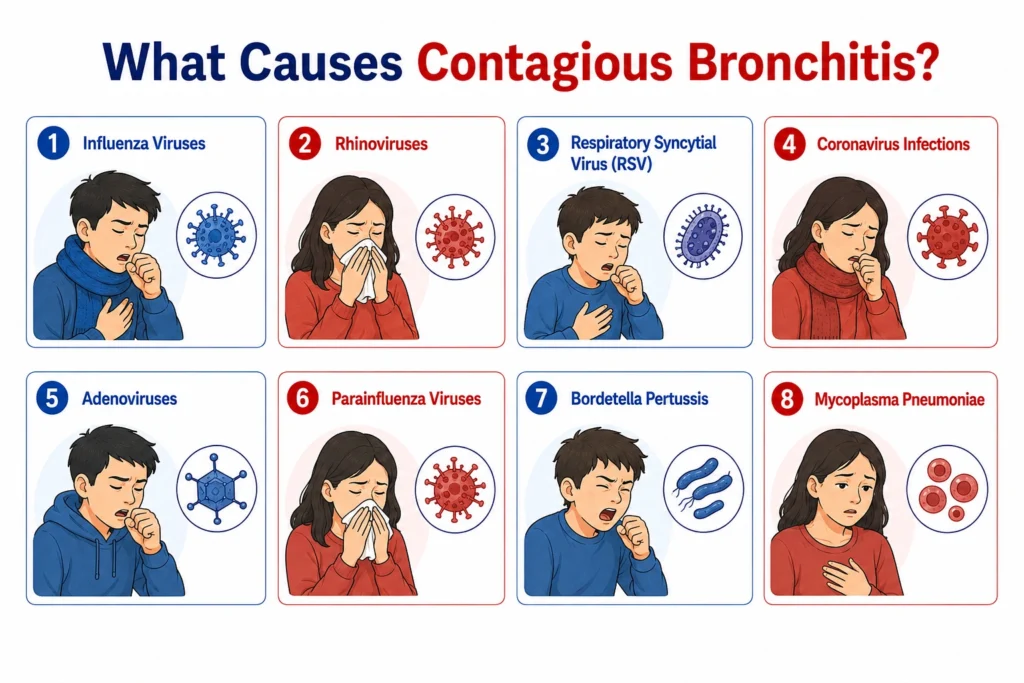
When bronchitis is contagious, the infection causing airway inflammation can spread from one person to another. This is most often associated with acute bronchitis, rather than chronic bronchitis. The responsible infection may begin like a common cold or flu and then move deeper into the respiratory tract, causing coughing, mucus, and chest discomfort. Identifying the underlying infection is important because contagiousness varies depending on the specific virus or bacteria involved.
Influenza Viruses
Influenza can infect the respiratory tract and sometimes lead to acute bronchitis with fever, cough, body aches, chills, and fatigue. Flu viruses spread easily between people through respiratory particles. People may be contagious before they realize they are sick.
Rhinoviruses
Rhinoviruses are common causes of the common cold and can trigger inflammation that extends into the bronchial tubes. They commonly cause a runny nose, sore throat, congestion, and cough before or alongside bronchitis symptoms. Close contact can allow the virus to spread to others.
Respiratory Syncytial Virus (RSV)
RSV can cause respiratory illness and may involve the lower airways, particularly in infants, older adults, and people with certain medical conditions. Symptoms can include cough, congestion, wheezing, and fever. RSV spreads through respiratory secretions and contaminated surfaces.
Coronavirus Infections
Coronaviruses, including SARS-CoV-2, can cause respiratory infections with cough, congestion, sore throat, fatigue, and fever. In some people, airway inflammation can produce bronchitis-like symptoms. The underlying coronavirus infection can spread through respiratory particles and close contact.
Adenoviruses
Adenoviruses can cause respiratory infections ranging from mild cold-like illness to more significant respiratory disease. They may produce coughs, sore throats, fever, and congestion. The virus can spread through respiratory droplets, close contact, and contaminated surfaces.
Parainfluenza Viruses
Human parainfluenza viruses commonly cause respiratory infections and can sometimes contribute to bronchitis. Symptoms may include cough, fever, runny nose, and sore throat. Transmission occurs through respiratory secretions and close contact with an infected person.
Bordetella Pertussis
Bordetella pertussis causes whooping cough and can initially resemble an ordinary respiratory infection. Persistent, severe coughing fits may develop as the illness progresses. Because pertussis is highly contagious, suspected infections require medical evaluation and appropriate treatment.
Mycoplasma Pneumoniae
Mycoplasma pneumoniae is a bacterial respiratory pathogen that can cause prolonged cough and bronchitis-like illness. It spreads mainly through respiratory droplets during close or prolonged contact. Symptoms may develop gradually rather than appearing suddenly.
How Does Bronchitis Spread?
Bronchitis itself does not always spread from person to person; the infection causing acute bronchitis is what can be contagious. Respiratory viruses and certain bacteria can move between people through respiratory secretions and contaminated hands or surfaces. The risk is generally greater during close contact with someone who is infected.
- Respiratory droplets: Coughing, sneezing, or talking can release infectious respiratory particles that may reach people nearby.
- Close personal contact: Kissing, hugging, or spending prolonged time close to an infected person can increase exposure.
- Contaminated hands: Touching the nose or mouth and then touching shared objects can transfer infectious material.
- Shared surfaces: Some respiratory pathogens can remain on frequently touched objects long enough to contribute to transmission.
- Poor indoor ventilation: Crowded indoor spaces with limited fresh air can increase exposure to respiratory viruses.
- Shared personal items: Sharing cups, utensils, or other items contaminated with respiratory secretions can increase the risk of infection.
How Long Is Bronchitis Contagious?
How long bronchitis is contagious depends on the infection causing it rather than the cough itself. Viral bronchitis is generally contagious while the underlying respiratory infection is active, particularly when fever and other acute symptoms are present. A cough can continue for several weeks after the infection has become much less contagious because airway inflammation may take longer to resolve.
How Can You Prevent Bronchitis From Spreading?
Preventing contagious bronchitis largely means reducing exposure to the respiratory infection causing it. Good hand hygiene, covering coughs, improving indoor air quality, and staying home while actively sick can reduce transmission. Vaccination against preventable respiratory infections, such as influenza, can also lower the risk of illnesses that may lead to bronchitis.
- Stay home when sick: Avoid close contact with others while respiratory symptoms are worsening or you have a fever.
- Wash your hands: Clean your hands regularly with soap and water or use hand sanitizer when soap is unavailable.
- Cover coughs and sneezes: Use a tissue or your elbow instead of your bare hands.
- Improve indoor ventilation: Bring in fresh outdoor air or use appropriate air purification when possible.
- Wear a well-fitting mask: Consider masking when around others during the infectious period, especially vulnerable people.
- Avoid sharing personal items: Do not share cups, utensils, towels, or other items that may carry respiratory secretions.
- Clean high-touch surfaces: Regularly disinfect commonly touched objects when someone is sick.
- Stay current on vaccines: Follow recommended vaccinations, including seasonal influenza vaccination.
When to Go to the ER for Bronchitis
Most cases of acute bronchitis improve without emergency treatment, but severe breathing problems can indicate pneumonia, a serious respiratory infection, or another urgent condition. Seek emergency care if symptoms suddenly become severe or you feel that you cannot breathe normally.
- Severe breathing problems: Struggling or gasping for breath.
- Blue or gray lips: May indicate dangerously low oxygen.
- Severe chest pain: New or intense chest pain needs urgent care.
- Coughing up blood: Significant or repeated blood requires evaluation.
- Sudden confusion: Confusion, fainting, or extreme drowsiness can be an emergency.
- Rapid worsening: Quickly worsening breathing or symptoms needs immediate care.
Need an ER near me? If bronchitis symptoms become severe or you are having trouble breathing, seek the nearest emergency room rather than waiting for symptoms to improve.
Bronchitis Treatments
Treatment depends on the cause and severity of bronchitis. Most uncomplicated acute bronchitis cases improve with supportive care because viruses cause most cases, so antibiotics usually do not help. The goal is to relieve coughing, congestion, discomfort, and fever while watching for signs of complications.
- Fluids: Drinking plenty of fluids can help prevent dehydration and may make mucus easier to clear.
- Rest: Adequate sleep and reduced physical exertion give your body time to recover.
- Humidified air: A clean humidifier or cool-mist vaporizer may help soothe irritated airways.
- Acetaminophen: Most doctors recommend acetaminophen for appropriate patients to help reduce fever and body aches when used according to the label.
- Ibuprofen: Most doctors recommend ibuprofen for appropriate patients who need relief from fever, inflammation, or body aches.
- Cough medicine: Most doctors recommend discussing OTC cough medicines with a healthcare professional, particularly for children or people taking other medicines.
- Honey: For adults and children over 1 year, honey may help soothe a troublesome cough.
- Bronchodilator: A healthcare professional may prescribe an inhaled bronchodilator when wheezing or underlying airway narrowing is present.
- Antibiotics: Most doctors do not recommend antibiotics for uncomplicated viral bronchitis because they do not treat viruses. They may be prescribed when a specific bacterial infection, such as pertussis, is diagnosed.
- Medical evaluation: Persistent, worsening, or severe symptoms may require testing to rule out pneumonia, asthma, influenza, COVID-19, or another respiratory condition.
Exceptional Emergency Care for Bronchitis
Bronchitis can become concerning when a persistent cough is accompanied by severe breathing difficulty, chest pain, high fever, or other worsening symptoms. At Exceptional Emergency Centers, our experienced emergency physicians are available in our 24/7 emergency room to evaluate severe respiratory symptoms and provide prompt medical care.
Our centers provide emergency evaluations, on-site laboratory testing, imaging when medically necessary, and treatment for urgent respiratory conditions. With an ER wait time of just 8 minutes, you can receive timely medical attention when bronchitis symptoms become severe or require emergency evaluation.
Key Takeaways
- Acute bronchitis can spread: It is often caused by contagious viruses.
- Coughs can linger: A cough may continue after you are no longer highly contagious.
- Prevent spread: Wash hands, cover coughs, and avoid close contact when sick.
- Most cases improve: Rest, fluids, and symptom relief usually help.
- Know the warning signs: Severe breathing problems, chest pain, or blue lips need urgent care.
Frequently Asked Questions About Bronchitis
How Long Does Bronchitis Last?
Acute bronchitis usually improves within 2–3 weeks, although a cough can sometimes last longer as the airways recover. If symptoms keep worsening or persist beyond several weeks, medical evaluation may be needed.
Can Bronchitis Kill You?
Most cases of acute bronchitis are not life-threatening and improve with supportive care. However, serious complications such as pneumonia or severe breathing problems can be dangerous, particularly in older adults, infants, and people with underlying health conditions.
What Causes Bronchitis?
Most cases of acute bronchitis are caused by respiratory viruses, including influenza, rhinoviruses, RSV, and coronaviruses. Less commonly, bacteria can cause bronchitis, while chronic bronchitis is usually associated with long-term airway irritation, especially from smoking.
Can Bronchitis Turn Into Pneumonia?
Bronchitis does not usually directly turn into pneumonia, but the infection causing bronchitis can sometimes progress to a lower respiratory infection. Worsening fever, chest pain, shortness of breath, rapid breathing, or increasing weakness may require evaluation for pneumonia.
Does Bronchitis Go Away On Its Own?
Yes, most cases of acute bronchitis caused by viruses improve on their own with rest, fluids, and symptom relief. However, severe or worsening symptoms should be evaluated by a healthcare professional to rule out pneumonia or another condition.
Is Bronchitis Viral or Bacterial?
Acute bronchitis is usually viral rather than bacterial. Because antibiotics do not treat viruses, most doctors do not recommend antibiotics for uncomplicated acute bronchitis. Antibiotics may be appropriate when a specific bacterial infection is diagnosed.