

Key Takeaways
- Tonsil stones are calcified deposits in the palatine tonsils, causing bad breath and throat discomfort.
- Common causes include poor oral hygiene, cryptic tonsils, chronic tonsillitis, and post-nasal drip.
- Symptoms include white nodules on the throat, metallic taste, sore throat, and tonsil stones smell.
- Treatments include oral hygiene, mouthwash for tonsil stones, saltwater gargles, manual removal, or medical procedures.
- Severe cases require urgent care; contact our emergency rooms in Orange County if breathing difficulty, pain, or bleeding occurs.
What Are Tonsil Stones?
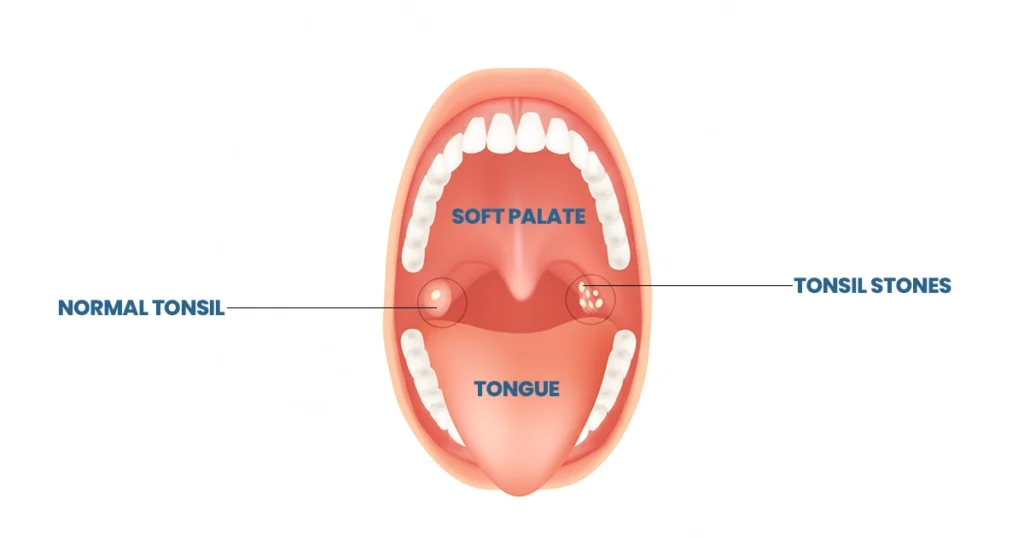
Tonsil stones, or tonsilloliths, are calcified deposits that form in the crevices of the palatine tonsils, composed of trapped food, bacteria, and mucus that harden over time. They can range from tiny specks to huge tonsil stones, causing discomfort, bad breath, or a sensation of something stuck in the throat. A CT-based study of 2,873 patients found that about 39.9% had detectable tonsil stones, highlighting their common occurrence.
How Do You Know if You Have Tonsil Stones
- Persistent bad breath or tonsil stones smell that doesn’t improve with brushing.
- Feeling of something stuck in the back of the throat.
- Visible white spots on the throat or white nodules on the throat near the tonsils.
- Sore throat or irritation when swallowing.
- Ear pain or discomfort referred from the throat nerves.
- Coughing or throat clearing due to irritation.
- Metallic taste in the mouth.
Also Read: How to Avoid Strep Throat During Peak Season
Causes of Tonsil Stones
Tonsil stones form when debris, bacteria, and mucus accumulate in the tonsillar crypts. Normally, tonsils filter bacteria, but trapped particles can calcify over time. Understanding these causes helps in preventing and managing recurring tonsilloliths.
1. Poor Oral Hygiene
Poor oral hygiene occurs when food particles, bacteria, and dead cells are not effectively removed from the mouth. This debris can lodge in the tonsillar crypts, providing a base for bacteria to multiply and eventually form tonsil stones, making it harder to remove stones from tonsils naturally.
2. Chronic Tonsillitis
Recurring inflammation of the tonsils can enlarge the tonsillar crypts, creating pockets where debris easily gets trapped. This environment encourages bacterial growth and increases the likelihood of tonsillar stone development.
3. Enlarged Tonsils & Cryptic Tonsils
Enlarged tonsils or cryptic tonsils have deeper pits or holes in the tonsils, where food, bacteria, and mucus can collect. These pockets make it easier for debris to harden into huge tonsil stones, which may require medical attention or professional removal.
4. Post-Nasal Drip & Mucus Buildup
Post-nasal drip occurs when excess mucus from sinus infections or allergies flows into the throat. This mucus carries debris and bacteria that can settle in tonsillar crypts, creating an environment for white patches on tonsils or tonsillar exudate to form stones.
Also Read: Is An Upper Respiratory Infection Contagious
5. Dry Mouth & Dehydration
Dry mouth results from reduced saliva flow due to dehydration, medications, or mouth breathing. Without saliva to naturally clean debris, bacteria accumulate in crypts, leading to tonsil stones that are difficult to remove without proper oral care or rinsing.
6. Diet High in Dairy or Sugar
A diet high in dairy or sugar increases mucus production and leaves sticky residues in the mouth. These residues adhere to tonsils and crypts, feeding bacteria and encouraging the formation of cysts on tonsils or calcified white nodules on the throat.
7. Smoking and Tobacco Use
Smoking or using tobacco irritates the throat and alters oral bacteria. This irritation, combined with increased mucus, allows debris to lodge in crypts, promoting the formation of tonsil stones, which may require professional intervention for removal.
8. Mouth Breathing
Mouth breathing, especially during sleep, dries saliva and reduces its natural cleansing effect. This allows debris and bacteria to accumulate in crypts, creating the perfect environment for tonsil stones to develop.
9. Bacterial Biofilm Formation
Bacterial biofilms are protective clusters of bacteria that attach to tonsillar crypts. These biofilms trap debris, which gradually hardens into tonsil stones and can make removing stones from tonsils at home more difficult.
10. History of Sinus Infection or Allergies
Chronic sinus infections or allergies increase mucus production and post-nasal drip, which carries debris into tonsillar crypts. Over time, this trapped material calcifies into huge tonsil stones, contributing to persistent bad breath and discomfort.
Also Read About: Sinus Headache
When Tonsil Stones Are an Emergency?
Most tonsil stones are harmless, but severe symptoms may indicate infection or complications requiring medical evaluation. Signs you should seek immediate care:
- Difficulty breathing or severe throat swelling.
- Intense pain that doesn’t improve with home care.
- High fever or systemic infection signs.
- Persistent bleeding tonsils or blood in saliva.
- Severe difficulty swallowing or inability to swallow liquids.
Contact Exceptional Emergency Centers or medical professionals immediately if these symptoms appear.
How to Get Rid of Tonsil Stones
Treatment combines hygiene, home remedies, medications, and medical procedures. Persistent or huge tonsil stones may require an ENT specialist for tonsil stones. Common treatments for tonsil stones include:
- Saltwater Gargle: Loosens debris and reduces bacterial load in crypts.
- Mouthwash for Tonsil Stones: Non-alcoholic antimicrobial mouthwash flushes particles and bacteria.
- Gentle Manual Removal Techniques: Carefully pressing around crypts can help with removing tonsil stones.
- Water Irrigator: Flushes crypts without tissue damage.
- Improved Oral Hygiene: Brushing, flossing, and tongue cleaning reduce debris and bacteria.
- Hydration: Increases saliva flow to naturally clean the mouth.
- Antibiotics (If Indicated): Only for infections; does not remove stones directly.
- Coblation Cryptolysis: Smooths tonsillar crypts to reduce stone formation.
- Tonsillectomy: Surgical removal for recurrent or large stones.
Care for Tonsil Stones at Exceptional Emergency Centers
If you’re dealing with persistent discomfort, bad breath, or a sensation of something stuck in your throat, what causes tonsil stones may be the concern. While many cases can be managed at home, recurring or huge tonsil stones sometimes require professional evaluation to prevent infection and ensure proper treatment.
At Exceptional Emergency Centers, our experienced medical team provides compassionate, personalized emergency care for patients with tonsil stones. From assessing symptoms like white nodules on the throat or tonsil stones to guiding effective treatment options, we offer comprehensive support to help you manage this condition safely and comfortably.