

Key Takeaways
- Brown mucus can indicate your airways are clearing old blood, debris, or environmental irritants.
- Coughing up brown mucus may be linked to smoking, pollution, or chronic lung conditions.
- Minor tissue bleeding or infections can result in brown phlegm with blood or streaks.
- Persistent or severe symptoms may require care, including our emergency room in Fort Worth.
- Observing accompanying symptoms helps determine when medical evaluation is necessary.
What Does Brown Mucus Mean?
Brown mucus often indicates your airways are clearing irritants, old blood, or infection-related debris. Tiny blood vessels can break due to inflammation, mixing old blood into mucus and turning it brown. A PubMed study on COPD patients found that only 5% of purulent (darker) sputum samples showed no bacterial growth, linking color to underlying infection. This makes brown mucus a useful indicator of respiratory changes.
Brown Mucus Symptoms
- Brown or brownish-yellow discharge from the nose or throat.
- Coughing up brown mucus that may be thick or rubbery.
- Phlegm with brown flecks or streaks of old blood.
- Congestion or difficulty clearing mucus.
- Accompanying cough or brown mucus and a cough sensation.
Also Read: Why Is My Mucus Black
Reasons Your Mucus Is Brown
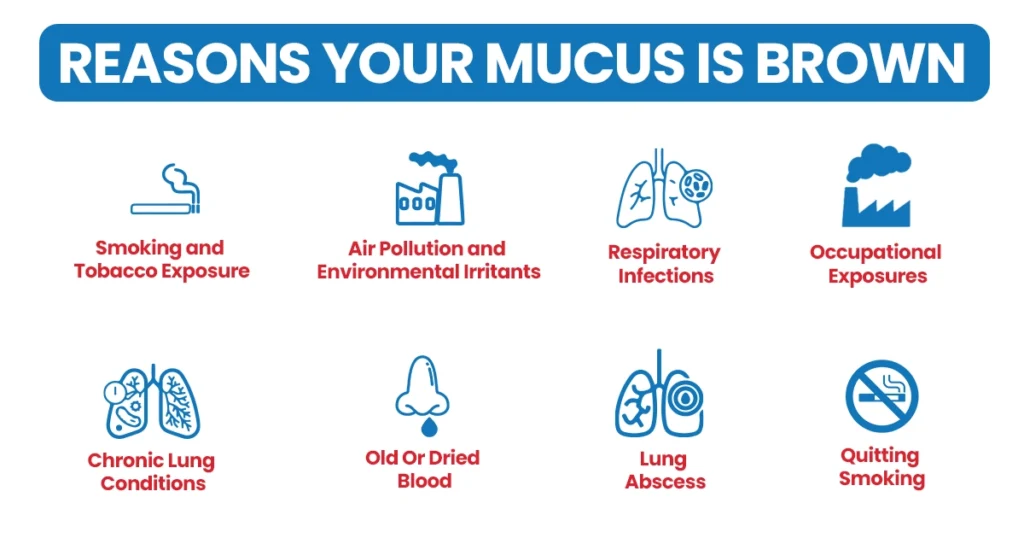
Brown mucus appears when your body responds to irritation, inflammation, or foreign particles in the respiratory tract. It’s usually a natural defense mechanism to trap debris, old blood, or infectious material. While often harmless, persistent brown mucus may indicate underlying conditions that need attention.
1. Smoking and Tobacco Exposure
Smoking introduces tar, nicotine, and other chemicals deep into the lungs. These substances irritate the airways, prompting increased mucus production to trap them. Over time, this mucus mixes with trapped particles, turning brown. Chronic smokers may notice persistent brown phlegm as a result of this ongoing process.
2. Air Pollution and Environmental Irritants
Exposure to dust, smog, and industrial chemicals irritates the respiratory linings. The body produces mucus to capture and remove these irritants. When these particles mix with mucus, they can appear brown or darkened. Brown mucus from the nose or throat is common in polluted environments.
3. Respiratory Infections
Infections like bronchitis, pneumonia, or upper respiratory infections inflame the airways and can damage tiny blood vessels. This minor bleeding combines with mucus, creating a brownish color. Coughing up brown mucus may also be accompanied by fever, congestion, or chest discomfort. Prompt treatment of infections can prevent complications like persistent lung inflammation or secondary infections.
4. Chronic Lung Conditions
Conditions such as COPD, chronic bronchitis, or cystic fibrosis cause persistent airway inflammation. This leads to ongoing mucus production that may mix with old blood or debris. Patients often notice brown mucus discharge over extended periods due to chronic irritation. Proper management can reduce mucus discoloration and support better lung function.
5. Old or Dried Blood
Minor nosebleeds or throat irritation can leave dried blood in the respiratory tract. When this mixes with mucus, it results in brown coloring. Brown mucus in the throat or nasal secretions often reflects this harmless but noticeable process. Avoiding excessive nose picking or aggressive coughing can minimize this type of brown mucus.
6. Lung Abscess
A lung abscess is a pocket of pus from severe infection. Blood and inflammatory debris can mix with mucus, producing brown mucus spit. The presence of foul odor or thick mucus often indicates deeper lung involvement. Timely medical evaluation and antibiotics are crucial to prevent abscess enlargement or systemic infection.
7. Quitting Smoking
When someone quits smoking, the lungs begin to clear years of trapped tar and debris. During this cleaning process, brown phlegm may appear as the respiratory system expels accumulated particles. This is typically temporary and part of lung recovery. Using supportive therapies like humidifiers or expectorants can help ease the clearance of mucus during this period.
8. Occupational Exposures
Jobs that involve dust, chemicals, or particulate matter increase exposure to respiratory irritants. The body produces mucus to trap and clear these substances. Over time, this leads to persistent brown colored mucus in workers with long-term exposure. Wearing protective masks and ensuring proper ventilation can significantly reduce the risk of developing discolored mucus.
How Brown Mucus Forms and Where It Appears
Brown mucus forms when normal, clear, or white mucus mixes with blood, pollutants, or inflammatory byproducts. This happens as the respiratory system works to trap and eliminate irritants or infectious material. The mucus thickens and changes color, often becoming sticky or rubbery, which is why it becomes noticeable during coughing or nasal drainage.
Where Brown Mucus Appears
- Nasal Passages: Brown mucus from the nose can result from dried blood, dust, or pollutants trapped in nasal secretions.
- Throat and Pharynx: Brown mucus in the throat often appears with post-nasal drip or irritation from frequent coughing.
- Lungs and Bronchi: Deep in the airways, brown phlegm forms when mucus collects inflammatory debris or old blood.
- Morning Cough: Thick, rubbery mucus from the throat is often noticed first thing in the morning as mucus accumulates overnight.
H2: When Brown Mucus Is Dangerous
While brown mucus is often benign, it can indicate serious issues if accompanied by concerning symptoms. Persistent or worsening brown mucus with additional warning signs may require urgent medical attention.
Danger Signs to Watch For
- Severe shortness of breath.
- High fever or chills.
- Chest pain or tightness.
- Brown phlegm with blood that increases or appears fresh.
- Confusion, dizziness, or fainting.
If you notice these signs alongside brown mucus, contact the Exceptional Emergency Centers for prompt evaluation.
Treatments for Brown Mucus
Treatment depends on the underlying cause. Mild cases often improve with hydration, reducing exposure to irritants, and gentle mucus clearance. Infections or chronic lung conditions may require medical intervention to reduce inflammation and remove mucus effectively.
Medical Treatment
- Antibiotics for Bacterial Infection: Treats bronchitis, pneumonia, or other infections.
- Bronchodilators: Open airways in chronic lung diseases, easing mucus expulsion.
- Mucolytic Agents: Thin thick mucus for easier coughing.
- Steroids: Reduce airway inflammation in conditions like COPD exacerbations.
- Oxygen Therapy: Supports breathing when lung function is impaired.
How to Clear Mucus from Throat Naturally
- Hydration: Drinking fluids thins mucus for easier clearance.
- Steam Inhalation: Warm steam loosens mucus in the nasal passages and throat.
- Saltwater Gargle: Soothes irritation and clears mucus from the throat.
- Honey: Acts as a natural demulcent to reduce throat discomfort.
How to Remove Mucus from Lungs Naturally
- Deep Breathing Exercises: Helps mobilize mucus from deeper airways.
- Chest Percussion: Gentle tapping can loosen mucus in the lungs.
- Humidifier Use: Adds moisture to airways, reducing mucus thickness.
- Physical Activity: Movement improves lung clearance and airflow.
Care for Brown Mucus at Exceptional Emergency Centers
If you are wondering Why Is My Mucus Brown, persistent discoloration can signal irritation, infection, or old blood in the airways. A timely evaluation helps determine the cause and prevents symptoms from worsening. Our team provides fast emergency care to ensure your respiratory health is properly assessed.
At Exceptional Emergency Centers, we offer rapid diagnostics and treatment for brown mucus and related symptoms. Our clinicians evaluate your airways, identify potential concerns, and guide you toward effective relief. You can rely on our advanced emergency care services for safe and prompt support.