

When you’re dealing with repeated diarrhea, vomiting, stomach cramps, nausea, or weakness, food poisoning can leave you feeling exhausted and worried about when you’ll feel normal again. It’s completely understandable to want to know how long the symptoms may last.
Most cases of food poisoning improve within a few days, although the duration can vary depending on the germ or toxin involved. If vomiting or diarrhea persists, symptoms become severe, or you develop signs of dehydration, do not wait for the illness to pass on its own. Seek medical attention at our Port Arthur emergency room.
What Is Food Poisoning?
Food poisoning is an illness caused by eating or drinking something contaminated with bacteria, viruses, parasites, or harmful toxins. It commonly causes diarrhea, vomiting, nausea, stomach cramps, fever, and weakness, with symptoms ranging from mild to severe. A major U.S. study estimated that 59% of foodborne illnesses caused by 31 major pathogens were linked to viruses, while 39% were caused by bacteria.
Dangerous Food Poisoning Symptoms
Most cases of food poisoning improve with rest and fluids, but some symptoms can signal a serious infection or severe dehydration. Seek prompt medical care if you experience:
- Bloody diarrhea or blood in your stool.
- Diarrhea lasting more than 3 days.
- A fever above 102°F (38.9°C).
- Frequent vomiting that prevents you from keeping fluids down.
- Severe or persistent abdominal pain.
- Very little urination, dark urine, extreme thirst, dry mouth, dizziness, or fainting.
- Confusion, unusual weakness, or difficulty staying awake.
- Blurred or double vision, muscle weakness, numbness, or difficulty swallowing.
If these symptoms occur, search for an ER near me for prompt medical evaluation.
How Long Can Food Poisoning Last?
If you are dealing with vomiting, diarrhea, stomach cramps, nausea, or fever, it can be exhausting and worrying to wonder when you will start feeling better. Food poisoning may last from a few hours to several weeks, depending on the germ or toxin involved, your overall health, and the severity of the illness. Most mild cases improve with supportive care, while severe or prolonged illness may lead to dehydration or other complications.
- Less Than 24 Hours: Some toxin-related food poisoning can cause sudden vomiting, diarrhea, and stomach cramps that improve within about a day. Symptoms may begin within hours of eating contaminated food.
- 1 To 3 Days: Many mild cases, including norovirus infections, improve within a few days as the body clears the infection. Rest and replacing lost fluids and electrolytes are important during recovery.
- 4 To 7 Days: Some bacterial infections, including Salmonella and certain E. coli infections, can cause diarrhea, fever, stomach cramps, and other symptoms for several days before gradually improving.
- 1 To 2 Weeks: Certain foodborne infections, including Campylobacter and Cryptosporidium, can cause diarrhea and digestive symptoms for a week or longer. Persistent symptoms can increase the risk of dehydration and may require medical evaluation.
- Several Weeks Or Longer: Some infections, particularly parasitic infections such as Giardia, can cause prolonged digestive symptoms lasting several weeks. Persistent diarrhea, bloody stool, severe weakness, or worsening symptoms should be evaluated by a healthcare professional.
How Long Does Food Poisoning Last By Cause?
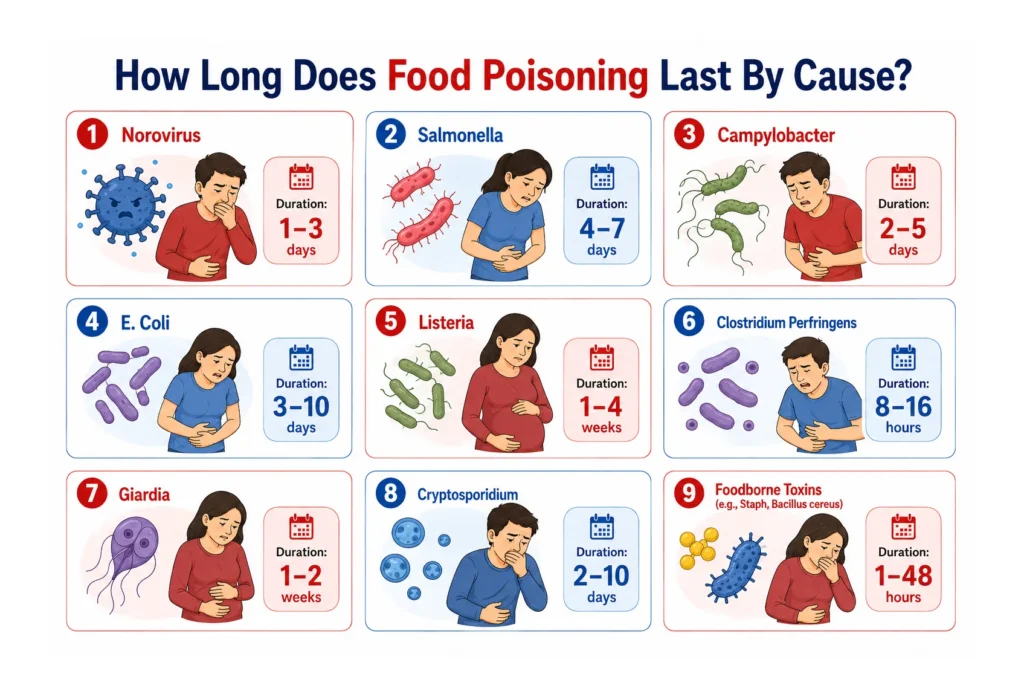
Food poisoning can last anywhere from a few hours to several weeks, depending on the specific bacteria, virus, parasite, or toxin involved. Some causes trigger symptoms quickly and resolve within a day, while others can cause prolonged illness. Knowing the likely cause can help explain differences in symptom duration and recovery.
Norovirus
Norovirus usually causes sudden vomiting, watery diarrhea, nausea, and stomach cramps. Symptoms typically begin 12 to 48 hours after exposure and last about 1 to 3 days. Most people recover without complications, although severe vomiting and diarrhea can cause dehydration.
Salmonella
Salmonella can cause diarrhea, fever, stomach cramps, nausea, and vomiting. Symptoms usually appear 6 hours to 6 days after exposure and typically last 4 to 7 days. Some infections can become more serious or persist longer, especially in people at higher risk of complications.
Campylobacter
Campylobacter commonly causes diarrhea, fever, abdominal cramps, nausea, and sometimes vomiting. Symptoms generally begin 2 to 5 days after exposure and usually last about 1 week. In some cases, diarrhea and other symptoms can continue longer or lead to complications.
E. Coli
Certain E. coli infections cause severe abdominal cramps and diarrhea, which may become bloody. Symptoms often begin 3 to 4 days after exposure and usually last 5 to 7 days. Some infections can cause serious complications and require prompt medical evaluation.
Listeria
Listeria can cause fever, muscle aches, nausea, diarrhea, and, in serious cases, neurological illness. Symptoms can begin within days, although some infections have a much longer incubation period. Mild gastrointestinal illness may last 1 to 3 days, while invasive listeriosis can require prolonged medical treatment.
Clostridium Perfringens
Clostridium perfringens typically causes abdominal cramps and watery diarrhea without significant vomiting. Symptoms usually begin 6 to 24 hours after exposure and generally last about 24 hours. Most cases resolve quickly, but persistent or severe diarrhea should be medically evaluated.
Giardia
Giardia can cause prolonged diarrhea, abdominal cramps, nausea, bloating, fatigue, and weight loss. Symptoms commonly begin 1 to 2 weeks after exposure and may last 2 to 6 weeks or longer without appropriate treatment. Persistent diarrhea should be evaluated to determine the cause.
Cryptosporidium
Cryptosporidium commonly causes watery diarrhea, stomach cramps, nausea, and dehydration. Symptoms usually begin 2 to 10 days after exposure and typically last 1 to 2 weeks. People with weakened immune systems may experience illness for much longer.
Foodborne Toxins
Certain bacterial toxins can cause food poisoning very quickly, sometimes within 30 minutes to several hours after eating contaminated food. Symptoms often last 24 to 48 hours, depending on the toxin involved. Severe vomiting, neurological symptoms, or dehydration can require urgent medical attention.
What Can Make Food Poisoning Last Longer?
Most food poisoning improves within a few days, but certain factors can slow recovery or increase the risk of complications:
- Severe Dehydration: Major fluid and electrolyte loss can worsen weakness and delay recovery.
- Certain Bacterial Infections: Salmonella, Campylobacter, and some E. coli infections may last longer.
- Older Age: Older adults may have a higher risk of severe illness and complications.
- Young Children: Children can become dehydrated quickly from vomiting and diarrhea.
- Weakened Immune System: Infections may be more severe or take longer to clear.
- Pregnancy: Some infections, especially Listeria, can cause serious complications.
- Delayed Treatment: Untreated dehydration or complications can make recovery more difficult.
When to Go to the ER
Most cases improve with fluids and rest, but severe symptoms can become dangerous. Seek emergency care if you experience:
- Severe Dehydration: Very little urination, dark urine, dizziness, fainting, or extreme weakness.
- Persistent Vomiting: You cannot keep fluids down or continue vomiting repeatedly.
- Bloody Diarrhea: Blood appears in your stool, or diarrhea becomes severe.
- Severe Abdominal Pain: Intense, persistent, or worsening stomach pain.
- High Fever: A fever of 102°F (38.9°C) or higher with worsening symptoms.
- Confusion or Fainting: Confusion, unusual drowsiness, fainting, or difficulty staying awake.
- Neurological Symptoms: Blurred vision, muscle weakness, difficulty swallowing, or trouble speaking.
Food Poisoning Treatment
Dealing with vomiting, diarrhea, stomach cramps, and weakness can leave you exhausted and worried about recovering. Most cases improve with supportive care rather than a specific medicine. The main goals are replacing lost fluids and electrolytes, controlling uncomfortable symptoms, and watching for signs of complications.
- Oral Rehydration Solution: Most doctors recommend oral rehydration solutions to replace fluids and electrolytes lost through vomiting and diarrhea. Take small, frequent sips if nausea makes drinking difficult.
- Plenty Of Fluids: Water, broth, and other suitable fluids can help prevent dehydration. If vomiting continues, drinking small amounts frequently may be easier to tolerate.
- Eat As Tolerated: Most doctors recommend returning to your regular diet as your appetite comes back rather than fasting. Start with foods you can tolerate and avoid anything that clearly worsens your symptoms.
- Loperamide: Most doctors recommend loperamide for some adults with uncomplicated diarrhea, but it should not be used with bloody diarrhea or fever. It is not appropriate for young children without medical guidance.
- Bismuth Subsalicylate: Most doctors recommend bismuth subsalicylate for some adults with uncomplicated diarrhea and stomach discomfort. Avoid it if you have bloody stools or a fever unless a healthcare professional advises otherwise.
- Prescription Medicines: Doctors may prescribe antibiotics or antiparasitic medicines when testing or evaluation shows a bacterial or parasitic infection that requires targeted treatment. Antibiotics do not treat viral food poisoning.
- IV Fluids: Severe dehydration may require intravenous fluids in an emergency department or hospital. IV fluids can rapidly replace fluids and electrolytes when you cannot drink enough.
- Anti-Nausea Medicine: A doctor may prescribe medication to control severe vomiting when it prevents you from drinking enough fluids. Treating persistent vomiting can help reduce the risk of dehydration.
- Rest And Recovery: Getting enough rest gives your body time to recover while you replace lost fluids and gradually resume eating. Avoid alcohol and foods that make your nausea or diarrhea worse.
Stomach Bug Care At Exceptional Emergency Centers
Stomach bugs often improve with supportive care, but persistent vomiting, severe diarrhea, dehydration, or worsening symptoms can require immediate medical attention. If you are unable to keep fluids down, have bloody diarrhea, severe abdominal pain, or signs of dehydration, do not wait for symptoms to worsen. Visit our 24/7 emergency room, where experienced emergency physicians are ready to provide prompt evaluation and treatment.
At Exceptional Emergency Centers, our board-certified emergency physicians are available 24/7 to evaluate severe stomach bug symptoms and related complications. We provide diagnostic testing, IV fluids for dehydration, medications to control severe symptoms, and personalized emergency care to help you recover safely.
Key Takeaways
- Most stomach bugs improve within 1 to 3 days, although some infections can last longer.
- Common symptoms include diarrhea, vomiting, nausea, stomach cramps, fever, and weakness.
- Drinking fluids and replacing lost electrolytes are important to prevent dehydration during recovery.
- Seek medical care for bloody diarrhea, severe abdominal pain, persistent vomiting, high fever, or signs of severe dehydration.
- If symptoms are severe, worsening, or not improving, prompt medical evaluation can help identify the cause and prevent complications.
Frequently Asked Questions
Does Food Poisoning Cause Fever?
Yes, food poisoning can cause a fever, particularly when certain bacterial or viral infections trigger an immune response. A high or persistent fever may require medical evaluation.
What To Eat After Food Poisoning?
Start with foods you can tolerate, such as bananas, rice, toast, crackers, oatmeal, potatoes, soup, and boiled chicken. Gradually return to your usual diet as your appetite and digestion improve.