

Experiencing lower left abdominal pain can be a stressful and confusing ordeal, especially for women. Because the lower left quadrant of the abdomen houses parts of the digestive tract, urinary system, and female reproductive organs, pinpointing the exact cause of the pain requires careful attention to detail. The discomfort can range from a dull, persistent ache to sudden, sharp cramps that make movement difficult.
While some causes are mild and may resolve on their own, others represent serious medical conditions that require immediate intervention. If you or a loved one needs an Orange County emergency room, paying close attention to accompanying symptoms is the first step in protecting your health and preventing long-term complications.
What Is Left Lower Abdominal Pain?
Left lower abdominal pain refers to any discomfort, tenderness, or cramping occurring below the navel on the left side of the body. This specific area contains the descending colon, the left ovary and fallopian tube, and the left ureter. Because vital structures share this space, pain warranting a 24/7 emergency room can originate from the digestive, reproductive, or urinary systems.
Also Read: What Causes Lower Abdominal Pain in Females
Lower Left Abdominal Pain Symptoms in Women
Not all abdominal discomfort is a medical emergency, but certain lower left abdominal pain symptoms in women point to a severe underlying issue. You should monitor your body for these dangerous warning signs:
- Sudden, severe pain that wakes you up from sleep or doubles you over.
- Persistent fever, chills, or night sweats accompany the pain.
- Unexplained nausea, severe vomiting, or an inability to keep fluids down.
- Blood in your stool, urine, or abnormal vaginal bleeding.
- A hard, rigid, or extremely tender-to-the-touch abdomen.
- Dizziness, fainting, or signs of shock (such as pale, cold skin).
What Causes Lower Abdominal Pain On The Left
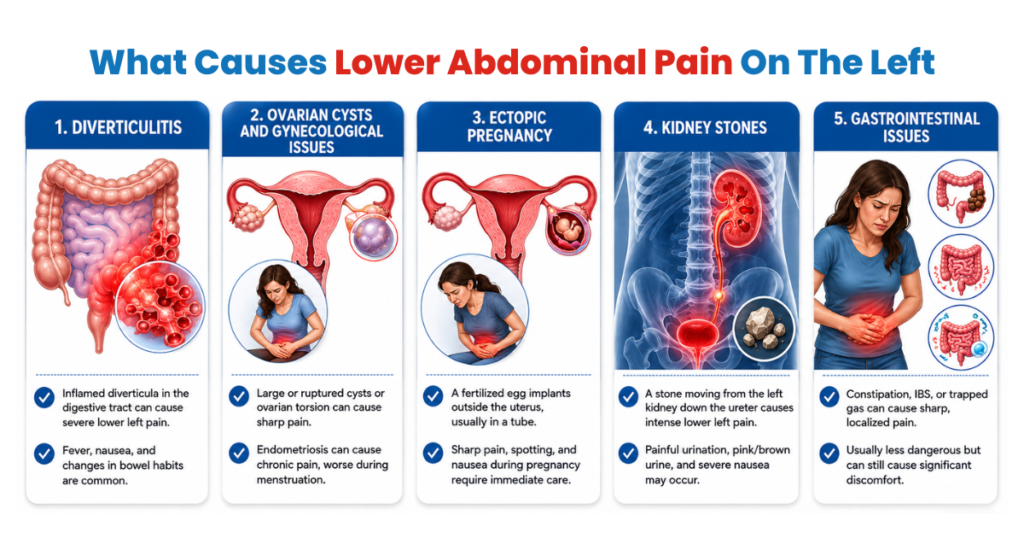
Understanding what causes lower abdominal pain on the left can help you and your healthcare provider quickly identify the correct treatment. In women, the causes are often split between gastrointestinal issues, urinary tract infections, and reproductive health concerns.
1. Diverticulitis
Diverticulitis is one of the most common causes of lower left-sided pain. It occurs when small, bulging pouches (diverticula) in the digestive tract become inflamed or infected. This condition often presents with constant, severe pain on the lower left side, accompanied by fever, nausea, and sudden changes in bowel habits. Because it is a bacterial complication, proper medical evaluation and reporting of severe infectious diseases are critical for long-term digestive health.
2. Ovarian Cysts and Gynecological Issues
An ovarian cyst is a fluid-filled sac that forms on or inside an ovary. While many cysts are painless and disappear on their own, a large or ruptured left ovarian cyst can cause sharp, sudden, and severe lower left abdominal pain. Twisting of the ovary (ovarian torsion) cuts off the blood supply and is a critical medical emergency. Additionally, conditions like endometriosis can cause chronic pain that worsens during a menstrual cycle.
3. Ectopic Pregnancy
An ectopic pregnancy happens when a fertilized egg implants outside the uterus, most commonly in a fallopian tube. If the left fallopian tube is affected, it causes sharp lower left pain, accompanied by vaginal spotting or bleeding. A ruptured ectopic pregnancy is a life-threatening emergency that requires immediate surgical care.
4. Kidney Stones
When a mineral deposit travels from the left kidney down the left ureter, it can cause excruciating, radiating pain in the lower left abdomen, groin, and back. Symptoms often include painful urination, pink or brown urine, and severe nausea as the stone attempts to pass.
5. Gastrointestinal Issues
General gastrointestinal issues such as severe constipation, irritable bowel syndrome (IBS), or a trapped pocket of gas can cause sharp, localized pain in the descending colon. While often less dangerous than other causes, they can still cause significant discomfort requiring medical evaluation.
Diagnosis Of Lower Left Abdominal Pain
Properly diagnosing the root cause of lower left abdominal pain requires a thorough medical evaluation, especially for women, given the complexity of the pelvic organs. Doctors use a combination of tests to rule out life-threatening conditions and pinpoint the exact source.
- Physical Examination: A doctor will gently press on the abdomen to check for tenderness, swelling, and rigidity.
- Pelvic Exam: Essential for women to evaluate the health of the uterus, ovaries, and fallopian tubes.
- Imaging Tests: Ultrasounds or CT scans provide clear images of the reproductive organs, kidneys, and intestines to identify cysts, stones, or inflammation.
- Blood Tests: Used to check for elevated white blood cells (indicating infection) or abnormal hormone levels.
- Urine Tests: Help detect urinary tract infections (UTIs) or microscopic blood caused by kidney stones.
- Pregnancy Tests: A standard procedure for women of childbearing age to quickly rule out or confirm an ectopic pregnancy.
How To Treat Lower Left Abdominal Pain
Figuring out how to treat lower left abdominal pain varies widely based on the underlying diagnosis. A medical professional will tailor the approach to ensure rapid relief and long-term recovery.
- Antibiotics: Prescribed for bacterial infections like diverticulitis or severe urinary tract infections.
- Pain Management: Over-the-counter or prescription pain relievers to manage acute discomfort from cysts or stones.
- Intravenous (IV) Fluids: Administered at an ER near me for severe dehydration from vomiting or diarrhea.
- Surgical Intervention: Emergency surgery is necessary for ruptured ectopic pregnancies, ovarian torsion, or a perforated bowel.
- Lifestyle Modifications: Dietary changes, such as increasing fiber intake, can prevent flare-ups of diverticulitis or basic digestive issues.
Managing Mild Abdominal Cramps at Home
For minor, non-emergency cramps related to digestion or mild menstruation, resting with a heating pad on the lower abdomen, staying fully hydrated, and taking over-the-counter anti-inflammatory medications can provide temporary comfort while monitoring symptoms.
When to Go to The ER?
Lower left abdominal pain should never be taken lightly. Waiting too long to seek treatment can turn a manageable condition into a life-threatening crisis. Knowing when to go to the ER is critical. Seek an ER for abdominal pain immediately if you experience:
- Sudden, unbearable pain that comes out of nowhere.
- Pain accompanied by a high fever, uncontrollable vomiting, or an inability to eat.
- Signs of internal bleeding, such as dizziness, confusion, or a rapid heart rate.
- Severe pain associated with an inability to have a bowel movement or pass gas.
- Any sharp abdominal pain if you are pregnant or suspect you might be.
Lower Left Abdominal Pain Care At Exceptional Emergency Centers
When sudden and severe abdominal pain strikes, you need immediate answers and fast relief. The Texas Department of State Health Services (DSHS) emphasizes the critical importance of timely emergency medical evaluation for acute abdominal symptoms to prevent life-threatening complications. Waiting for an appointment with a primary care doctor is simply not an option when every minute matters.
At Exceptional Emergency Centers, our state-of-the-art facilities are fully equipped to handle all forms of acute abdominal and pelvic emergencies. With on-site advanced imaging, fully certified laboratories, and board-certified physicians, we can rapidly diagnose the root cause of your pain. Whether you are treating a ruptured left ovarian cyst, kidney stones, or a severe digestive infection, our team is available 24/7 to provide prompt, compassionate, and life-saving emergency medical services without the long wait times of a traditional hospital ER.