

High blood pressure isn’t just a number; it can trigger severe headaches, dizziness, chest tightness, shortness of breath, and even increase the risk of heart attack or stroke if left unmanaged. Many people wonder whether magnesium can help lower blood pressure and protect the heart, and if symptoms become severe or sudden, visiting an Amarillo emergency room can provide prompt evaluation and care.
Research shows magnesium plays a critical role in regulating muscle contraction, nerve signaling, and blood vessel tone. When magnesium levels are low, blood vessels may become tense, increasing strain on the cardiovascular system and making dangerous spikes in blood pressure more likely. Understanding how magnesium supports vascular relaxation, when dietary sources are sufficient, and when supplements may be needed can help you reduce risk and recognize warning signs that require prompt medical attention.
What Is Magnesium?
Magnesium is a mineral required for hundreds of biological functions in the body. It supports muscle activity, nerve communication, blood sugar control, and heart rhythm regulation. In the cardiovascular system, magnesium helps regulate the balance of electrolytes such as calcium and potassium inside cells. This balance affects how muscles contract and relax, including the smooth muscles that line blood vessels.
Because of this function, the relationship between magnesium and blood pressure has been widely studied. Adequate magnesium levels help maintain flexible blood vessels and stable circulation, which may contribute to healthier blood pressure levels. Low magnesium intake has been associated with an increased risk of hypertension, making magnesium for high blood pressure an important topic in heart health research. If you experience sudden or severe symptoms, visiting an emergency room near me can provide immediate care.
How Magnesium Affects Blood Pressure
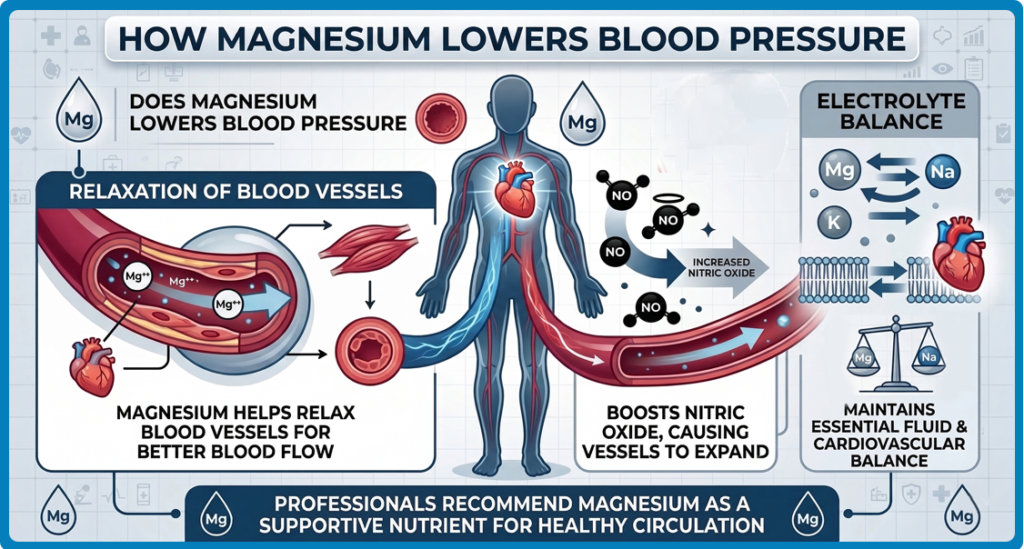
Magnesium plays a critical role in maintaining healthy blood pressure by influencing how blood vessels function. Understanding these mechanisms helps explain why magnesium is important for heart health, and in cases of sudden chest discomfort or blood pressure spikes, seeking care at Exceptional Emergency Centers can provide prompt evaluation and treatment.
Key Ways Magnesium Supports Blood Pressure:
- Regulates Muscle Contraction and Relaxation:
- Calcium in cells causes muscles, including blood vessel walls, to contract.
- Magnesium counterbalances calcium, allowing muscles to relax.
- Result: Blood vessels stay flexible, reducing vascular resistance and easing blood flow.
- Calcium in cells causes muscles, including blood vessel walls, to contract.
- Supports Nitric Oxide Production:
- Magnesium helps the body produce nitric oxide, a molecule that signals blood vessels to widen.
- Widened vessels improve circulation and help maintain stable blood pressure.
- Magnesium helps the body produce nitric oxide, a molecule that signals blood vessels to widen.
- Maintains Electrolyte Balance:
- Works alongside potassium and sodium to support fluid balance and proper cardiovascular function.
Why This Matters:
- Adequate magnesium levels allow blood vessels to respond more efficiently to stress, preventing sudden spikes in blood pressure.
- Magnesium is considered a supportive nutrient for cardiovascular health, particularly for individuals at risk of hypertension.
Can Magnesium Help With High Blood Pressure?
Several clinical studies have examined whether magnesium intake can reduce hypertension. Evidence suggests that magnesium may produce modest reductions in both systolic and diastolic blood pressure, particularly in individuals with low magnesium levels. For people who are deficient in magnesium, increasing intake through diet or magnesium supplements for blood pressure may help restore normal vascular function. However, magnesium alone is not considered a replacement for medical treatment in people with diagnosed hypertension.
Instead, magnesium for high blood pressure is typically viewed as a supportive strategy alongside healthy lifestyle habits such as balanced nutrition, physical activity, and sodium reduction.
Dietary Sources of Magnesium for Blood Pressure
One of the most effective ways to maintain healthy magnesium levels is through diet. Many whole foods naturally contain magnesium and can contribute to better cardiovascular health.
Foods that support magnesium for blood pressure include:
- Leafy Green Vegetables: Spinach, kale, and Swiss chard are among the richest natural sources of magnesium.
- Nuts and Seeds: Almonds, pumpkin seeds, and sunflower seeds provide significant amounts of magnesium and healthy fats.
- Whole Grains: Brown rice, quinoa, and oats contribute magnesium while also supporting heart health.
- Legumes: Beans, lentils, and chickpeas supply magnesium along with fiber and plant-based protein.
- Dark Chocolate: Dark chocolate with high cocoa content contains magnesium and antioxidants that support vascular function.
Consuming these foods regularly helps maintain the natural balance between magnesium and blood pressure.
Magnesium Supplements for Blood Pressure
When dietary intake of magnesium isn’t enough, magnesium supplements can help support healthy blood pressure levels. Here’s what you need to know:
Common Forms of Magnesium Supplements:
- Magnesium citrate: Highly absorbable and often recommended for supplementation.
- Magnesium glycinate: Gentle on the stomach, high bioavailability, and less likely to cause digestive issues.
- Magnesium oxide: More affordable but less well absorbed; may be used when cost is a concern.
Benefits of Magnesium Supplements for Blood Pressure:
- Helps blood vessels relax and reduce vascular tension.
- Supports proper electrolyte balance alongside calcium and potassium.
- May contribute to modest reductions in systolic and diastolic blood pressure in people with magnesium deficiency.
Safety and Usage Considerations:
- Avoid excessive intake: Too much magnesium can cause diarrhea, nausea, or dangerously low blood pressure.
- Medication interactions: People taking hypertension or heart medications should consult a doctor before starting supplements.
- Dosage guidance: A healthcare professional can recommend the right dose based on your blood magnesium levels and health needs.
Key Takeaway: When used appropriately under medical supervision, magnesium supplements can be a valuable addition to a heart-healthy lifestyle, especially for those with confirmed deficiencies.
When to Go to the ER for High Blood Pressure
High blood pressure can sometimes escalate rapidly, turning into a life-threatening situation. While magnesium and lifestyle strategies support long-term heart health, sudden spikes in blood pressure with severe symptoms require immediate medical attention.
Seek emergency care if you experience:
- Severe chest pain or tightness
- Shortness of breath or difficulty breathing
- Sudden, intense headache
- Vision changes, such as blurred or double vision
- Confusion, trouble speaking, or dizziness
- Weakness, numbness, or paralysis on one side of the body
These warning signs may indicate a hypertensive crisis, stroke, or heart attack, and prompt evaluation at an emergency facility is critical to prevent serious complications.
Expert Care at Exceptional Emergency Center for High Blood Pressure
At Exceptional Emergency Center, patients with dangerous blood pressure spikes receive rapid, expert care to reduce risks and stabilize cardiovascular function. The center provides:
- 24/7 emergency evaluation: Immediate assessment for chest pain, severe headache, dizziness, shortness of breath, or neurological symptoms.
- Advanced diagnostics: Blood pressure monitoring, ECG, lab work, and imaging to determine the underlying cause quickly.
- Rapid treatment interventions: Safe, effective methods to lower critically high blood pressure and manage complications.
- Specialized cardiovascular follow-up: Expert physicians coordinate ongoing care to prevent recurrence and optimize heart health.
When blood pressure reaches dangerous levels, timely care at Exceptional Emergency Center can be life-saving, complementing long-term strategies like magnesium intake and lifestyle management.
Key Takeaways
- Magnesium plays an important role in regulating blood vessel relaxation and circulation.
- The relationship between magnesium and blood pressure has been supported by multiple clinical studies.
- Dietary sources such as leafy greens, nuts, seeds, and whole grains provide natural magnesium for blood pressure support.
- In certain cases, magnesium supplements for blood pressure may be recommended to address a deficiency.
- Individuals experiencing severe symptoms related to high blood pressure should seek immediate medical evaluation.
Frequently Asked Questions
Which magnesium is best for high blood pressure?
Magnesium citrate and magnesium glycinate are often recommended because they are well absorbed by the body. These forms may help support healthy blood pressure when combined with a balanced diet and lifestyle.
Is magnesium good for high blood pressure?
Magnesium can support heart health by helping blood vessels relax and improving circulation. This improved blood flow reduces strain on the heart and arteries. Over time, it may contribute to maintaining normal blood pressure levels and overall cardiovascular well-being.
How does magnesium affect blood vessels?
Magnesium helps regulate muscle relaxation in blood vessel walls, allowing them to widen and reduce tension. This improved flexibility supports smoother blood flow and lowers strain on the heart. Over time, it contributes to healthier cardiovascular function and better circulation.