
Key Takeaways
- High cholesterol can contribute to fatigue by reducing blood flow, oxygen, and nutrient delivery to the body.
- Not everyone with high cholesterol feels tired, as fatigue depends on the extent of artery plaque buildup.
- Other factors may also cause fatigue, including sleep disorders, thyroid issues, anemia, chronic inflammation, and mental health conditions.
- Managing cholesterol and energy levels involves lifestyle changes, proper medical care, and monitoring to reduce fatigue and cardiovascular risks.
- At our Harlingen emergency room, we can evaluate sudden fatigue, chest discomfort, or concerning symptoms linked to high cholesterol and ensure timely care.
What Is High Cholesterol?
High cholesterol occurs when there’s too much cholesterol in the blood, a fat-like substance the body needs for cell structure, hormone production, and vitamin D synthesis. Medically, this condition is called hypercholesterolemia. While cholesterol is vital in moderation, excess levels can form plaques in arteries, increasing the risk of heart disease and contributing to high cholesterol and tiredness.
What Causes High Cholesterol
Several factors can elevate cholesterol levels. Knowing what makes cholesterol high helps guide prevention:
- Diets high in saturated and trans fats.
- Sedentary lifestyle or minimal physical activity.
- Being overweight or obese.
- Family history or genetic predisposition.
- Health conditions such as diabetes or hypothyroidism.
- Age and hormonal changes.
What Happens When Your Cholesterol Is High?
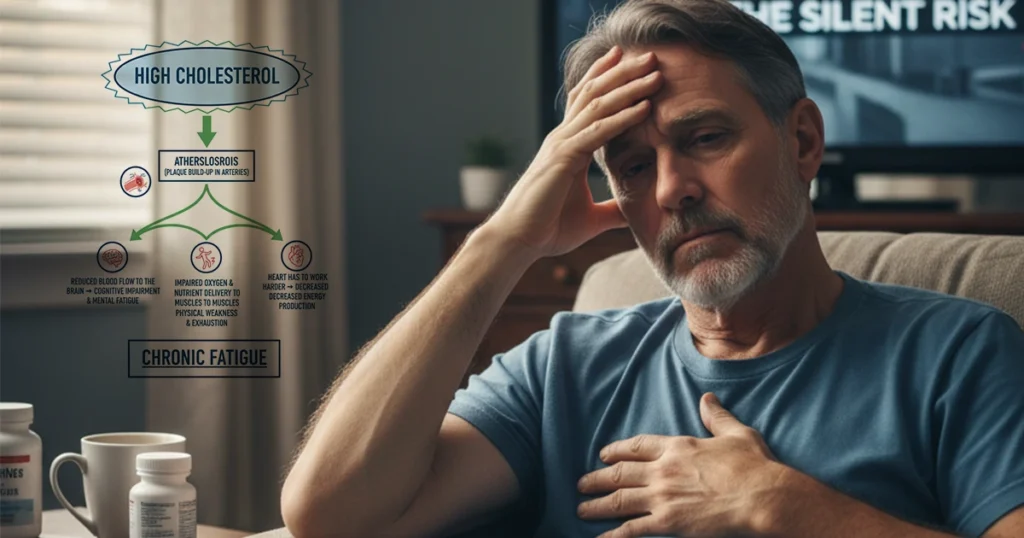
When cholesterol levels rise, fatty plaques accumulate in the arteries, a condition known as atherosclerosis. These plaques narrow the blood vessels, forcing the heart to work harder and reducing oxygen and nutrient delivery to muscles and organs. This decreased circulation can cause unusual fatigue. Over time, untreated high cholesterol increases the risk of serious cardiovascular problems, including heart attack and stroke.
How Can High Cholesterol Cause Fatigue?
High cholesterol gradually affects your energy. Narrower arteries make the heart work harder to circulate blood, while tissues receive less oxygen and fewer nutrients. This combination often leads to persistent fatigue, even during normal daily activities. Research from the NIH shows that women experiencing higher fatigue-related symptoms had up to 12% lower HDL-C and 8% lower apolipoprotein A1, linking lipid imbalances to decreased energy levels.
Reasons High Cholesterol Causes Fatigue
- Vascular Inflammation – Excess cholesterol irritates blood vessels, triggering chronic inflammation that leaves the body feeling worn out.
- Strain on the Heart – Narrowed arteries force the heart to pump harder, lowering overall stamina and causing faster fatigue.
- Limited Nutrient Flow – Reduced circulation limits oxygen and nutrient delivery to tissues, directly affecting energy and recovery.
- Cellular Stress – High cholesterol generates free radicals, increasing oxidative stress and contributing to tiredness.
- Sleep Challenges – Cholesterol-related issues, like sleep apnea, can disrupt restorative sleep, leaving you drowsy and low on energy during the day.
Can High Cholesterol Cause Fatigue for Everyone?
Not everyone with high cholesterol will experience fatigue. The extent depends on how advanced plaque buildup is in the arteries. Atherosclerosis progresses through four stages:
- Stage One: Cholesterol forms a fatty streak in arteries, reversible with a healthy lifestyle. Fatigue is usually minimal at this stage, but adopting healthy habits can prevent progression.
- Stage Two: Plaque builds up and cannot be reversed. Some people may start feeling tired during physical activity as blood flow decreases slightly, making daily tasks more challenging.
- Stage Three: Plaque becomes unstable and may rupture, increasing the risk of stroke or heart attack. Fatigue becomes more noticeable, often accompanied by shortness of breath or chest discomfort.
- Stage Four: Arteries may become fully blocked, severely restricting blood flow. Extreme fatigue is common, and urgent medical attention is necessary to avoid life-threatening complications.
When Is It an Emergency?
Fatigue linked to high cholesterol can sometimes signal a serious issue. Seek immediate care if you experience:
- Sudden, severe chest pain or pressure.
- Difficulty breathing or shortness of breath.
- Dizziness, fainting, or confusion.
- Pain or numbness in the arms, legs, or face.
- Rapid heartbeat or palpitations.
If you experience any of these symptoms, contact the Exceptional Emergency Centers immediately for prompt medical attention.
What Else Could Be Causing My Fatigue?
High cholesterol may not be the only factor. Other potential contributors include:
- Sleep disorders, such as insomnia or sleep apnea – Poor sleep can leave you feeling drained even after a full night’s rest.
- Thyroid dysfunction (hypothyroidism or hyperthyroidism) – Imbalances in thyroid hormones can directly impact energy levels.
- Anemia or vitamin deficiencies – Low red blood cells or essential nutrients reduce oxygen delivery to the body, causing tiredness.
- Chronic infections or inflammation – Ongoing illness or inflammation can make the body feel constantly fatigued.
- Mental health conditions, including depression or anxiety – Emotional and psychological stress can manifest physically as persistent exhaustion.
Ways to Manage Cholesterol and Fatigue
Managing cholesterol and fatigue requires a combination of lifestyle changes and medical guidance. Effective strategies include:
- Eating a heart-healthy diet rich in fruits, vegetables, whole grains, and lean proteins.
- Engaging in regular physical activity, at least 30 minutes most days.
- Maintaining a healthy weight.
- Following prescribed medications from your healthcare provider.
- Managing stress with meditation, yoga, or relaxation techniques.
- Scheduling regular check-ups to monitor cholesterol levels.
Exceptional Emergency Centers: Take Control of Fatigue
Fatigue linked to high cholesterol can sometimes signal a serious underlying issue. Persistent tiredness, especially when accompanied by chest discomfort, shortness of breath, or dizziness, should not be ignored. Early evaluation is crucial to identify the cause, manage symptoms, and reduce the risk of complications.
At the Exceptional Emergency Centers, our experienced team provides thorough assessment and personalized care for individuals experiencing high cholesterol and related fatigue. We offer expert emergency care, monitoring, and treatment plans to help restore energy, support heart health, and improve overall well-being so you can maintain a healthy, active lifestyle with confidence.