

If you suddenly notice your heart racing, fluttering, pounding, or beating irregularly, it can be frightening; especially when you are unsure what is causing it. These changes in your heartbeat can sometimes be related to atrial fibrillation (AFib), a common heart rhythm disorder.
AFib occurs when the heart’s upper chambers (atria) beat irregularly instead of maintaining a normal rhythm. While some episodes cause mild or no symptoms, AFib can increase the risk of blood clots and stroke, making new or severe symptoms important to take seriously. If you have chest pain, severe shortness of breath, fainting, or stroke symptoms, seek emergency care at our ER in Fort Worth immediately.
What Causes AFib?
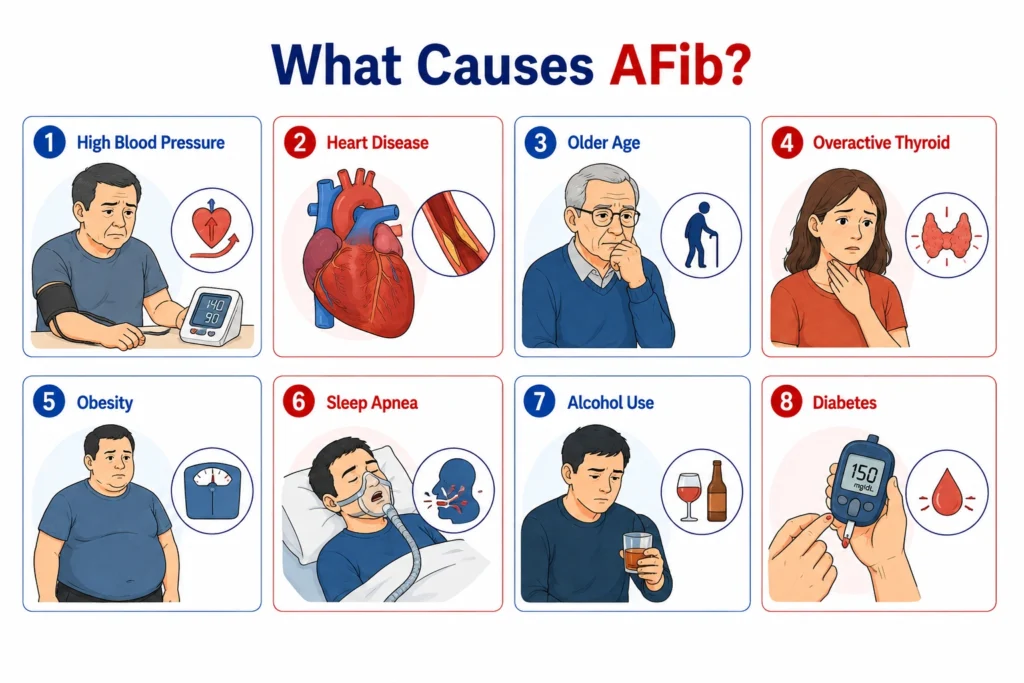
It is understandable to feel concerned when your heartbeat suddenly becomes irregular or unusually fast, especially if you have never experienced it before.
Several factors can increase the likelihood of AFib, and sometimes more than one factor is involved. Identifying the underlying trigger can help doctors choose the right treatment and reduce future episodes.
High Blood Pressure
High blood pressure puts ongoing strain on the heart and can cause structural and electrical changes over time. These changes can make the atria more vulnerable to abnormal rhythms. Long-standing, poorly controlled hypertension is an important AFib risk factor.
Heart Disease
Conditions such as coronary artery disease, heart valve problems, and previous heart attacks can damage or place stress on the heart. This can interfere with normal electrical signaling and increase the likelihood of AFib. Treating underlying heart disease may help reduce AFib complications.
Older Age
The risk of AFib increases as people get older because the heart can undergo gradual structural and electrical changes. Other age-related conditions, including high blood pressure and heart disease, can further increase the risk. However, AFib can occur in younger adults as well.
Overactive Thyroid
An overactive thyroid, or hyperthyroidism, can make the heart beat faster and more forcefully. Excess thyroid hormone can also affect the heart’s electrical system and trigger an abnormal rhythm. Treating the thyroid disorder may help control AFib.
Obesity
Excess body weight is associated with changes in the heart’s structure, inflammation, and higher blood pressure. These factors can increase the likelihood of developing AFib and may contribute to more frequent episodes. Gradual, medically supervised weight management can be beneficial.
Sleep Apnea
Obstructive sleep apnea causes repeated interruptions in breathing during sleep and can place stress on the cardiovascular system. Repeated oxygen changes and pressure fluctuations may contribute to AFib. Treating sleep apnea can be an important part of managing the condition.
Alcohol Use
Alcohol, particularly heavier or binge drinking, can trigger episodes of AFib in some people. It may affect the heart’s electrical activity and contribute to dehydration or changes in the nervous system. Some people with AFib may benefit from limiting or avoiding alcohol.
Diabetes
Diabetes can contribute to changes in the blood vessels and heart, while also increasing the likelihood of high blood pressure and other cardiovascular conditions. These combined effects can raise the risk of AFib. Keeping blood glucose and other risk factors controlled is important for heart health.
Dangerous AFib Symptoms
AFib symptoms can vary considerably from person to person. Some people notice an irregular heartbeat immediately, while others have mild symptoms or no symptoms at all. A recent systematic review and meta-analysis found that about 27% of people with AFib were asymptomatic, showing why the absence of noticeable symptoms does not necessarily mean the condition is harmless.
- Rapid or irregular heartbeat.
- Heart palpitations, fluttering, or pounding in the chest.
- Shortness of breath, particularly during activity.
- Unusual tiredness or weakness.
- Dizziness or lightheadedness.
- Reduced ability to exercise or physical activity.
- Chest discomfort or pressure.
- Fainting or near-fainting.
- Confusion or difficulty concentrating.
- Sudden numbness, weakness, trouble speaking, or vision changes, which may indicate a stroke.
When To Go To The ER
Not every AFib episode requires emergency treatment, but certain warning signs can indicate a heart attack, stroke, dangerously abnormal heart rate, or another serious complication. Do not wait for symptoms to improve on their own when severe or sudden warning signs occur.
- Severe or persistent chest pain, pressure, or tightness.
- Severe difficulty breathing or shortness of breath at rest.
- Fainting, collapse, or inability to stay awake.
- A very rapid heartbeat accompanied by weakness, dizziness, or chest discomfort.
- Sudden facial drooping, arm weakness, or difficulty speaking.
- Sudden loss of vision, severe confusion, or difficulty understanding speech.
- New severe dizziness, especially with difficulty walking or coordination problems.
- Signs of shock, such as cold, clammy skin, extreme weakness, or very low blood pressure.
If you need the closest emergency room to me, seek emergency medical care at the nearest ER immediately if you are experiencing any of these warning signs.
Effective AFib Treatments
The right AFib treatment depends on your symptoms, heart health, stroke risk, type of AFib, and underlying causes. Treatment may focus on controlling the heart rate, restoring a normal rhythm, preventing blood clots, or addressing conditions that trigger AFib.
Because AFib can increase stroke risk, treatment should be individualized rather than managed with over-the-counter products alone. A healthcare professional can determine which approach is safest for you.
- Blood Thinners: Most doctors recommend anticoagulants for people whose stroke risk makes them appropriate. These medications reduce clot-related stroke risk but require medical guidance.
- Rate-Control Medicines: Most doctors recommend medications such as beta-blockers or certain calcium channel blockers when appropriate to slow an excessively fast heart rate.
- Rhythm-Control Medicines: Most doctors recommend antiarrhythmic medications only when appropriate because these drugs can have significant effects and require medical supervision.
- Electrical Cardioversion: A controlled electrical shock can restore a normal heart rhythm in selected patients. Doctors determine whether cardioversion is appropriate based on the duration of AFib and stroke risk.
- Catheter Ablation: This minimally invasive procedure targets areas responsible for abnormal electrical signals. It may be considered when medications do not adequately control AFib or are not well tolerated.
- Treating Underlying Conditions: Managing high blood pressure, thyroid disease, sleep apnea, diabetes, and heart disease can help reduce AFib triggers and complications.
- Lifestyle Changes: Limiting alcohol, maintaining a healthy weight, exercising appropriately, avoiding smoking, and getting adequate sleep can support overall heart health and AFib management.
- Over-The-Counter Medicines: There is no over-the-counter medicine that safely treats or stops AFib. Most doctors do not recommend using aspirin or other OTC products as a substitute for prescribed stroke-prevention treatment.
Exceptional Emergency Care for AFib
AFib can be concerning, especially when it causes a rapid or irregular heartbeat, chest discomfort, severe shortness of breath, dizziness, or fainting. At Exceptional Emergency Centers, our experienced emergency physicians are available in our 24/7 emergency room to evaluate concerning symptoms and provide prompt medical care.
Our centers provide emergency evaluations, on-site laboratory testing, imaging when medically necessary, and treatment for urgent heart-related symptoms. If you experience severe chest pain, difficulty breathing, fainting, or sudden stroke-like symptoms, seek emergency medical attention without delay.
Key Takeaways
- AFib is an irregular heart rhythm that can increase the risk of blood clots and stroke.
- High blood pressure, heart disease, older age, obesity, sleep apnea, alcohol use, diabetes, and thyroid problems can contribute to AFib.
- Common symptoms include palpitations, rapid heartbeat, shortness of breath, dizziness, weakness, and chest discomfort.
- Severe chest pain, fainting, difficulty breathing, or sudden stroke-like symptoms require immediate emergency care.
- AFib treatment may include medications, cardioversion, catheter ablation, and lifestyle changes based on individual risk factors.
Frequently Asked Questions About AFib
What Is A Dangerous Heart Rate With AFib?
There is no single heart rate that is dangerous for everyone with AFib. A very rapid heart rate, especially above 150 beats per minute, may require urgent evaluation when accompanied by chest pain, severe shortness of breath, dizziness, or fainting.
What Does AFib Feel Like?
AFib may feel like a racing, fluttering, pounding, or irregular heartbeat. Some people also experience shortness of breath, fatigue, dizziness, weakness, or chest discomfort, while others have no noticeable symptoms.
Is AFib Hereditary?
AFib can run in families, so having a close relative with the condition may increase your risk. However, genetics are only one factor, and conditions such as high blood pressure, obesity, sleep apnea, and heart disease can also contribute.
Is AFib Dangerous?
AFib can be dangerous because the irregular heartbeat may allow blood clots to form in the heart, increasing the risk of stroke. It can also contribute to heart failure and other complications, particularly when it is untreated or poorly controlled.