

A painful sore in your mouth can make eating, drinking, and even talking uncomfortable. If you keep getting mouth ulcers or have a sore that feels unusually painful, it is natural to wonder what is causing it.
Most mouth ulcers are temporary and heal on their own, but some persistent or recurring sores need medical attention. Our emergency rooms in Orange County can provide prompt care when severe symptoms make it difficult to eat, drink, or manage the pain.
What Are Mouth Ulcers?
Mouth ulcers are painful sores that develop on the soft tissues inside the mouth, including the lips, cheeks, tongue, gums, or the floor of the mouth. They often appear as round or oval sores with a white, yellow, or gray center surrounded by redness and can make eating, drinking, or speaking uncomfortable.
A PubMed-indexed study of 3,244 patients found that 21.7% experienced recurrent aphthous ulceration, showing how common these recurring mouth sores can be.
Mouth Ulcer Causes
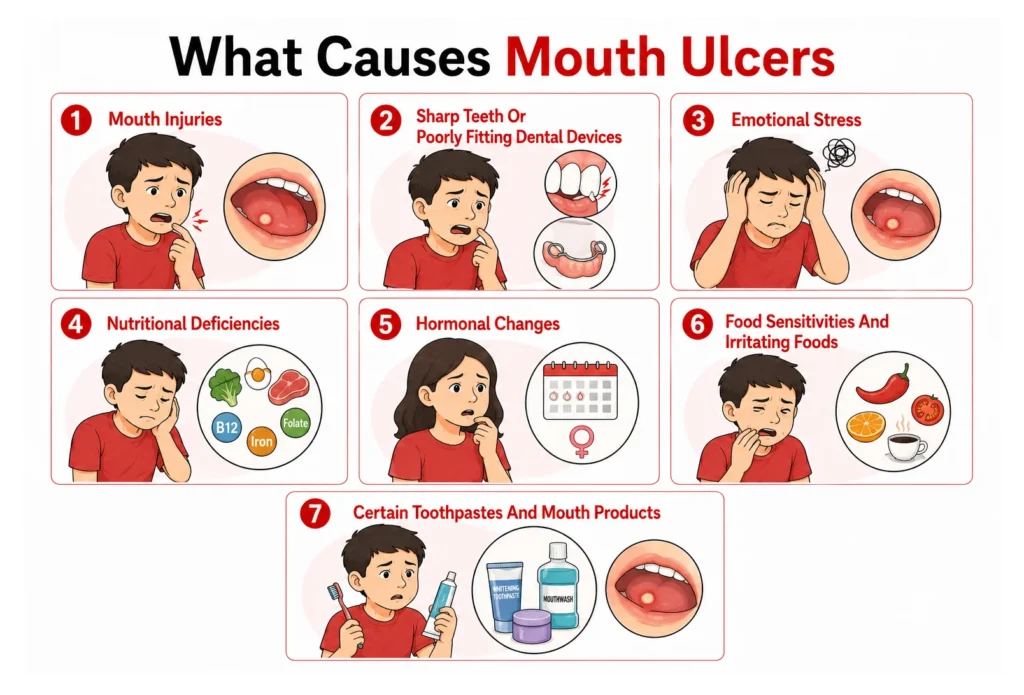
Mouth ulcers can develop for many different reasons, and identifying the possible trigger can be frustrating, especially when the sores keep returning. While many ulcers are harmless and heal within one to two weeks, recurrent or persistent sores may sometimes point to an underlying problem that needs medical evaluation. The causes can range from minor irritation to nutritional deficiencies, infections, and certain medical conditions.
Mouth Injuries
Accidentally biting your cheek, tongue, or lip can damage the delicate lining of the mouth and lead to an ulcer. Dental procedures, aggressive tooth brushing, or injuries from sports can also trigger painful sores. These ulcers often improve after the injured tissue heals. Repeated trauma, however, can cause the same area to remain irritated.
Sharp Teeth or Poorly Fitting Dental Devices
A broken tooth, sharp filling, braces, or poorly fitting dentures can repeatedly rub against the mouth’s soft tissues. This ongoing irritation may cause a sore or prevent an existing ulcer from healing properly. A dentist can identify and correct the source of mechanical irritation. Persistent ulcers should not simply be assumed to result from dental irritation.
Emotional Stress
Emotional stress is commonly associated with outbreaks of recurrent canker sores in some people. Stress may affect immune responses and contribute to inflammation, potentially making ulcers more likely to develop. Although stress is not the only explanation for recurring sores, some people notice outbreaks during particularly stressful periods. Managing stress may help reduce certain personal triggers.
Nutritional Deficiencies
Low levels of important nutrients, particularly iron, folate, and vitamin B12, have been associated with recurrent mouth ulcers. These deficiencies can sometimes result from an inadequate diet or an underlying condition that affects nutrient absorption. Frequent mouth ulcers may warrant medical testing when a nutritional deficiency is suspected. Treating the underlying deficiency may help reduce recurrence.
Hormonal Changes
Hormonal fluctuations may trigger mouth ulcers in some individuals, particularly during certain phases of the menstrual cycle. Changes in hormone levels can influence the body’s inflammatory and immune responses. However, hormonal changes do not cause every case of recurrent mouth ulcers. Keeping track of when sores occur may help identify a possible pattern.
Food Sensitivities and Irritating Foods
Some people may notice mouth ulcers after eating particular foods or ingredients that irritate the mouth. Spicy, acidic, or other personally triggering foods can cause discomfort and may contribute to ulcer development in susceptible individuals. Food sensitivities may also play a role in some cases. Identifying repeated patterns can help distinguish possible triggers.
Certain Toothpastes and Mouth Products
Some oral care products may irritate sensitive mouth tissues and contribute to recurring ulcers. Toothpastes or mouth rinses containing certain ingredients, including sodium lauryl sulfate, have been identified as possible triggers for some people. Switching products may be helpful when a clear pattern exists. Persistent or worsening sores should still be evaluated by a healthcare professional.
Infections
Certain viral, fungal, and other infections can cause painful sores or ulcers in and around the mouth. Herpes simplex virus, for example, causes cold sores, which differ from typical canker sores in their location and cause. Other infections may also produce mouth lesions with additional symptoms such as fever or swollen lymph nodes. Proper diagnosis is important because treatment depends on the infection.
Immune System Disorders
Some mouth ulcers are associated with problems involving the immune system. In these conditions, inflammation or an abnormal immune response may contribute to repeated or severe sores. Autoimmune and inflammatory diseases can sometimes cause mouth ulcers alongside other symptoms affecting different parts of the body. Frequent, severe, or unexplained ulcers should be medically evaluated.
Digestive Diseases
Certain digestive conditions, including celiac disease and inflammatory bowel diseases, may be associated with recurrent mouth ulcers. In some cases, ulcers can occur alongside digestive symptoms or nutritional deficiencies caused by poor nutrient absorption. Mouth sores alone do not necessarily mean someone has a digestive disease. However, recurrent ulcers combined with ongoing digestive symptoms deserve medical attention.
Medications and Medical Treatments
Some medications and medical treatments can cause mouth sores as a side effect. Certain chemotherapy drugs, immune-suppressing treatments, and other medications may damage or irritate the tissues lining the mouth. Never stop a prescribed medication without speaking with a healthcare professional. A doctor can help determine whether a medication may be contributing to recurring mouth ulcers.
Oral and Systemic Medical Conditions
Less commonly, mouth ulcers can be linked to serious oral or systemic conditions, including certain inflammatory disorders and oral cancer. A sore that lasts longer than a few weeks, repeatedly returns in the same location, or appears unusually large should be assessed by a healthcare professional. Additional warning signs include unexplained weight loss, difficulty swallowing, or a persistent lump. Early evaluation can help identify the underlying cause.
Dangerous Mouth Ulcer Symptoms
Mouth ulcers can cause noticeable discomfort, particularly when eating, drinking, or speaking. Symptoms vary depending on the ulcer’s size, location, and underlying cause, but most common ulcers appear as painful sores inside the mouth. Some symptoms may indicate a more serious condition and should not be ignored.
- Pain or burning sensation inside the mouth.
- Round or oval sores with a white, yellow, or gray center.
- Redness around the ulcer.
- Tingling or burning before the sore appears.
- Pain while eating or drinking.
- Discomfort when speaking.
- Sensitivity to spicy, acidic, or salty foods.
- Swelling or irritation around the affected area.
If severe symptoms develop or the pain makes it difficult to eat or drink, visit the nearest emergency room for prompt medical evaluation.
Mouth Ulcer Treatment
Dealing with a painful mouth ulcer can make eating, drinking, and speaking uncomfortable. The right mouth ulcer treatment depends on the severity, underlying cause, and how long the sore has been present. While many ulcers heal on their own, treatment can help relieve discomfort. Persistent or recurring ulcers should be evaluated by a healthcare professional.
Over-The-Counter Pain Relief
Over-the-counter gels, sprays, and rinses may temporarily reduce pain and make eating or drinking easier. Follow product instructions carefully and ask a healthcare professional which option is appropriate. These treatments mainly help manage symptoms while the ulcer heals.
Medicated Mouth Rinses
Certain mouth rinses may reduce discomfort and irritation caused by mouth ulcers. Healthcare professionals may recommend prescription rinses for severe or multiple ulcers. Avoid products that cause additional burning or irritation.
Topical Medications
Medicated pastes, creams, or gels can protect the ulcer and reduce pain or inflammation. Healthcare professionals may recommend corticosteroid treatments for severe or persistent ulcers. Use prescription medications only as directed.
Lifestyle and Home Care
Avoiding spicy, acidic, salty, or rough foods can prevent further irritation. Softer foods, cool fluids, and a soft-bristled toothbrush may also improve comfort. Most minor mouth ulcers heal within one to two weeks.
Treating the Underlying Cause
Recurring mouth ulcers may be linked to nutritional deficiencies, infections, medications, or other conditions. Treating the underlying cause can help prevent repeated ulcers. A healthcare professional can recommend further testing when needed.
When to Go to the ER for Mouth Ulcers
Most mouth ulcers heal without emergency treatment, but severe symptoms should not be ignored. Seek immediate medical care if the pain becomes severe, symptoms worsen quickly, or you cannot eat or drink enough fluids. Go to the ER if you experience:
- Difficulty breathing or swallowing.
- Severe dehydration or inability to keep fluids down.
- Significant swelling of the mouth, tongue, or throat.
- High fever or signs of a serious infection.
- Severe pain that cannot be controlled.
- A weakened immune system with severe or worsening mouth sores.
Exceptional Emergency Care For Mouth Ulcers
If you or a loved one has severe mouth pain, significant swelling, difficulty swallowing, or symptoms that make it hard to eat or drink, do not delay seeking medical care. At Exceptional Emergency Centers, our experienced emergency physicians are available in our 24/7 emergency room to evaluate severe mouth ulcer symptoms and provide prompt treatment.
Our centers can provide emergency evaluation, on-site laboratory testing, imaging when medically necessary, and treatment for serious underlying conditions. We are equipped to provide timely care when mouth ulcers are accompanied by severe symptoms or signs of a potentially serious infection.
Key Takeaways
- Mouth ulcers are painful sores that commonly develop inside the mouth.
- Common triggers include mouth injuries, stress, nutritional deficiencies, and certain foods.
- Most minor mouth ulcers heal within one to two weeks.
- Treatments can help reduce pain, protect the sore, and promote comfortable healing.
- Seek medical attention for severe, persistent, or frequently recurring mouth ulcers.
- Visit a 24/7 emergency room if mouth ulcers cause severe swelling, difficulty breathing or swallowing, or significant dehydration.
Frequently Asked Questions
Are Mouth Ulcers Contagious?
Most common mouth ulcers, including canker sores, are not contagious and cannot spread from person to person. However, some mouth sores caused by infections, such as cold sores caused by the herpes simplex virus, can be contagious.
What Do Mouth Ulcers Look Like?
Mouth ulcers typically appear as round or oval sores with a white, yellow, or gray center and a red border. They commonly develop inside the cheeks or lips, on the tongue, or along the gums and may cause pain or a burning sensation.