

Key Takeaways
- Itchy eyes are commonly linked to allergies, dryness, or irritation, but infections and eye conditions can also play a role.
- Symptoms often include redness, tearing, burning, or a gritty sensation that can affect daily comfort and vision.
- Proper diagnosis helps rule out serious causes and ensures safe, effective care.
- Persistent or severe itching should not be ignored, especially if vision changes or pain develops.
- Fast evaluation is available when symptoms worsen, including at our emergency room in Harlingen.
What Is an Itchy Eye?
An itchy eye is a common symptom caused by irritation or inflammation of the eye’s surface or surrounding tissues. It often occurs when the immune system reacts to allergens, dryness, or environmental triggers. While many cases are mild and temporary, ongoing itching can signal an underlying condition that needs attention.
A National Eye Institute–referenced study published on PubMed reports that up to 40% of the population experiences ocular allergy symptoms, with itching being the most common complaint.
Symptoms of an Itchy Eye
- Persistent urge to rub the eyes.
- Redness or bloodshot appearance.
- Watery or excessive tearing.
- Burning or stinging sensation.
- Swollen or puffy eyelids.
- Gritty or foreign body feeling.
Also Read: How to Soothe Irritated Skin Around Eyes
Why Is My Eye Itchy?
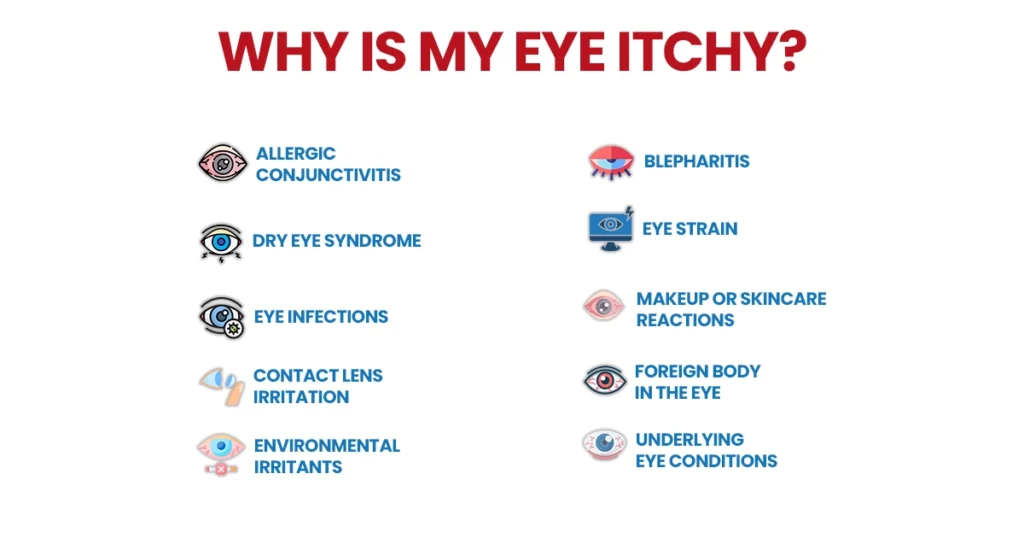
If you’re asking, “Why Are My Eyes So Itchy?”, you’re not alone. Eye itching is one of the most frequent eye-related complaints and can range from mildly annoying to severely disruptive. The sensation often reflects inflammation or sensitivity in the eye’s protective tissues. Understanding the reason behind the irritation is essential for relief and for preventing complications.
1. Allergic Conjunctivitis
Allergic conjunctivitis occurs when the eyes react to allergens like pollen, dust, or pet dander. The immune response releases histamine, leading to intense itching and redness. Symptoms often affect both eyes and may be seasonal or year-round. It is one of the most common causes of persistent eye itching.
2. Dry Eye Syndrome
Dry eye develops when the eyes don’t produce enough tears or when tears evaporate too quickly. This leads to irritation, itching, and a scratchy feeling. Screen use, aging, and certain medications increase risk. Ironically, dryness can also cause excessive tearing as a reflex response.
3. Eye Infections
Bacterial or viral infections can irritate the eye’s surface and cause itching along with discharge or pain. Pink eye is a common example. Infections often worsen without treatment and may be contagious. Prompt care helps prevent the spread and complications.
4. Contact Lens Irritation
Contact lenses can trap allergens or debris against the eye. Poor lens hygiene or overwearing lenses increases irritation and itching. Some people also develop sensitivity to lens materials or solutions. Removing lenses often improves symptoms.
5. Environmental Irritants
Smoke, pollution, strong odors, and chemicals can irritate the eyes. These exposures dry out and inflame the eye surface. Symptoms usually improve once the irritant is removed. Protective eyewear can reduce risk.
6. Blepharitis
Blepharitis is inflammation of the eyelids caused by bacteria or skin conditions. It leads to itchy, crusty eyelids and eye discomfort. Symptoms are often chronic and may flare repeatedly. Good eyelid hygiene is key to controlling.
7. Eye Strain
Prolonged screen time reduces blinking, leading to dryness and itching. Eye strain also causes fatigue and blurred vision. Frequent breaks and proper lighting help reduce symptoms. This is increasingly common with digital device use.
8. Makeup or Skincare Reactions
Cosmetics and skincare products can trigger allergic or irritant reactions around the eyes. Ingredients may cause itching, redness, or swelling. Symptoms often improve after stopping the product. Using hypoallergenic products lowers risk.
9. Foreign Body in the Eye
Dust, sand, or debris can enter the eye and cause immediate itching and discomfort. Rubbing may worsen irritation or scratch the cornea. Flushing the eye with clean water can help. Persistent symptoms need medical evaluation.
10. Underlying Eye Conditions
Conditions like glaucoma, uveitis, or corneal disorders can sometimes present with itching. These are less common but more serious. Symptoms may include pain or vision changes. Early diagnosis is important for eye health.
How Are Itchy Eyes Diagnosed?
Diagnosis begins with a detailed symptom history and eye examination. Providers assess redness, discharge, tear production, and eyelid health. Allergy history and environmental exposures are reviewed. In some cases, fluorescein staining or referral to an eye specialist may be needed.
When to See a Doctor?
Medical care is important if itchy eyes persist, worsen, or interfere with vision. Some causes require prescription treatment or urgent care. Early evaluation helps prevent complications and long-term discomfort. Seek care if you notice:
- Eye pain or pressure.
- Vision changes or blurred vision.
- Thick discharge or crusting.
- Sensitivity to light.
- Swelling that does not improve.
If these symptoms appear, contact the Exceptional Emergency Centers for prompt evaluation and care.
Treatment for Itchy Eyes
Treatment depends on the underlying cause of the itching. Relief often involves reducing inflammation, soothing irritation, and protecting the eye surface. Many cases improve with simple measures, while others need targeted medical therapy. A personalized approach ensures safe and lasting relief.
- Over-the-Counter Antihistamine Drops: Reduce allergy-related itching by blocking histamine release. Helpful for seasonal and environmental allergies.
- Artificial Tears: Lubricate dry eyes and flush out irritants. Safe for frequent daily use.
- Cold Compresses: Calm inflammation and provide quick itch relief. Useful for allergy flare-ups.
- Prescription Eye Drops: Steroid or immunomodulating drops may be used for severe inflammation under medical supervision.
- Eyelid Hygiene: Warm compresses and gentle lid cleaning help manage blepharitis-related itching.
- Avoidance Strategies: Limiting allergen exposure, taking screen breaks, and stopping irritating products prevent recurrence.
Eye Itching Relief at Exceptional Emergency Centers
Wondering, “Why are my eyes so itchy?” It can be caused by allergies, dryness, infections, or irritants. At Exceptional Emergency Centers, our skilled team evaluates your symptoms promptly, ensuring quick relief and preventing complications. Early assessment helps address underlying issues before they worsen.
Our experts provide emergency care, including safe treatments, supportive therapies, and guidance to manage triggers effectively. Whether it’s persistent itching, redness, or discomfort, Exceptional Emergency Centers offer fast, compassionate care to restore comfort and eye health.